
Light Requirements
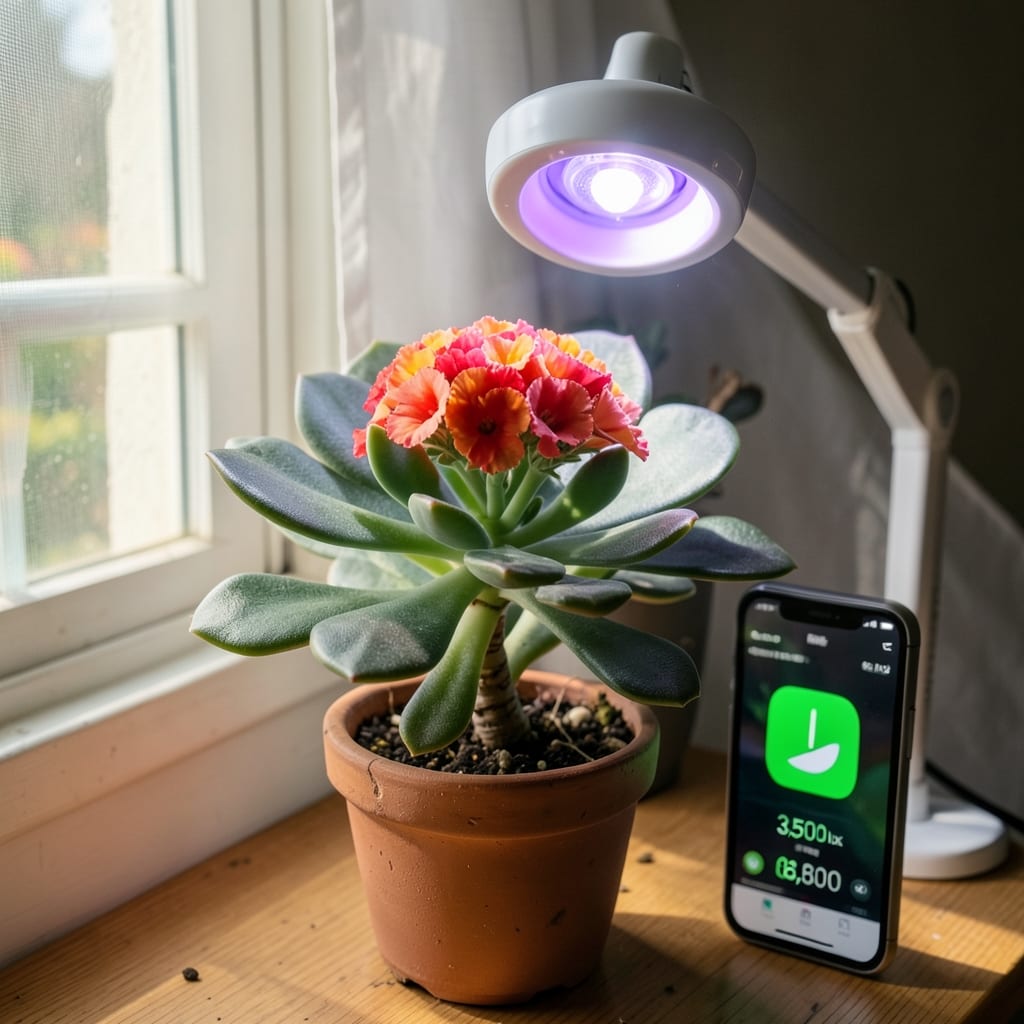
If your kalanchoe plant 🌸 is looking more like a sad green stick than a vibrant blooming star, you might be getting its light needs all wrong. This hardy succulent thrives on bright, indirect sunlight, but too much direct sun or insufficient light can turn its cheerful flowers into sparse, leggy stems.
Most gardeners underestimate how much light kalanchoes actually crave—at least 6 hours of bright light daily is the magic number to keep those stunning blooms coming. The key is finding that sweet spot between full sun and shade, especially if you're growing yours indoors near a window.
Let’s break down exactly how to meet your kalanchoe’s light requirements, whether you’re dealing with a sun-drenched windowsill or a dim corner. You’ll learn how to spot signs of light stress and adjust placement for year-round success.
From south-facing windows to grow lights, I’ll show you the simplest ways to give your kalanchoe the perfect light spectrum—so you can enjoy those cheerful blooms for seasons to come.

Kalanchoe light requirements: the ideal sunlight spectrum for blooms and growth
Kalanchoes are sun-worshippers at heart, but their light needs are more nuanced than you might think. These succulent beauties crave bright, indirect sunlight for at least 6 hours daily, but direct midday sun can scorch their delicate leaves. Think of them as sunbathers who prefer a beach chair under an umbrella rather than full noon exposure.
The ideal light spectrum for kalanchoes falls between 5,000 to 6,000 Kelvin—bright enough to encourage flowering but not so intense it causes leaf burn. This range mimics morning and late afternoon sunlight, which is why east- or west-facing windows work beautifully for indoor plants.
Outdoor kalanchoes thrive in partial shade gardens where they receive filtered sunlight through tree canopies. In hot climates, afternoon shade becomes crucial to prevent leaf bleaching. Even in cooler regions, winter sunlight is often too weak, which is why supplementing with grow lights during shorter days can make all the difference.
Let’s break down the exact light requirements using this quick reference table to help you visualize the perfect conditions for your kalanchoe’s growth and blooming cycles.
When placing your kalanchoe, prioritize locations that mimic its natural habitat. In the wild, these plants grow in dry, rocky areas where sunlight is abundant but often diffused. This explains why they perform so well on elevated surfaces like plant stands or shelves near windows—it allows light to reach all sides of the leaves.
For gardeners in regions with intense summer sunlight, a 30% shade cloth can provide the perfect filter during peak hours. Even a sheer curtain drawn over a south-facing window can reduce harsh light while maintaining the brightness kalanchoes need to thrive. The goal is to replicate the dappled sunlight found under trees in their native environments.
Seasonal adjustments are key too. During winter months when natural light dims, move your kalanchoe closer to the brightest window or supplement with a 12-hour grow light cycle. This mimics the longer daylight hours of summer and prevents the plant from entering a premature dormancy phase, which can stunt flowering.
Remember that kalanchoes are photoperiod-sensitive, meaning they need specific light conditions to trigger blooming. Most varieties require 12-14 hours of darkness each day to produce flowers. If your plant isn’t blooming, check both its light exposure and nighttime darkness—both are equally important for flower production.
Pro tip: Rotate your kalanchoe quarter-turn weekly to ensure even light exposure on all sides. This prevents the plant from leaning toward the light source, which creates that unsightly leggy growth we all want to avoid. A well-lit, evenly exposed kalanchoe will reward you with compact growth and prolonged blooming seasons.
🌸
Signs your kalanchoe isn’t getting the right light (and how to fix it)
Your kalanchoe might be silently screaming for help if it’s not getting the right light. The most common sign of underlighting is leggy growth, where stems stretch unnaturally tall and thin in search of sunlight. You’ll notice the leaves spacing out more than usual and turning a pale, almost translucent green. This happens because the plant stretches to reach light sources, creating that unsightly "spaghetti plant" look.
Another dead giveaway is when your kalanchoe’s leaves lose their vibrant color, turning dull and washed-out. Healthy kalanchoe leaves should have a rich, deep green hue—when they start looking more like bleached lettuce, it’s a clear sign they’re not getting enough bright, indirect light. The edges may also develop a purplish tint, which indicates stress from insufficient light energy for photosynthesis.
On the flip side, overlighting causes its own set of problems. If your kalanchoe is getting too much direct sun—especially harsh afternoon rays—you’ll spot brown, crispy patches on the leaves. These sunburnt areas start as pale yellow spots that quickly turn brown and papery. In extreme cases, entire leaves may curl up and die, leaving your plant looking ragged and stressed.
🚨 Light Stress Warning Signs
Underlighting: Stretched stems, pale leaves, sparse blooms
Overlighting: Brown leaf tips, crispy patches, leaf curling
Fix: Move to east/west window or use sheer curtain for south-facing placement
Your kalanchoe might also be telling you it’s not blooming because of light issues. These plants are photoperiod-sensitive, meaning they need a specific balance of light and darkness to trigger flowering. If your kalanchoe has gone months without flowers, check if it’s getting at least 12-14 hours of darkness daily. Too much artificial light at night can confuse the plant’s natural blooming cycle, especially in winter when days are shorter.
For indoor plants, window placement makes all the difference. If your kalanchoe is sitting more than 3 feet from a south-facing window, it’s likely not getting enough light. Try moving it closer or rotating the pot weekly to ensure even exposure. For outdoor plants, watch for midday wilting—a sign they’re getting too much direct sun during peak hours. Providing afternoon shade with a 30% shade cloth can work wonders in hot climates.
One final telltale sign is when your kalanchoe’s leaves grow smaller over time. This is a classic symptom of chronic underlighting, where the plant can’t produce enough energy to grow normal-sized foliage. The solution? Supplement with a grow light (preferably LED with a 6,000K color temperature) for 12-14 hours daily during winter months when natural light is weak.
🌿