
Light Requirements
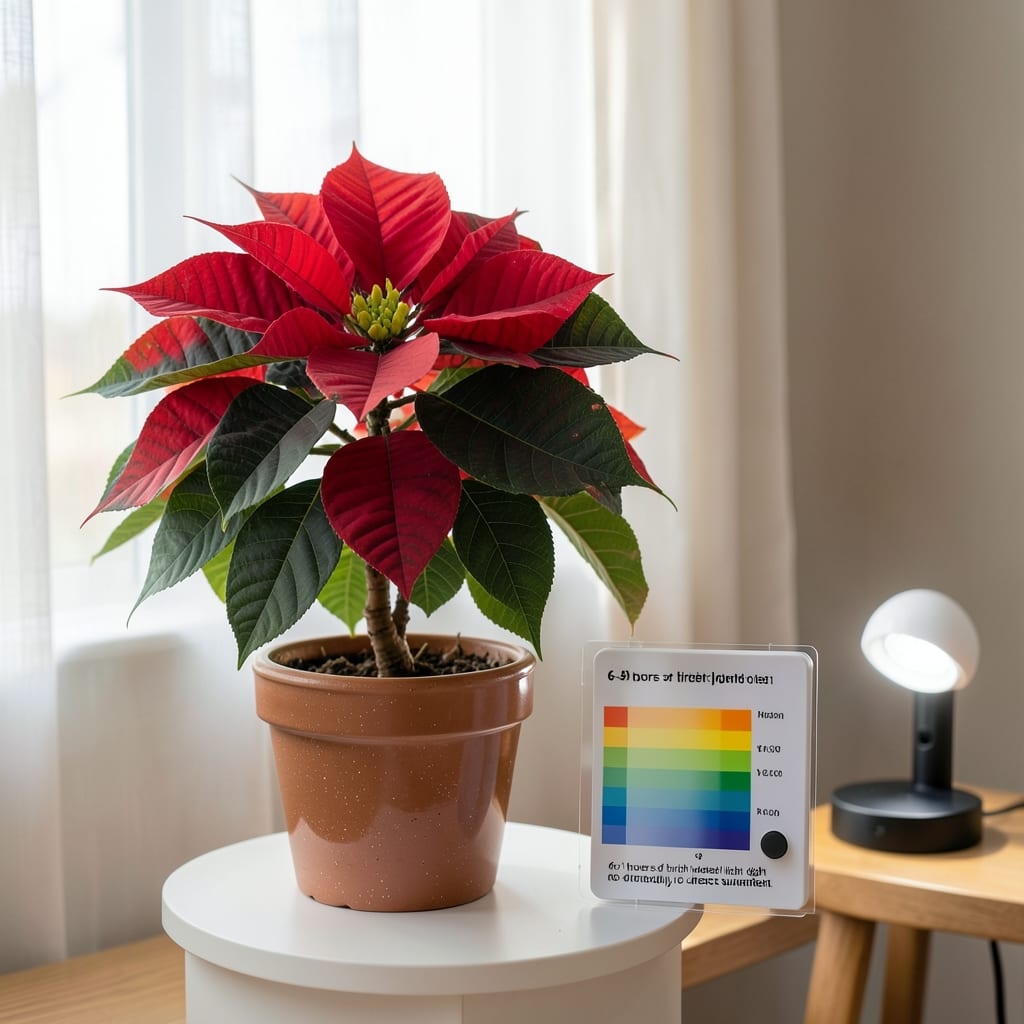
If your 🎄 poinsettia plant looks more sad than festive this holiday season, the answer might be simpler than you think—it’s all about how much light it needs. Too much direct sun can scorch those vibrant leaves, while too little dims the magic before Christmas. The secret to keeping your poinsettia thriving lies in understanding its ideal light needs, which are easier to master than you’d expect.
Poinsettias crave bright indirect light, about 6-8 hours daily, but they can’t handle harsh midday rays. Think of it like a cozy spot near a window where the sun peeks in gently—like an east or west-facing room where the light is soft but abundant. Getting this balance right is the key to those show-stopping red bracts that make the holidays feel complete.
I’ve seen firsthand how a little adjustment—like moving a plant from a dim corner to a sunlit shelf—can transform its health in just a few weeks. The good news? Even if you’ve struggled before, it’s never too late to fix it. Whether you’re dealing with leggy stems or lackluster color, I’ll show you exactly how to tweak the light and bring back that holiday glow.
From choosing the perfect window to supplementing with grow lights, this guide will walk you through every step. By the end, your poinsettia will be the star of your season—no guesswork required. Let’s get started!

Ideal light requirements for poinsettias: balancing brightness and indirect sun
Poinsettias thrive in bright indirect sunlight, making them perfect for indoor holiday decor. These plants need 6-8 hours of light daily, but direct sun can scorch their delicate red bracts. The key is mimicking their natural understory habitat—think dappled sunlight filtering through trees.
In summer months, poinsettias can handle slightly more light, but avoid placing them near south-facing windows where harsh rays dominate. During winter, when natural light dims, supplement with artificial grow lights if needed to maintain their vibrant color.
Your poinsettia’s light needs change seasonally. In spring and fall, they adapt well to moderate indoor lighting, but for peak blooming in winter, they require consistent brightness. Without enough light, their leaves turn pale, and those stunning holiday colors fade.
🌱 Poinsettia Light Requirements Summary
| Season | Light Needs | Best Location | Artificial Supplement |
|---|---|---|---|
| Spring | 6+ hours bright indirect | East/west window | None needed |
| Summer | Morning sun, afternoon shade | 3-5 ft from window | Sheer curtain filter |
| Fall | 6-8 hours bright indirect | South-facing window with filter | Grow light 12-14 hrs/day |
| Winter | 12+ hours darkness daily | Brightest window available | LED grow bulb 6-8 hrs |
For optimal growth, place your poinsettia within 3-5 feet of an east or west-facing window. This distance prevents leaf burn while ensuring sufficient light penetration. If your home lacks natural light, a south-facing window with a sheer curtain works too—just avoid direct midday sun.
Poinsettias are sensitive to light intensity. Too little causes leggy stems and weak color, while too much leads to brown leaf tips and faded bracts. Rotate your plant quarter-turn weekly to ensure even light exposure and prevent one-sided growth.
In winter months, when days shorten, your poinsettia needs 12+ hours of darkness daily to trigger blooming. Use blackout curtains or move the plant to a dark closet for 14 hours each night starting in early October for best results.
If you notice pale leaves or weak stems, your poinsettia isn’t getting enough light. Move it closer to a window or add a grow light 6-8 inches above the plant. For artificial lighting, use a full-spectrum LED bulb (6400K color temperature) for 12-14 hours daily.
Remember, poinsettias are tropical plants that naturally grow under forest canopies. Recreate this environment indoors by providing bright but diffused light. With the right lighting, your poinsettia will reward you with bold colors and lush foliage all holiday season.
Signs your poinsettia isn’t getting the right light (and how to fix it)
If your poinsettia’s leaves are turning yellow or brown, it’s often a sign of too much direct sunlight. I’ve seen this happen when plants sit near south-facing windows during peak afternoon sun. The edges of leaves crisp and dry out—almost like they’ve been sunburned. To fix this, move your plant 3-5 feet back from the window or use a sheer curtain to diffuse the light.
On the flip side, pale green or leggy stems mean your poinsettia isn’t getting enough light. These plants stretch toward the nearest light source, creating weak, elongated stems that can’t support the heavy bracts. If you notice this, place your poinsettia in a brighter spot—like an east or west window—and consider adding a grow light if natural light is insufficient.
⚠️ Warning: Common Lighting Mistakes
❌ Too much sun: Brown leaf tips, crispy edges, faded bracts. Fix: Move to indirect light or add sheer curtain.
❌ Too little light: Leggy stems, pale leaves, weak growth. Fix: Relocate to brighter spot or supplement with grow light.
❌ Inconsistent light: Buds drop before blooming. Fix: Maintain 6-8 hours daily light exposure.
Another red flag is when buds form but drop off before blooming. This usually happens when poinsettias receive too much light during the day or not enough darkness at night. Poinsettias need 12+ hours of complete darkness daily to trigger blooming. If your plant is in a well-lit room at night, try moving it to a dark closet or covering it with a box from late afternoon until morning.
For artificial lighting solutions, I recommend using a full-spectrum LED grow bulb (around 6400K color temperature) placed 6-8 inches above the plant. Run it for 12-14 hours daily to mimic natural light cycles. This works especially well in north-facing rooms or during winter months when daylight is scarce.
If your poinsettia’s bracts lose their vibrant color, it could mean insufficient light or nutrient deficiencies. In this case, move the plant to a brighter location and consider using a balanced fertilizer (like 10-10-10) every 4-6 weeks during the growing season. The combination of proper light and nutrients will bring back that holiday-season glow.
Pro tip: Rotate your poinsettia quarter-turn weekly to ensure even light exposure. This prevents lopsided growth and helps the plant develop uniform, bushy foliage. With these adjustments, your poinsettia will bounce back faster than you think—just give it the right light, and it’ll reward you with show-stopping color all season long. 🎄