
Light Requirements
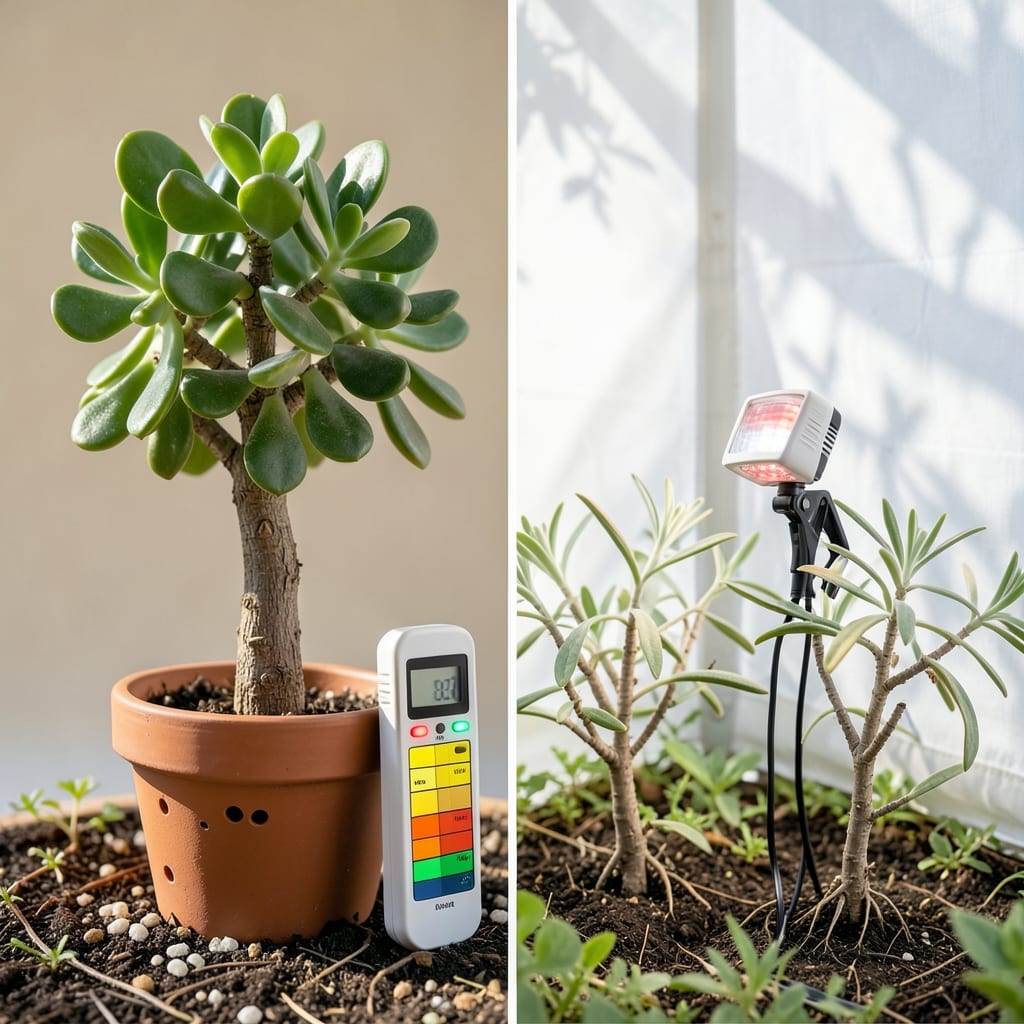
If you're wondering how much light does a jade plant need, the answer is simple: it thrives on bright indirect sunlight, which mimics its natural desert habitat without risking leaf burn. Too little light and your Jade Plant will stretch toward any available source, growing leggy and weak. Too much direct sun, and you’ll end up with crispy brown patches. Finding that sweet spot is easier than you think, and I’ll show you exactly how to spot the perfect balance for your plant’s health.
Whether you’re placing it near a window or using grow lights indoors, I’ll break down the ideal light conditions—plus how to adjust for seasonal changes. Let’s get your Jade Plant looking full and lush again in no time.
By the end, you’ll know exactly where to position your plant, how to tell if it’s getting just the right amount of light, and what to do if it starts showing stress. Your Jade Plant’s happy, healthy glow starts with understanding its light needs—and I’ve got you covered.

Jade plant light requirements: the ideal bright indirect sun balance explained
Jade plants (Crassula ovata) originate from the arid regions of South Africa, where they bask in bright sunlight with some natural filtering. This means your jade plant craves bright indirect light—think of it as morning sun with afternoon shade. In my experience, this balance prevents the two most common light-related issues: leggy growth from insufficient light and sunburn from too much direct exposure.
When I first started growing jade plants, I made the mistake of placing mine in a south-facing window, thinking more light was always better. Within weeks, the leaves turned a crispy brown. That’s when I learned about the 60% light rule: jade plants need 4-6 hours of bright indirect light daily, with only 2-3 hours of direct sun at most. This mimics their natural habitat where sunlight is intense but filtered through other vegetation.
To visualize this, imagine placing your jade plant near an east-facing window where it gets gentle morning sunlight, or a west-facing window with filtered afternoon light. If you’re unsure about your window’s intensity, a simple test is to hold your hand near the plant. If you can comfortably read a book with the light shining through, it’s likely the right bright indirect light level.
| Light Condition | Ideal Duration | Signs of Correct Light | Window Placement |
|---|---|---|---|
| Bright Indirect Light | 4-6 hours daily | Thick, glossy green leaves | East or west window, 2-3 feet away |
| Direct Sunlight | 2-3 hours max | Leaves stay firm, no browning | South window with sheer curtain |
| Low Light | Less than 3 hours | Leggy stems, pale leaves | North window or deep indoors |
The seasonal shift in sunlight is another critical factor. During summer months, when the sun is more intense, your jade plant may need to be moved slightly farther from the window or given a sheer curtain to filter the light. In winter, when natural light is scarce, you might need to supplement with a grow light to maintain those 4-6 hours of bright indirect light. I’ve found that a simple LED grow light on a timer for 6 hours a day works wonders during the shorter daylight hours.
One of the easiest ways to tell if your jade plant is getting the right amount of light is to observe its leaf color and growth pattern. Healthy jade plant leaves are thick, glossy, and a vibrant green. If you notice the leaves turning yellow or brown along the edges, it’s a sign of too much direct sun. On the other hand, if the leaves are pale or stretched out, your plant isn’t getting enough light. These visual cues are your plant’s way of communicating its needs, and paying attention to them will keep your jade plant thriving.
For those of us with limited natural light, artificial lighting can be a game-changer. I’ve successfully used full-spectrum LED grow lights placed about 6-12 inches above the plant for 12-14 hours a day. This mimics the long daylight hours jade plants experience in their native habitat. Just
If you’re growing your jade plant outdoors, it’s important to acclimate it gradually to direct sunlight. Start by placing it in a shaded area for a few hours a day, then slowly increase its exposure over the course of a week or two. This process, known as hardening off, helps prevent sunburn and shock. Once acclimated, your jade plant can handle a few hours of direct sunlight, especially during the cooler parts of the day like early morning or late afternoon.
Ultimately, the key to perfect jade plant lighting is observation and adjustment. Every home’s light conditions are unique, so don’t be afraid to experiment with different placements and monitor your plant’s response. With the right balance of bright indirect light, your jade plant will reward you with thick, vibrant leaves and a sturdy, compact growth habit that’s the envy of any plant collection.
🌿
How to adjust your jade plant’s light exposure for perfect growth
Adjusting your jade plant’s light exposure doesn’t have to be complicated. The key is creating a consistent routine that mimics its natural desert environment. Start by evaluating your home’s natural light sources. If your jade plant is currently in a south-facing window, it’s likely getting too much direct sun during peak hours. Move it 2-3 feet back or add a sheer curtain to diffuse the light while maintaining brightness.
For east-facing windows, your jade plant will receive gentle morning sun—perfect for its needs. Place it within 2 feet of the window to ensure it gets those crucial 4-6 hours of bright indirect light. West-facing windows work well too, but be mindful of the intense afternoon sun. Rotate your plant quarter-turns every few days to ensure even growth and prevent it from leaning toward the light.
If your home lacks sufficient natural light, grow lights are a game-changer. I recommend using a full-spectrum LED grow light placed 6-12 inches above your jade plant. Run it for 12-14 hours daily to simulate long daylight hours. Position the light so it covers the plant evenly, and adjust the height as your jade plant grows taller. This setup works especially well during winter months when natural light is scarce.
Seasonal adjustments are crucial. In summer, when the sun is most intense, move your jade plant to a spot with dappled shade or use a sheer curtain to prevent sunburn. During winter, when days are shorter, supplement with a grow light or rotate your plant to different windows to ensure even exposure. I’ve found that monitoring your plant’s leaf color is the easiest way to gauge if adjustments are needed.
For outdoor enthusiasts, transitioning your jade plant from indoors to outdoors requires patience. Start by placing it in a shaded area for 1-2 hours daily, gradually increasing exposure over 1-2 weeks. This hardening-off process prevents shock and allows your plant to adjust to the stronger sunlight. Once fully acclimated, your jade plant can handle 2-3 hours of direct sun in the morning or late afternoon.
Remember, every home’s light conditions are unique. Don’t hesitate to experiment with different placements and observe your plant’s response. The goal is to achieve that perfect balance of bright indirect light—where your jade plant stays compact, vibrant, and healthy. With these adjustments, you’ll have a thriving jade plant that’s the star of your space.
☀️