
Size
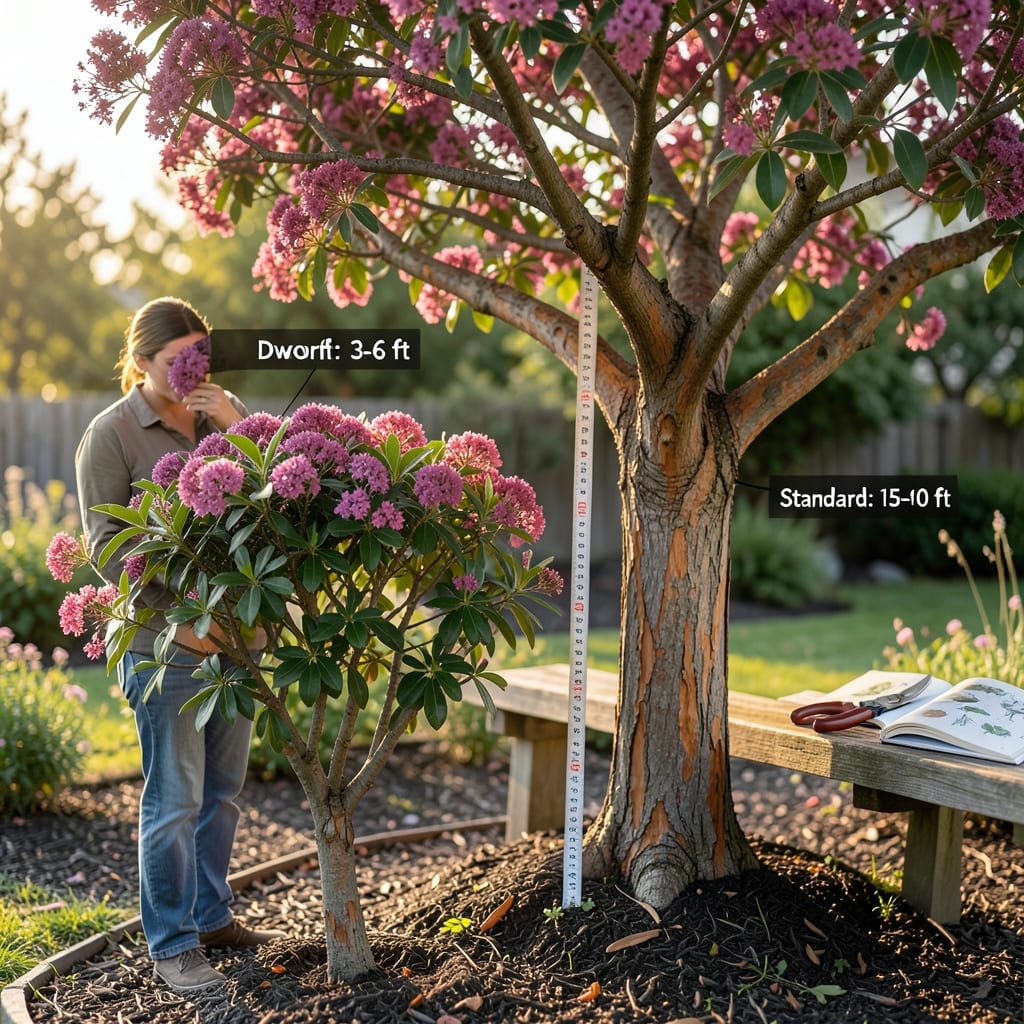
Curious about how tall crape myrtles can grow? These stunning 🌸 trees can range from compact shrubs to towering giants, making them incredibly versatile for any landscape.
With the right variety, you could end up with a 6-foot dwarf perfect for small patios or a 30-foot statement tree that adds drama to large yards. The key to choosing the right size lies in understanding each type's growth habits.
From selecting the perfect variety for your space to learning how to control their height through simple pruning techniques, I'll walk you through everything you need to know. Whether you're working with limited space or dreaming of a grand backyard centerpiece, crape myrtles offer endless possibilities.
Let's explore how to match these beautiful trees with your garden vision while keeping them at the perfect height for your needs.


Crape myrtle height by variety: from dwarf to towering giants
Crape myrtles are one of the most versatile landscape trees, offering heights ranging from 6 feet to over 30 feet depending on the variety. Whether you're designing a cozy patio corner or a grand backyard focal point, there's a crape myrtle perfect for your space. The key lies in understanding how each type grows and matures.
Dwarf varieties like 'Acoma' or 'Centennial' stay between 6-12 feet, ideal for small gardens or container planting. On the other end, standard varieties such as 'Muskogee' or 'Natchez' can reach 20-30 feet, creating dramatic vertical accents. Your choice depends entirely on your available space and design goals.
Here's a quick visual guide to help you compare the most popular crape myrtle varieties and their mature heights:
| Variety | Mature Height | Best For | Sun Needs |
|---|---|---|---|
| 'Acoma' | 6-8 ft | Containers, small patios | Full sun |
| 'Centennial' | 6-10 ft | Urban gardens, foundation planting | Full sun |
| 'Tonto' | 10-15 ft | Medium yards, privacy screens | Full sun |
| 'Muskogee' | 20-25 ft | Large landscapes, focal points | Full sun |
| 'Natchez' | 25-30 ft | Backyard statements, shade trees | Full sun |
When selecting your crape myrtle, consider not just the mature height but also the growth rate. Dwarf varieties typically reach their mature size within 3-5 years, while standard trees may take 7-10 years to fully develop. This timeline helps you plan for long-term spacing and maintenance needs.
Another factor influencing height is your climate zone. Crape myrtles thrive in USDA zones 6-9, but in warmer zones (like 8-9), they grow faster and taller. In cooler zones (like 6-7), their growth may be slightly stunted but still vibrant. Always check your local climate conditions before planting.
For small spaces, consider container planting with dwarf varieties. You can easily move them to optimize sunlight or protect them from harsh winters. Just ensure your container has adequate drainage—crape myrtles hate soggy roots. A 15-gallon pot works well for the first few years before transplanting to the ground.
If you're aiming for a privacy screen or windbreak, semi-dwarf varieties like 'Tonto' or 'Rapid Fire' (10-15 feet) are excellent choices. They grow quickly enough to provide seasonal privacy while staying manageable for most homeowners. Plant them 8-10 feet apart for a dense, natural barrier.
For those dreaming of a grand statement tree, standard varieties like 'Muskogee' or 'Natchez' deliver stunning height and dramatic blooms. These trees create focal points in large yards, parkways, or even commercial landscapes. Just be prepared for their mature size—plant them at least 15-20 feet away from structures, sidewalks, or driveways.
Remember, crape myrtles are deciduous, meaning they lose their leaves in winter. This seasonal change can make them appear shorter during dormancy, but they'll burst back to life in spring with fresh foliage and vibrant flowers. Their height is most impressive during the growing season when they're in full bloom.
How to control crape myrtle growth: pruning tips for different heights
Once you've chosen your crape myrtle variety, maintaining its ideal height becomes essential—especially if you're working with limited space or aiming for a specific look. The good news? Crape myrtles respond beautifully to pruning, allowing you to shape them while encouraging healthier growth and more abundant blooms. Whether you have a 6-foot dwarf or a 30-foot giant, these techniques will help you keep it at your desired height.
For dwarf varieties (6-12 feet), light pruning is all you need. Focus on removing any dead or crossing branches in late winter or early spring, just before new growth begins. Avoid heavy pruning—these varieties stay compact naturally, and over-pruning can stress them. A quick trim to maintain their shape and remove any water sprouts (suckers) will keep them looking tidy without stunting their growth.
Here’s a step-by-step guide to pruning crape myrtles for height control, tailored to different varieties:
- 🌿 Timing: Prune in late winter or early spring (February-March) before buds swell. Avoid pruning in fall—it encourages new growth that won’t harden off before winter.
- ✂️ Tools: Use clean, sharp pruners or a pruning saw for thicker branches. Sterilize tools with rubbing alcohol to prevent disease.
- 📏 Height Target: For dwarf varieties, trim to maintain their natural shape. For standard trees, remove up to 1/3 of the canopy to control height without harming the tree.
- 🌸 Bloom Preservation: Crape myrtles flower on new wood. Prune just above a bud or branch collar to encourage vibrant blooms the following season.
- 🚫 Avoid: Never prune the trunk or main branches to "stunt" growth—this causes stress and weakens the tree. Focus on outer branches.
If you're dealing with a taller variety (15+ feet), you’ll want to prune more aggressively to maintain safety and manageability. Start by removing any dead, diseased, or weak branches first. Then, focus on thinning the canopy by cutting back branches that are growing inward or crossing each other. This not only controls height but also improves air circulation, reducing the risk of fungal diseases.
For privacy screens or windbreaks, consider a technique called pollarding. This involves cutting back branches to a specific height (like 6-8 feet) to encourage dense, bushy growth. Pollard your crape myrtle in late winter, and you’ll see a fuller, more compact screen by summer. Just be prepared for a temporary drop in height—new growth will fill in quickly.
One common mistake gardeners make is over-pruning crape myrtles, which can lead to a broom-like appearance with excessive water sprouts. To avoid this, stick to the 1/3 rule: Never remove more than one-third of the tree’s canopy in a single pruning session. This ensures the tree stays healthy and continues to thrive. If you’ve already over-pruned, don’t worry—your crape myrtle will bounce back with proper care and patience.
Finally, remember that pruning isn’t just about height control—it’s also about health and aesthetics. A well-pruned crape myrtle will have a balanced shape, fewer pests, and more vibrant blooms. With the right techniques, you can enjoy your crape myrtle’s natural beauty while keeping it at the perfect height for your space. Happy pruning! 🌳