
Light Requirements
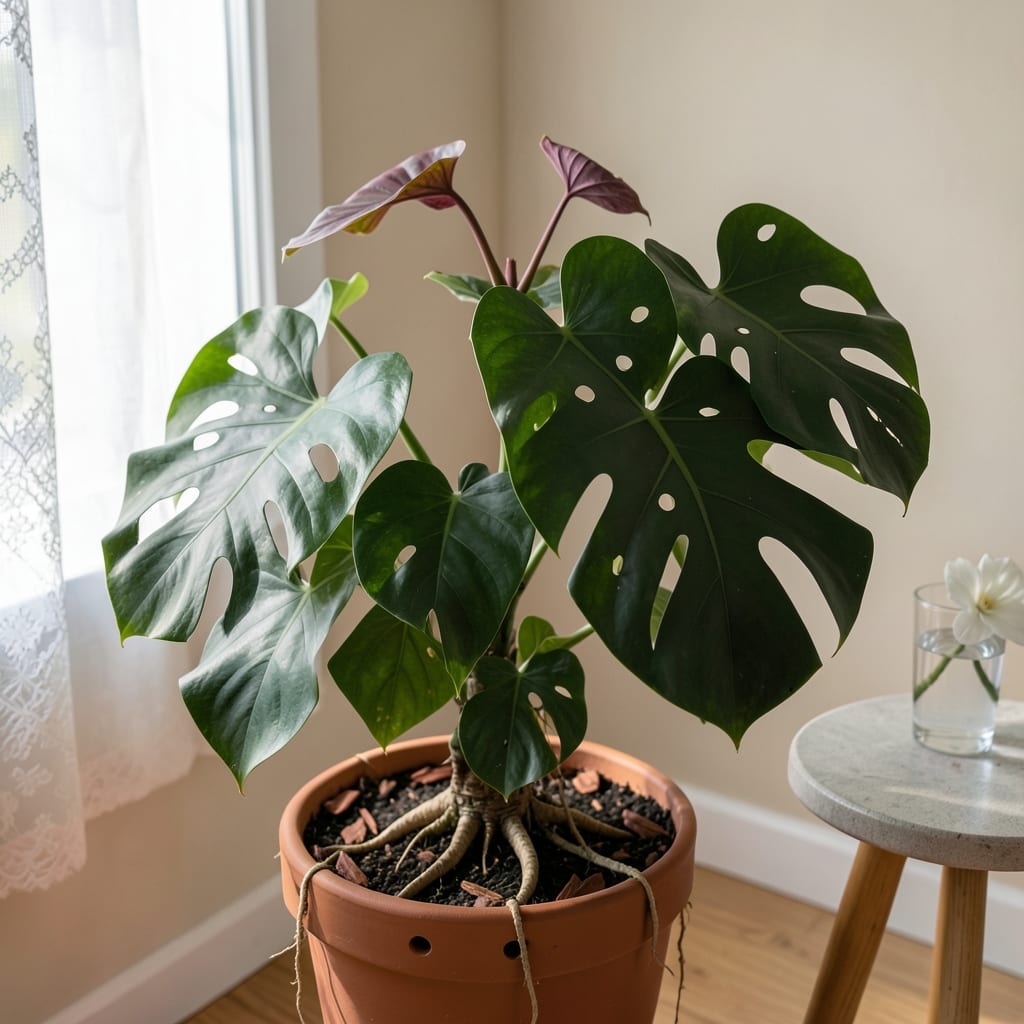
If your Swiss Cheese Plant 🌿 is struggling with dull leaves or slow growth, you're probably dealing with the wrong light conditions. This tropical beauty thrives on bright indirect sunlight, but too much direct sun or too little light can turn its stunning foliage into a sad, yellowing mess.
I've seen firsthand how a few simple adjustments can transform a struggling plant into a lush, thriving vine. The key is understanding exactly how much light your Swiss Cheese Plant needs - not too much, not too little, but just right to keep those iconic split leaves looking their best.
Whether you're dealing with a low-light apartment or a sunny windowsill, I'll show you how to create the perfect lighting environment. We'll cover everything from recognizing the signs of poor lighting to choosing the best artificial lights when natural light falls short.
Let's get your plant the ideal light it deserves so you can enjoy those beautiful variegated leaves year-round. Your Swiss Cheese Plant will thank you with faster growth and more dramatic foliage than ever before!

Optimal light requirements for swiss cheese plant growth and variegation
The Swiss Cheese Plant (Monstera deliciosa) thrives in bright indirect light, mimicking its native tropical understory habitat. This means it needs 4-6 hours of filtered sunlight daily—think dappled shade through tree leaves rather than harsh midday rays. Too little light weakens growth, while too much causes unsightly leaf burn. The key is finding that perfect balance for vibrant variegation and healthy foliage.
Your plant's variegated leaves (like the 'Albo Variegata' variety) actually depend on light to maintain their striking patterns. Without enough light, those beautiful white or yellow splashes fade to plain green. I've seen variegated plants revert completely to green when deprived of proper light—it's heartbreaking but completely reversible with the right adjustments!
For indoor growing, position your plant 1-3 feet from an east or west-facing window. South-facing windows work too, but you'll need to use a sheer curtain to diffuse the intensity. Remember, direct midday sun (especially from south windows) can scorch leaves within hours, turning them crispy brown at the edges—a classic sign of light stress.
Outdoor gardeners can place Swiss Cheese Plants in partial shade gardens or under large trees where they receive morning sun and afternoon shade. In warmer climates (zones 10-12), they can tolerate morning sun only (6 AM-12 PM) with afternoon shade protection. The goal is to avoid the 10 AM-4 PM sun window when UV intensity peaks.
| Light Condition | Daily Duration | Leaf Effects | Best For |
|---|---|---|---|
| Bright Indirect Light | 4-6 hours | Vibrant variegation, large fenestrations | Ideal growth |
| Low Light (<4 hrs) | 2-3 hours | Pale leaves, slow growth, no variegation | Survival only |
| Direct Sun | >2 hours | Brown crispy edges, bleached spots | Avoid completely |
| Artificial Grow Lights | 12-14 hours | Maintains variegation, compact growth | Low-light spaces |
Did you know your Swiss Cheese Plant actually grows toward light? This is called phototropism, and you'll often see new growth leaning dramatically toward the light source. If your plant starts looking lopsided, it's a clear sign it needs to be rotated quarter-turn every 2-3 weeks to grow evenly. I always place mine near a window but rotate the pot weekly—it makes a huge difference in maintaining that balanced, bushy shape.
The light spectrum matters too. Swiss Cheese Plants prefer the blue and red wavelengths found in natural daylight, which is why variegated varieties need more light than solid green ones. Blue light promotes compact growth, while red light enhances variegation. If you're using grow lights, look for full-spectrum LEDs that mimic natural sunlight to maintain those beautiful patterns.
Pro tip: If you notice new leaves emerging smaller than mature ones, your plant is likely light-starved. This is your Swiss Cheese Plant's way of conserving energy! Move it closer to a brighter spot (but still indirect) and watch those leaves grow larger over the next few weeks. I've seen plants go from producing 6-inch leaves to 18-inch beauties just by improving their light conditions.
For outdoor plants in cooler climates (zones 6-9), you can bring them inside before winter when daylight hours drop below 10 hours. Even tropical plants need their rest, but maintaining at least 6 hours of light during winter months prevents dormancy and keeps growth steady. A simple south-facing windowsill with sheer curtains works perfectly for this seasonal transition.
Remember, the quality of light matters more than quantity. Your Swiss Cheese Plant would rather have gentle, consistent light than harsh, intermittent sunlight. Think of it like raising a tropical child—you want warmth and stability, not unpredictable blasts of heat. With the right light balance, you'll be rewarded with faster growth, larger leaves, and those coveted variegated patterns that make this plant so special.
Signs of wrong light exposure and how to fix them
Your Swiss Cheese Plant 🌿 sends clear signals when it's not getting the right light. The most common red flags include yellowing leaves, brown leaf tips, and pale, stretched-out growth. These symptoms don't just affect looks—they indicate your plant is either starving for light or burning from too much sun.
I've helped countless plant parents revive their Swiss Cheese Plants by recognizing these early warning signs. The key is matching the symptoms to the specific light issue—whether it's underlighting in a dim corner or overlighting near a south-facing window. Let's break down what each symptom means and how to fix it.
Underlighting symptoms include slow growth, small leaves, and dull variegation. Your plant might look leggy as it stretches toward any available light source. This happens when your Swiss Cheese Plant isn't getting enough bright indirect light—typically 4-6 hours daily.
For variegated varieties like Monstera deliciosa 'Albo Variegata', insufficient light causes the white or yellow patterns to fade completely. This is because the plant prioritizes producing green chlorophyll over maintaining variegation when light is scarce. The fix? Move your plant closer to a bright window or supplement with grow lights.
🌱 Light Exposure Troubleshooting
Underlighting
- 🌱 Slow growth
- 🌱 Small, pale leaves
- 🌱 Leggy stems
- 🌱 Faded variegation
Fix: Move to brighter spot or add grow lights.
Overlighting
- 🌱 Brown leaf tips
- 🌱 Crispy edges
- 🌱 Yellow patches
- 🌱 Bleached variegation
Fix: Move to indirect light or sheer curtain.
On the opposite end, overlighting causes brown crispy edges, yellow patches, and bleached variegation. These are classic signs of sunburn, where the intense rays damage your plant's delicate leaves. If you notice these symptoms, your Swiss Cheese Plant is likely getting direct afternoon sun, which is far too harsh for its tropical origins.
The solution is simple: filter the light. Place a sheer curtain between your plant and the window, or move it to a spot that receives bright but indirect light, like a west-facing window with afternoon shade. For variegated varieties, this adjustment will help maintain those stunning patterns while preventing leaf damage.
For new leaves that emerge completely green with no variegation, your plant might be stressed from sudden light changes. This is common when moving plants between low-light and bright spots. The fix? Gradually acclimate your Swiss Cheese Plant by moving it incrementally closer to its new light source over 1-2 weeks. This gives it time to adjust without shocking its system.