
Orchid Care
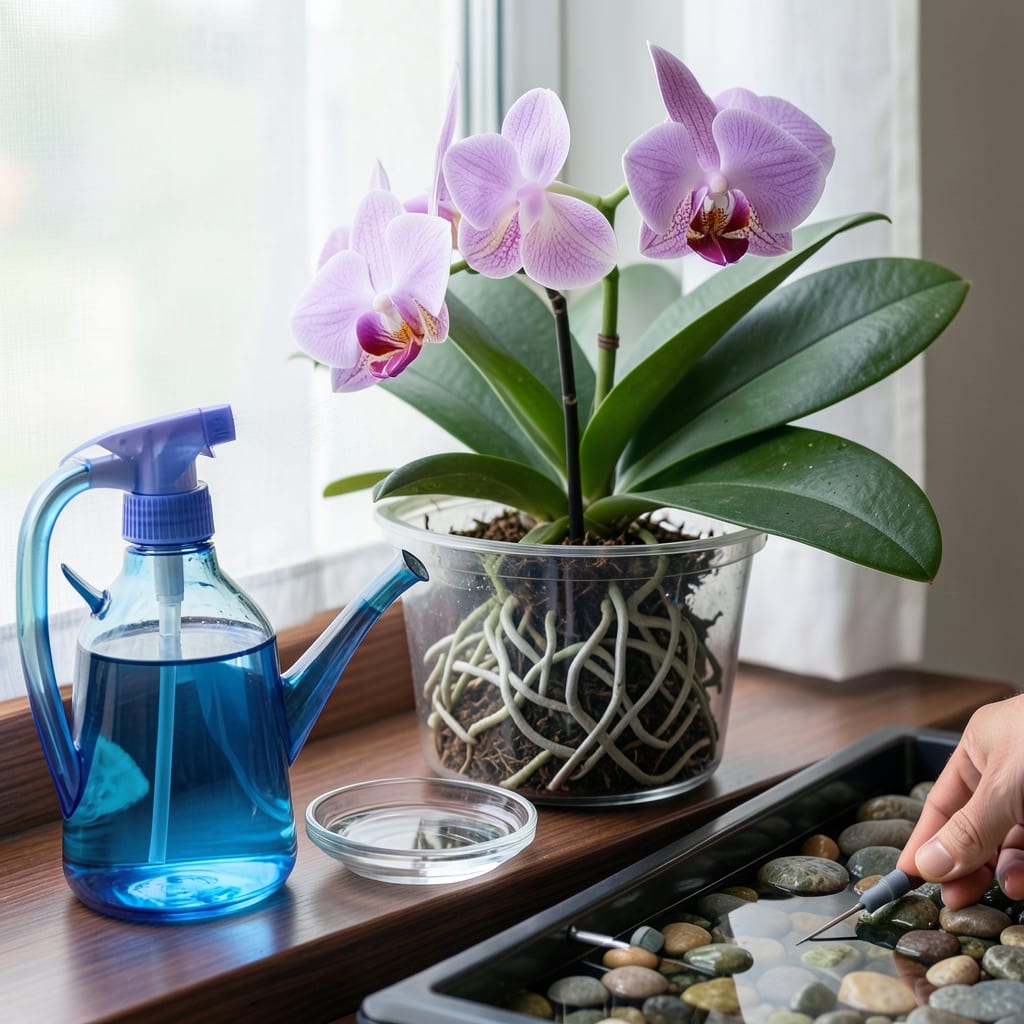
Orchid watering schedule for dry climates: leaf color as your guide
When raising orchids in dry environments, your watering routine can’t rely on guesswork—it must adapt to leaf color, air humidity, and seasonal heat. Unlike tropical orchids, those in arid climates need less frequent but deeper hydration. The key? Watch for silvering leaves (a thirst signal) and wrinkled pseudobulbs (a cry for water).
Most orchid growers in dry zones make two critical mistakes: overwatering to "keep them hydrated" or underwatering to "avoid root rot." Both lead to leaf yellowing or root desiccation. The solution? A 7-10 day schedule with adjustments based on leaf color and environmental stress. Let’s break it down by what your orchid’s leaves are telling you.
📊 Summary Table: Watering by Leaf Color in Dry Environments
For example, my Phalaenopsis orchid in Arizona’s 35°F (2°C) winters thrives on a biweekly watering schedule when its leaves stay bright green. But during 100°F (38°C) summer days, I increase frequency to every 5 days and use a pebble tray with water to boost humidity around the pot.
Pro tip: Use a moisture meter or the "finger test"—insert your finger 1 inch into the mix. If it feels dry, water; if damp, wait. Dry environments demand this precision because orchid roots absorb moisture differently in low-humidity air.
Another game-changer? Pot material matters. Terracotta pots dry faster than plastic, so terracotta-grown orchids need watering 2-3 days earlier than plastic-potted varieties. My Cattleya orchids in clay pots get water every 6 days in summer, while their plastic-potted siblings wait 9 days.
Watch for root health too. Healthy roots are green or silvery; rotting roots turn black and mushy. If you spot black roots, reduce watering to every 14 days and repot in fresh orchid bark mix. This is how I saved my Dendrobium after a summer of overzealous watering.
Humidity hacks: Place your orchid on a humidity tray (pebbles + water) or group pots together to create a microclimate. I’ve seen 40% humidity jump to 60% just by clustering 3 orchids. Aim for 50-70% humidity—any lower, and you’re fighting transpiration stress.
Finally, seasonal shifts demand flexibility. Summer heat increases evaporation, so I water morning-only to prevent fungal risks from evening moisture. Winter? I cut back to every 3 weeks as growth slows. Your orchid’s leaf plumpness is the best barometer—wrinkled leaves scream "hydrate now!"
Remember: Orchids in dry climates are not cacti. They need consistent moisture, not drought. The trick is balancing frequency with depth—always water until water runs out the drainage holes, then let excess drain completely. This mimics their natural epiphytic habitat where roots get short, intense rains followed by drying periods.
Seasonal adjustments: how to modify watering in extreme heat vs. mild dry conditions
Seasonal shifts completely rewrite your orchid’s watering rules in dry environments. What works in mild spring fails spectacularly in summer’s 105°F (40°C) heat. My Vanda orchids in Southern California need daily misting in July but thrive on weekly watering in March. The key is matching your schedule to temperature, humidity, and growth cycles.
Start by tracking your local heat index. When temperatures exceed 90°F (32°C), evaporation doubles, forcing me to water my Cymbidiums every 4-5 days instead of the usual 7-10 days. Use a hygrometer to monitor humidity—aim for 50-70%. Below 40%, even bright green leaves signal thirst faster than usual.
🌡️ Numbered Highlights: Seasonal Watering Adjustments for Orchids
- 🌿 Spring (50-70°F / 10-21°C): Every 7-10 days. New growth demands consistent moisture—water when top 1 inch of mix feels dry.
- ☀️ Summer (90°F+/32°C+): Every 4-5 days. Increase morning watering and use pebble trays to combat low humidity. Avoid evening watering to prevent fungal growth.
- 🍂 Fall (60-80°F / 15-27°C): Every 10-14 days. Growth slows—reduce frequency but maintain deep soaks to prevent root stress.
- ❄️ Winter (Below 60°F / 15°C): Every 3-4 weeks. Most orchids enter dormancy—water only when pseudobulbs feel light and shriveled.
- 🌧️ Rainy Season: Reduce by 50%. Overhead watering can cause root rot—use a watering can with a fine rose for targeted hydration.
Indoor orchids face different challenges. My Phalaenopsis near a south-facing window gets daily watering in summer because the glass acts like a greenhouse, trapping heat. To fix this, I move pots 3 feet back from the window and use frosted window film to diffuse light. For outdoor orchids, afternoon shade is non-negotiable—direct sun turns leaves yellow within days.
Watch for leaf curl in heatwaves—this means your orchid is wilting from transpiration stress. Immediately move it to shade and soak the roots for 10 minutes. I’ve revived wilted Oncidiums this way after just 2 hours of afternoon sun exposure. Conversely, wrinkled pseudobulbs in winter mean it’s time to hydrate—even if the air feels dry.
Pro tip: Group orchids to create a microclimate. Three Dendrobiums clustered together maintain 60% humidity around each other, cutting my summer watering needs by 30%. Avoid placing orchids near HVAC vents or heat sources—the forced dry air accelerates dehydration.
Finally, adjust your pot’s drainage seasonally. In summer, use larger pots (1-2 inches wider) to hold more moisture, while in winter, smaller pots help roots dry faster. My Cattleyas in 6-inch pots need watering every 5 days in summer but stretch to 3 weeks in winter when repotted into 4-inch containers. This simple swap saves 90% of my orchids from winter rot.
Remember: Orchids in dry climates are not one-size-fits-all. Your Paphiopedilum might love daily misting, while your Vanda thrives on weekly soaks. The only constant? Monitor, adjust, and trust your orchid’s signals—its leaves will tell you everything you need to know. 🌸