
Trees
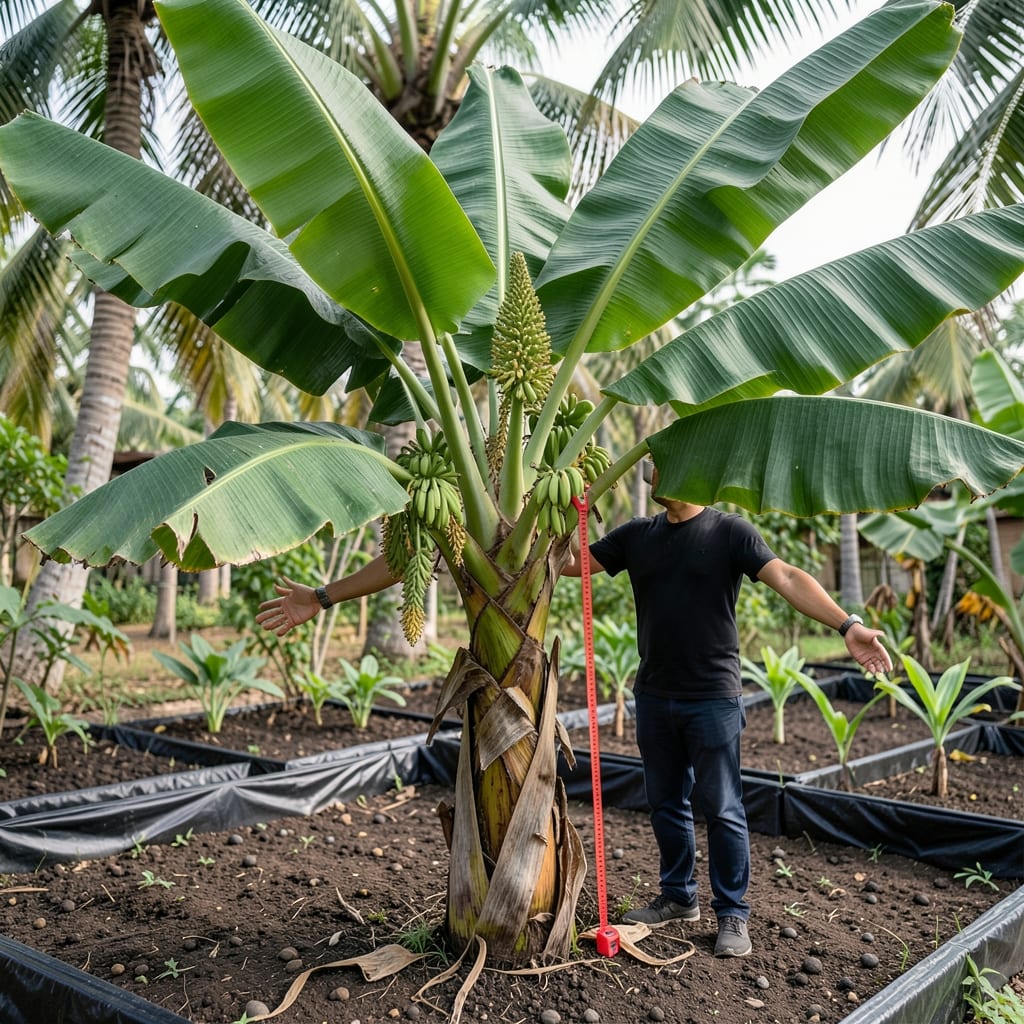
If you're dreaming of harvesting your own 🍌 banana tree but wondering how tall they can grow, the answer might surprise you—some varieties stretch skyward like jungle giants while others stay perfectly manageable in containers. The height of your banana tree depends entirely on the variety you choose, with dwarf types reaching just 8-12 feet and commercial varieties soaring to 20-30 feet or taller.
This isn’t just about aesthetics—your space and climate play a huge role in how fast and tall your banana tree will grow. Whether you're in a tropical paradise or a cooler zone with Zone 9b winters, knowing the right variety for your conditions is the key to success. Let’s break down the fastest-growing types and how to maximize their potential without sacrificing your yard (or sanity).
Picture this: a 10-foot banana tree thriving in your backyard or even a large pot on your balcony, producing fruit in as little as 9-12 months. But how do you get there? It starts with selecting the right variety—whether you want a compact 'Dwarf Cavendish' or a towering 'Lady Finger'—and giving it the care it craves.
I’ll show you exactly how to learn how each type grows, from seedling to fruiting, and share pro tips to keep your banana tree healthy and happy—no matter how tall it dreams of becoming. Ready to turn your space into a tropical oasis?

Banana tree height by variety: from dwarf to giant types explained
Choosing the right banana tree variety is key to managing its height—some stay under 10 feet while others tower over 25 feet. The Dwarf Cavendish, for example, is perfect for small gardens, while the Red Dacca can reach skyscraper heights. Let’s break down the most popular types and their mature sizes to help you pick the best fit for your space.
Most banana trees fall into three height categories: dwarf (8-12 ft), semi-dwarf (12-18 ft), and standard (20-30 ft). The variety you choose will dictate whether you need a large backyard or can grow it in a container. Let’s explore the specifics of each type to help you decide which one suits your gardening goals.
🌱
| Variety | Mature Height | Growth Rate | Best For |
|---|---|---|---|
| Dwarf Cavendish | 8-12 ft | Moderate (2-3 ft/year) | Containers, small gardens |
| Lady Finger | 12-18 ft | Fast (3-5 ft/year) | Backyards, tropical climates |
| Red Dacca | 20-30 ft | Very Fast (5+ ft/year) | Large gardens, tropical regions |
| Ice Cream Banana | 6-10 ft | Slow-Moderate (1-2 ft/year) | Containers, urban gardens |
| Gros Michel | 25-30 ft | Fast (4-6 ft/year) | Large estates, tropical farms |
The Dwarf Cavendish is my top recommendation for beginners or those with limited space. It stays under 12 feet and thrives in containers, making it ideal for patios or balconies. Meanwhile, the Red Dacca is a giant—perfect for tropical climates where space isn’t an issue. If you’re growing bananas for fruit, the Lady Finger is a great middle-ground option, offering a balance of manageable height and productivity.
For urban gardeners, the Ice Cream Banana is a standout because it stays under 10 feet and produces edible, creamy fruit. Its slower growth rate also means less maintenance. If you’re aiming for a dramatic, tropical look, the Gros Michel will give you that 25+ foot statement plant—but only if you have the room and climate to support it.
🌿
When selecting a variety, consider your USDA zone and available space. Dwarf varieties like the Dwarf Cavendish or Ice Cream Banana are ideal for zones 9b-11, while taller types like the Red Dacca require Zone 10+ and ample room to spread their roots. Always check your local climate conditions to ensure your chosen variety will thrive.
Another factor to consider is growth rate. Faster-growing varieties like the Lady Finger or Gros Michel can reach fruiting size in as little as 9-12 months, while slower growers like the Ice Cream Banana may take 18-24 months. If you’re impatient for fruit, opt for a faster-growing type—but be prepared for more aggressive pruning needs.
🪴
To maximize the height potential of your banana tree, provide it with well-draining soil, consistent moisture, and partial sunlight. Avoid overwatering, as soggy soil can stunt growth or cause root rot. Additionally, fertilize every 4-6 weeks during the growing season with a balanced NPK fertilizer (e.g., 10-10-10) to encourage strong, upward growth.
If you’re growing a tall variety like the Red Dacca or Gros Michel, consider installing a support stake early on to help guide the trunk upward and prevent it from bending under the weight of large leaves. This is especially important in windy climates where strong gusts can damage young, flexible trunks.
For compact varieties like the Dwarf Cavendish, regular pruning of old or damaged leaves will encourage bushier growth and prevent the plant from becoming top-heavy. This not only keeps the tree manageable but also
How fast do banana trees grow? Growth stages and height milestones
Banana trees are some of the fastest-growing plants in your garden, with certain varieties shooting up 3-5 feet per year under ideal conditions. But their growth isn’t linear—it happens in distinct stages, from a tiny seedling to a towering fruiting giant. Understanding these stages helps you predict height milestones and adjust care accordingly. Let’s walk through the timeline of banana tree growth and what to expect at each phase.
Most banana trees follow a predictable growth pattern: seedling (0-6 months), juvenile (6-18 months), mature (18-36 months), and fruiting (36+ months). The speed at which they progress depends on variety, climate, and care. For example, a Lady Finger banana might reach 10 feet in its first year, while a Dwarf Cavendish will grow more slowly, hitting 5-6 feet in the same time.
🌱
- 0-6 Months (Seedling Stage): Starts as a small plant (6-12 inches tall) with broad leaves. Growth is slow but steady, with 1-2 new leaves per month. Height gain: 1-2 feet.
- 6-12 Months (Juvenile Stage): Trunk thickens, and growth accelerates. Expect 2-3 feet of height gain this year, with leaves reaching 2-3 feet long. Ideal time to stake for support.
- 12-18 Months (Early Mature Stage): Trunk reaches 6-10 feet, and leaf size increases dramatically. This is when dwarf varieties start producing flower buds.
- 18-24 Months (Mature Stage): Maximum height potential is reached. Tall varieties like Red Dacca can grow 5+ feet per year, while dwarf types plateau around 8-12 feet.
- 24+ Months (Fruiting Stage): Height growth slows as energy shifts to producing fruit. Pruning old leaves encourages new growth cycles.
The fastest growth occurs during the juvenile and mature stages, when banana trees receive 6+ hours of sunlight, consistent moisture, and rich soil. In tropical climates (Zones 10-11), banana trees can grow up to 12 feet in a single year if given optimal care. However, cooler zones (like Zone 9b) will see slower growth, with height gains of 2-3 feet per year.
💧
Watering plays a critical role in height growth. Young banana trees need deep watering every 2-3 days to support rapid cell division in their trunks. Overwatering can cause root rot, while underwatering stunts growth. Use a moisture meter to ensure the top 6 inches of soil stay consistently damp but never soggy. Mulching with organic matter helps retain moisture and encourages upward growth.
Fertilizer is another game-changer. During the growing season (spring-fall), feed your banana tree every 4-6 weeks with a balanced NPK fertilizer (10-10-10). This ensures steady height gains and strong trunk development. Avoid high-nitrogen fertilizers, which promote leafy growth at the expense of trunk height. Instead, opt for a potassium-rich fertilizer to strengthen stems and support the weight of large leaves.
🌿
Light exposure directly impacts how tall your banana tree grows. While they thrive in partial sunlight (4-6 hours daily), full sun (8+ hours) accelerates growth but requires extra watering to prevent leaf scorch. In hot climates, provide afternoon shade to protect young leaves from burning. If growing indoors near a window, place your banana tree 1-3 feet from an east- or west-facing window to maximize indirect light.
Pruning is often overlooked but crucial for managing height. Remove old or damaged leaves to redirect energy to new growth. For tall varieties, prune one-third of the oldest leaves annually to encourage bushier, more compact growth. This not only controls height but also improves airflow, reducing the risk of fungal diseases like black sigatoka.
🌳
If you’re growing a banana tree in a container, expect slower height growth compared to in-ground plants due to root restrictions. However, dwarf varieties like the Ice Cream Banana or Dwarf Cavendish can still reach 6-10 feet in pots if given proper care. Use a large container (20+ gallons) with drainage holes and repot every 2-3 years to accommodate root growth. Container-grown banana trees may also benefit from staking to prevent toppling in windy conditions.