
Size
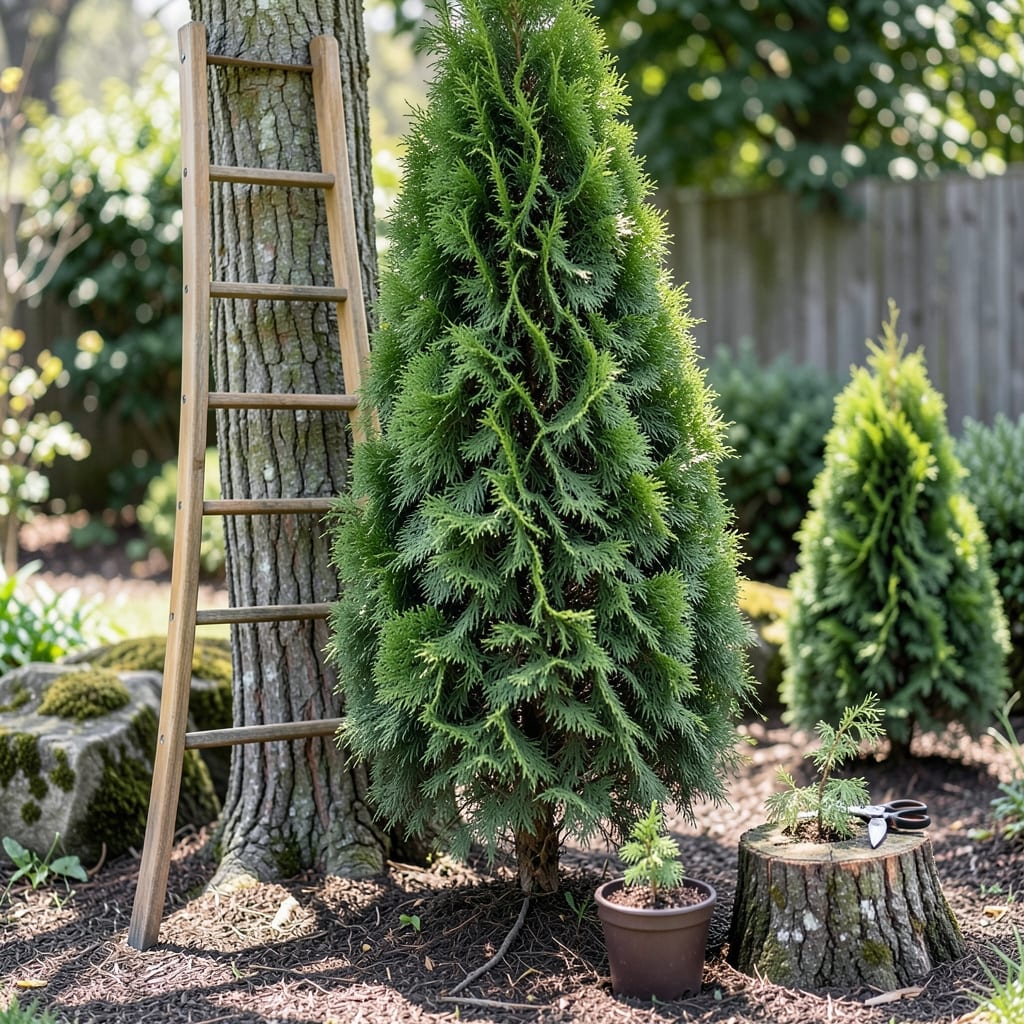
If you're wondering how tall can arborvitae grow before they turn your small yard into a dense forest, you're asking the right question. These evergreen trees offer stunning privacy and year-round beauty, but their mature size can be a game-changer for your landscape planning.
The good news is that arborvitae varieties range from dwarf cultivars that stay under 3 feet to towering giants reaching over 60 feet. Whether you're dreaming of a cozy hedge or a dramatic privacy screen, understanding these differences is the key to making the right choice for your space.
In this guide, I'll break down the height potential of popular arborvitae types, share practical tips for controlling growth through pruning, and show you creative ways to use these trees in small yards. Let's find the perfect fit for your outdoor vision.
From the compact 'Smaragd' that works beautifully in tight corners to the tall 'Emerald Green'** that creates stunning vertical interest, you'll discover how to maximize your space without sacrificing the lush greenery you love.

Arborvitae height by variety: which stay compact for small yards?
When planning your landscape, knowing how tall can arborvitae grow is crucial, especially if you have limited space. Arborvitae trees come in a stunning range of sizes, from dwarf varieties perfect for containers to towering giants that create natural privacy screens. The key is selecting the right cultivar for your yard's dimensions and your design goals.
For urban gardens or narrow lots, dwarf arborvitae varieties are game-changers. These compact plants typically mature between 3 to 6 feet tall, making them ideal for foundation plantings, small hedges, or even as standalone specimen plants in tight corners. Their slow growth rates also mean less maintenance over time.
If you're working with a moderate-sized yard, semi-dwarf varieties offer the perfect middle ground. These typically reach 10 to 15 feet at maturity, providing ample privacy without overwhelming your outdoor space. They're excellent choices for creating living room dividers or lining walkways.
For those with larger properties or who want to make a bold statement, standard arborvitae varieties can grow up to 60 feet tall. These giants are perfect for creating dramatic privacy screens or as focal points in expansive landscapes. However, their size requires careful planning and regular pruning to maintain their shape.
Here's a quick comparison to help you visualize the differences:
| Variety | Mature Height | Growth Rate | Best For |
|---|---|---|---|
| 'Smaragd' | 3-5 ft | Slow | Containers, small hedges |
| 'Emerald Green' | 12-15 ft | Moderate | Privacy screens, hedges |
| 'American Gold' | 12-15 ft | Moderate | Color contrast, mixed borders |
| 'Thuja plicata' | 40-60 ft | Fast | Large landscapes, privacy |
| 'Teddy' | 3-4 ft | Very Slow | Containers, bonsai |
One of my favorite space-saving tips is to use dwarf arborvitae in containers. Varieties like 'Smaragd' or 'Teddy' thrive in pots, allowing you to move them seasonally or place them strategically on patios, balconies, or decks. This flexibility is perfect for renters or those with limited garden space.
For urban gardens with narrow lots, consider planting semi-dwarf varieties in a staggered formation. This creates an illusion of depth while maximizing vertical space. For example, placing a 12-foot 'Emerald Green' at the back of a narrow bed with 6-foot 'American Gold' in front adds layers without overwhelming the area.
When planning your arborvitae layout, always consider mature height and spread. Even dwarf varieties need adequate space to prevent overcrowding. For instance, a 4-foot 'Teddy' should still have at least 3 feet of clearance from other plants to allow for proper air circulation and growth.
If you're unsure which variety to choose, start with a smaller specimen plant and observe how it grows in your specific conditions. Factors like sunlight exposure, soil quality, and local climate can influence final height, so a trial period is always a good idea before committing to a larger planting.
Pruning and maintenance tips to control arborvitae height naturally
Once you've chosen your arborvitae variety, pruning becomes your best tool to maintain the perfect height for your space. Unlike many plants, arborvitae respond well to pruning, allowing you to shape them without harming their health. The key is timing—prune at the right seasons and use proper techniques to encourage healthy growth while keeping your plants at your desired size.
For most arborvitae varieties, the best time to prune is late winter or early spring, just before new growth begins. This timing allows you to shape the plant while it's still dormant but ready to respond to your cuts. Avoid heavy pruning in late summer or fall, as this can stimulate tender new growth that may not harden off before winter, making it vulnerable to frost damage.
Start with light pruning in the first year to establish the basic shape. Use sharp, clean pruning shears to make cuts just above a leaf node or branch collar. This encourages branching and prevents unsightly stubs. For taller varieties like 'Emerald Green,' you might remove only the topmost growth to control height while maintaining a full, bushy appearance.
Here's a simple step-by-step guide to pruning your arborvitae for height control:
- 🌱 Step 1: Inspect - Examine your arborvitae for any dead, diseased, or crossing branches. Remove these first to improve air circulation.
- 🪴 Step 2: Shape - Decide on your desired height and shape. Use a string line if needed to create a straight, even top.
- ✂️ Step 3: Prune - Make cuts at a 45-degree angle just above a leaf node. Never cut into old wood.
- 💧 Step 4: Water - After pruning, water deeply to help the plant recover and reduce stress.
- ☀️ Step 5: Monitor - Watch for new growth and adjust pruning as needed in subsequent seasons.
One common mistake many gardeners make is over-pruning in a single session. Arborvitae can handle up to one-third of their foliage removed in a year, but removing more can stress the plant. For height control, it's better to make small, incremental cuts over several seasons rather than drastic reductions all at once.
For dwarf varieties like 'Teddy', minimal pruning is usually needed—just enough to maintain a neat shape and remove any leggy growth. These varieties grow very slowly, so you can prune them once a year to keep them looking their best. In contrast, taller varieties like 'Thuja plicata' may require more frequent attention to control their rapid growth.
Remember that proper pruning tools make all the difference. Use bypass pruners for smaller branches and loppers or a handsaw for thicker stems. Always clean your tools with rubbing alcohol between cuts to prevent the spread of disease. With the right approach, you can enjoy your arborvitae's natural beauty while keeping it at the perfect height for your space.