
Flowers
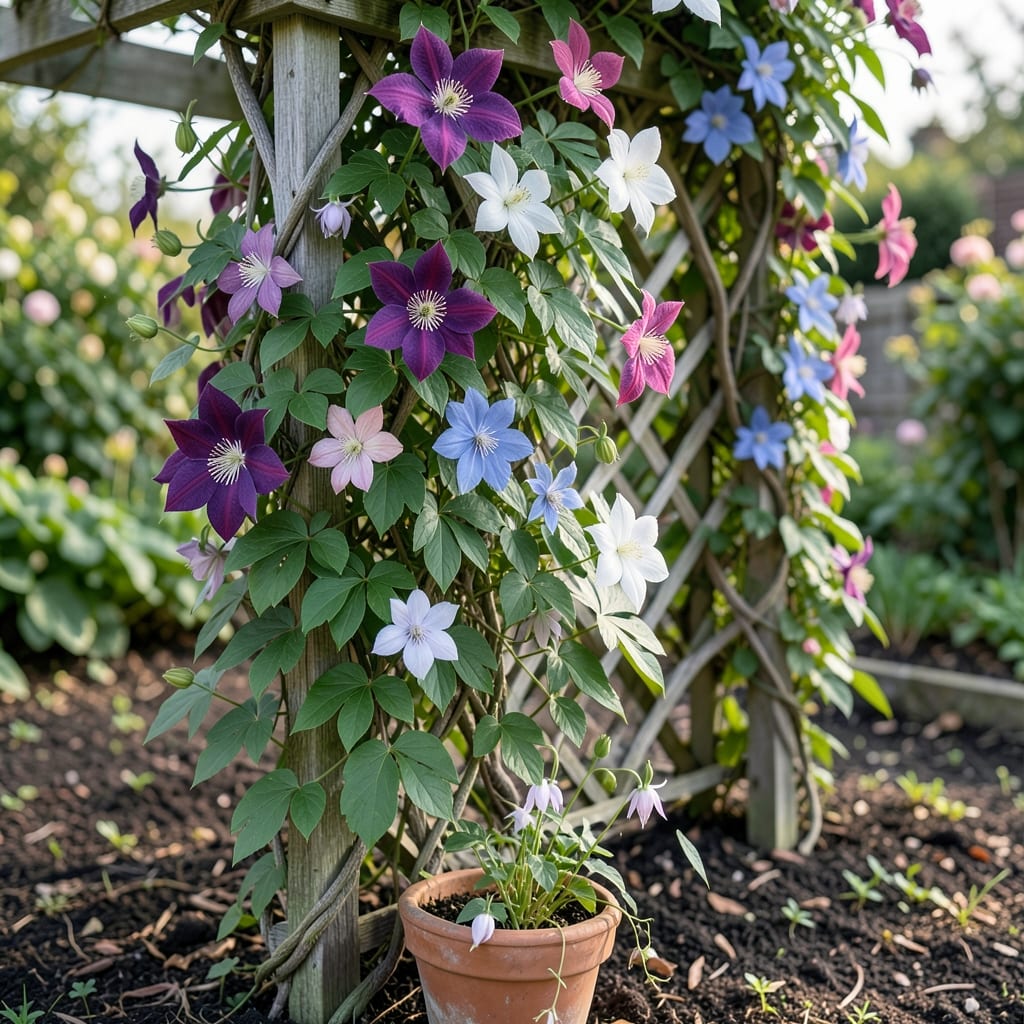
Ever wondered how tall a clematis 🌸 can grow if given the right conditions? Some varieties stretch toward the sky like living ladders, reaching heights that’ll make your trellis look like a child’s play structure—while others stay neatly contained in pots. The difference? Pruning zones and variety selection.
If you’ve ever struggled with runaway vines or wished for a more manageable size, you’re not alone. Clematis can grow anywhere from 3 feet to over 20 feet, depending on its group and care. The key to controlling its height lies in understanding its growth habits and pruning needs—something I’ll break down so you can choose the perfect variety for your space.
Whether you’re dreaming of a dramatic vertical garden or just want a vine that won’t swallow your patio, knowing which clematis types thrive in your zone—and how to train them—is game-changer. Let’s explore the heights you can expect and how to keep your clematis at the perfect size for your needs.
From dwarf varieties that fit balconies to towering giants that need sturdy trellises, I’ll show you how to pick the right clematis for your space—and keep it growing beautifully without taking over your yard. Ready to transform your outdoor (or indoor!) space with these versatile vines?


Clematis growth height by pruning Group: what to expect
Clematis vines are legendary for their vertical growth, but not all varieties climb to the same heights. In fact, their mature size depends almost entirely on their pruning group—a classification system that determines how aggressively they grow and when they bloom. If you’ve ever wondered why one clematis towers over your fence while another barely reaches your waist, the answer lies in these three distinct groups.
Group 1 clematis are the compact climbers, typically staying between 3 to 6 feet tall. These are the perfect choice if you’re working with limited space, like a balcony or small patio. Group 2 varieties grow 6 to 12 feet, making them ideal for mid-sized trellises or arbors. But it’s Group 3 clematis that truly steal the show, capable of reaching 15 to 30+ feet with the right support—think pergolas, large fences, or even small trees.
Here’s the kicker: pruning zones don’t just influence height—they also dictate bloom time and plant health. For example, Group 3 clematis need hard pruning every year to control their massive growth, while Group 1 varieties thrive with minimal cuts. Let’s break down what to expect from each group, including their growth rates, ideal trellis structures, and how to keep them from becoming unruly giants.
Understanding these groups will help you choose the right clematis for your space—and avoid the heartbreak of a vine that outgrows its welcome. Whether you’re planning a vertical garden or just want a manageable vine for your deck, knowing these height ranges is your first step to success.
| Pruning Group | Mature Height Range | Growth Rate (Per Year) | Ideal Trellis/Structure | Pruning Time |
|---|---|---|---|---|
| Group 1 | 3–6 ft | 1–2 ft | Small trellis, container, or balcony rail | Late winter (minimal pruning) |
| Group 2 | 6–12 ft | 2–4 ft | Arbor, mid-sized fence, or pergola | Early spring (moderate pruning) |
| Group 3 | 15–30+ ft | 4–8 ft | Large fence, tree, or sturdy pergola | Late winter (hard pruning) |
🌿 Note: Group 3 varieties can grow even taller if given ideal conditions and support.
If you’re planning your clematis garden, Group 1 varieties like Clematis montana are my top pick for small spaces. They bloom early in the season and stay neatly contained, making them perfect for containers or low trellises. Their height rarely exceeds 6 feet, and they often produce fragrant white or pink flowers that perfume the air.
For mid-sized gardens, Group 2 clematis like Clematis viticella strike the perfect balance. These varieties grow 6 to 12 feet and are known for their late-summer blooms in vibrant colors like purple, red, and pink. They’re also more forgiving if you miss a pruning cycle, making them great for beginners.
But if you’re dreaming of a dramatic vertical display, Group 3 clematis like Clematis armandii or Clematis lanuginosa will deliver. These giants can reach 20 to 30 feet or more, but they require hard pruning every year to control their growth and encourage healthy blooms. Without proper pruning, they’ll quickly overtake your yard—and your neighbors’!
One common mistake I see is assuming all clematis grow to the same height. In reality, their growth habits are as diverse as their bloom colors. For example, Clematis recta (a Group 3 variety) can grow 15 feet tall in just one season, while Clematis texensis (Group 1) stays under 4 feet and thrives in hot climates. Choosing the right variety for your space—and understanding its growth potential—is the key to a successful clematis garden.
Ready to pick the perfect clematis for your space? Start by matching your trellis height to the variety’s mature size, and don’t forget to prune according to its group. With the right care, you’ll have a vine that’s as stunning as it is manageable—no matter how tall your dreams (or your fence) may be! 🌸
How pruning zones control clematis height: step-by-step guide
Pruning isn’t just about keeping clematis vines in check—it’s the secret weapon for controlling their height and encouraging abundant blooms. Each pruning group (1-3) has unique needs, and getting this wrong can mean a vine that either stays too short or becomes an unmanageable giant. The good news? With the right techniques, you can guide your clematis to grow exactly where you want it—whether that’s a 6-foot trellis or a 20-foot pergola.
For Group 1 clematis, minimal pruning is key. These varieties bloom on previous year’s growth, so aggressive cuts can reduce flowers. Instead, focus on removing dead or weak stems in late winter and trimming back any overgrowth by no more than one-third. This keeps their height between 3 to 6 feet while ensuring they burst into bloom early in the season.
Here’s where things get interesting: Group 2 clematis require moderate pruning in early spring. Cut back last year’s stems by about one-third to encourage new growth and blooms. This group thrives with a balance—enough pruning to control height (6 to 12 feet) but not so much that you sacrifice flowers. Think of it as a gentle reset to keep them vigorous and productive.
- 1 Identify your group: Know whether your clematis is Group 1, 2, or 3 before pruning. Group 1 needs minimal cuts, Group 2 moderate, and Group 3 hard pruning.
- 2 Prune at the right time: Group 1 in late winter, Group 2 in early spring, and Group 3 in late winter. Pruning at the wrong time can stunt growth or reduce blooms.
- 3 Cut back by the correct amount: Group 1: trim 10-20% of old stems. Group 2: cut back one-third of last year’s growth. Group 3: prune hard to 2-3 healthy buds from the base.
- 4 Train vines upward: Use soft ties or twine to guide new growth along trellises. Avoid harsh tying that can damage stems.
- 5 Fertilize after pruning: Apply a balanced fertilizer (10-10-10) in early spring to support new growth. Avoid heavy feeding in fall or winter.
Group 3 clematis are the big hitters of the pruning world. These vines need hard pruning every year to stay manageable. Cut back all stems to 2-3 healthy buds from the base in late winter. This might sound drastic, but it’s what encourages their 15 to 30+ feet of growth—and their stunning late-summer blooms. Without this pruning, they’ll grow wildly out of control, becoming more weed than garden feature.
One mistake I see often is pruning at the wrong time. For example, cutting back Group 1 clematis in spring (when they bloom on old wood) will leave you with no flowers. Similarly, pruning Group 3 too late can stunt their growth for the season. Always prune before new growth begins, and you’ll avoid these pitfalls. Another common error is over-pruning Group 2 varieties, which can reduce their height but also cut back their flower production.
Pro tip: If you’re unsure about your clematis’s pruning group, check its bloom time. Early bloomers (like Group 1) are usually the compact varieties, while late bloomers (Group 3) are the towering giants. With the right pruning approach, you can shape your clematis to fit your space—and enjoy a vine that’s as manageable as it is beautiful. Ready to transform your trellis into a vertical garden masterpiece? 🌿