
Size
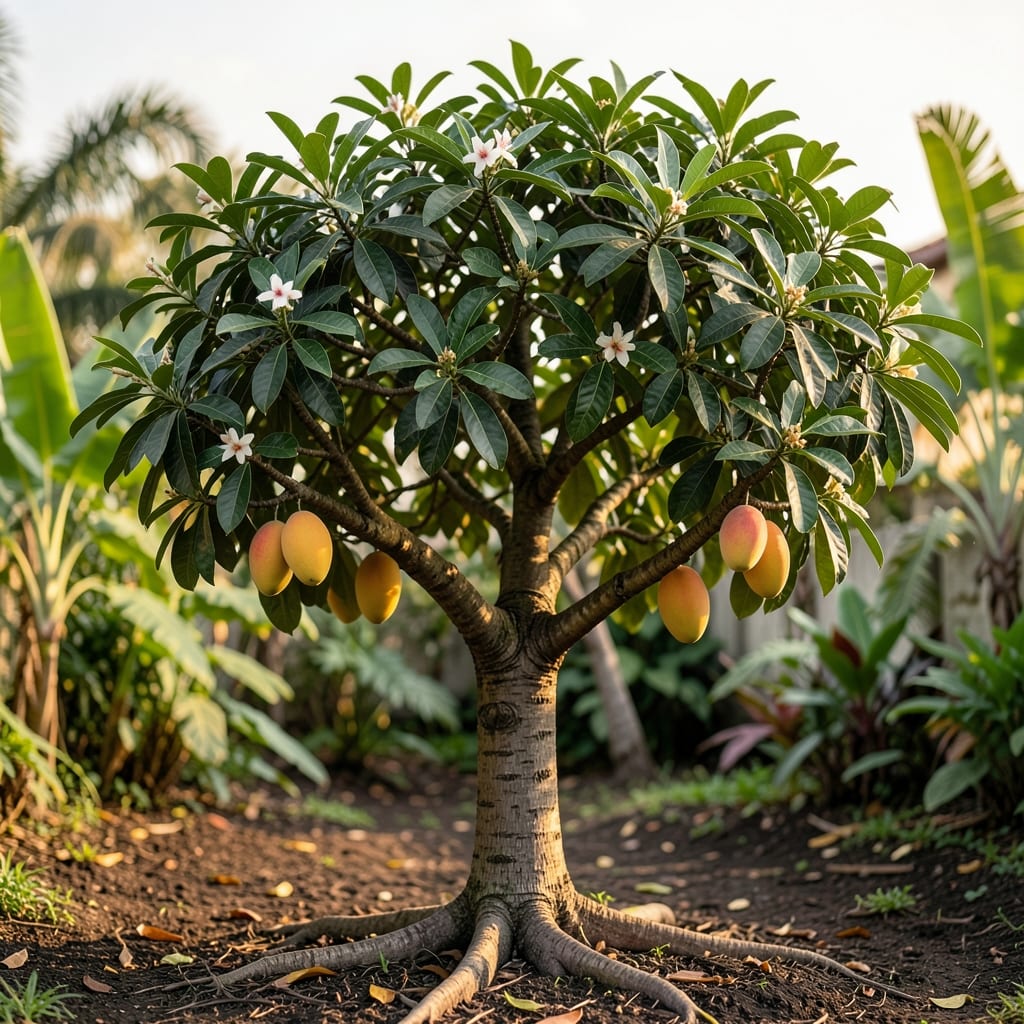
Wondering how tall can mango trees grow? You might be surprised to learn these tropical giants can stretch from 10 feet to over 100 feet—depending entirely on the variety you choose and how you care for it. Imagine a backyard mango tree 🥭 that barely reaches your shoulder next to a towering orchard specimen that blocks the sun, all from the same species!
For home gardeners, the good news is that dwarf varieties like 'Cogshall' or 'Julie' stay between 8-15 feet, making them perfect for containers or small yards. But if you're dreaming of a 50-100-foot tropical giant, you'll need space—and patience, since standard varieties like 'Haden' or 'Tommy Atkins' take years to reach their full height.
What really controls a mango tree's height? It's not just genetics—soil quality, pruning habits, and even your local climate play huge roles. In USDA Zones 10-12, these trees thrive year-round, but in cooler microclimates like Zone 9b, they'll grow slower unless you take extra care. The right variety in the right spot can mean the difference between a manageable backyard tree and a 3-story jungle.
Ready to pick the perfect mango tree for your space? Discover which varieties fit your yard—and how to keep them at your ideal height—with our expert care guide. Your tropical harvest starts here!


Mango tree height by variety: from dwarf to giant species
Choosing a mango tree isn’t just about flavor—it’s about space planning. Standard varieties can become 100-foot giants, while dwarf types stay compact enough for backyard containers. The right variety ensures your tree thrives without dominating your landscape. Let’s explore the height spectrum and what it means for your garden.
Mango trees grow at dramatically different rates based on their genetic makeup. Some varieties, like the 'Cogshall' or 'Julie', stay under 15 feet tall, making them perfect for patio gardens or small urban yards. Others, like 'Haden' or 'Tommy Atkins', can soar to 80–100 feet in tropical climates, requiring orchard-level space.
🌱 Comparison Table: Mango Tree Heights by Variety
| Variety | Mature Height | Growth Rate | Best For |
|---|---|---|---|
| 'Cogshall' | 8–12 ft | Slow to moderate | Containers, small yards |
| 'Julie' | 10–15 ft | Moderate | Patios, urban gardens |
| 'Keitt' | 20–30 ft | Moderate to fast | Backyards, orchards |
| 'Haden' | 50–80 ft | Fast | Large properties, commercial |
| 'Tommy Atkins' | 60–100 ft | Very fast | Tropical orchards |
🌿
Your climate zone plays a huge role in how tall a mango tree grows. In USDA Zones 10–12, where frost is rare, trees like 'Haden' can reach their full 80-foot potential. But in cooler microclimates (like Zone 9b), growth slows, and trees may stay 20–30 feet tall. Even dwarf varieties benefit from warmth and humidity—they’ll grow faster in Florida or Hawaii than in Southern California.
Soil quality also affects height. Well-draining, slightly acidic soil (pH 5.5–6.5) encourages healthier root systems, which support taller growth. If your soil is clay-heavy or alkaline, roots struggle, and the tree may stay shorter than expected. Amending with compost or sand can make a big difference for container-grown dwarf varieties.
Pruning isn’t just for shaping—it’s a height-control tool. Regular pruning of standard varieties can keep them 20–30 feet tall instead of letting them reach 100 feet. For dwarf trees, pruning encourages bushier growth and more fruit per square foot. We’ll cover pruning techniques in the next section, but for now, remember: prune in late winter to avoid damaging flowering branches.
If you’re dreaming of homegrown mangoes but lack space, consider grafting. Many nurseries offer dwarf rootstocks grafted with standard varieties, like 'Keitt' on 'Cogshall' rootstock. This combo gives you the flavor of a giant tree in a compact package. Just ensure your grafted tree gets full sun and regular watering to support its fruit-bearing potential.
For backyard gardeners, semi-dwarf varieties like 'Kent' (20–30 feet) strike the perfect balance. They’re tall enough to produce abundant fruit but small enough to fit in medium-sized yards. Plus, their moderate growth rate means you’ll see harvestable fruit in 3–5 years, not decades.
Before planting, measure your yard’s sunniest spot and compare it to your chosen variety’s mature height. A 100-foot tree needs at least 50 feet of clearance from structures, power lines, and neighboring trees. For container growing, dwarf varieties thrive in 15–20 gallon pots, but they’ll need regular repotting as roots expand.
Need help choosing? Start with your space: If you have limited room, dwarf varieties are your best bet. For large properties or orchards
How to control mango tree height: pruning, grafting, and spacing tips
If you’ve ever wondered how to keep your mango tree from becoming a 3-story jungle, the answer lies in smart pruning, grafting, and spacing. Unlike some fruit trees, mangoes respond dramatically to pruning—when done correctly, you can shape growth, improve fruit access, and even encourage bushier canopies. The key is timing: prune at the wrong time, and you might stunt flowering or stress the tree entirely.
For backyard gardeners, dwarf varieties like 'Cogshall' are already low-maintenance, but even standard varieties can be managed with strategic cuts. Start by removing dead or crossing branches in late winter or early spring, before new growth begins. This opens the canopy to sunlight, reducing fungal risks and improving air circulation—a must for heavy fruit loads. Just avoid heavy pruning during flowering or fruiting seasons, as this can shock the tree and drop blossoms or fruit.
Remove suckers (shoots from the base) and water sprouts (vertical shoots) to direct energy upward. Aim for a central leader (main trunk) with 3-4 main branches for easier fruit picking.
Cut back overlapping branches to let sunlight reach the inner canopy. This prevents fruit sunburn and improves air flow, cutting down on pests and disease.
Graft a dwarf variety (e.g., 'Julie') onto a standard rootstock to combine the compact growth of one with the hardiness of another. This is how commercial growers keep trees manageable while maximizing yield.
Plant dwarf varieties 10-15 feet apart; semi-dwarfs need 20-30 feet. Standard varieties? Give them 50+ feet to avoid root competition and shade stress.
❌ Topping (cutting the main trunk flat)—this causes suckers and weak regrowth. ✅ Thin selectively to maintain the tree’s natural shape.
Grafting is a game-changer for height control, especially if you love the flavor of a standard variety like 'Haden' but lack the space. Start by selecting a healthy rootstock (the base tree) and a dwarf scion (the branch you’ll graft). Use a whip-and-tongue graft in late winter, then seal the cut with grafting tape. Within a few months, the scion will grow into a miniature version of your dream mango tree—without the towering height.
Spacing is just as critical as pruning. In a backyard setting, a 20-foot semi-dwarf like 'Keitt' needs room to breathe, but planting it too close to a fence or other trees will lead to stunted growth and poor fruit quality. If you’re growing multiple trees, space them 30-50 feet apart to mimic natural orchard conditions. Pro tip: Use drip irrigation to deliver water directly to the root zone, reducing competition from weeds or grass.
Remember, mango trees grow fastest in USDA Zones 10-12, where they can add 3-6 feet per year if conditions are ideal. In cooler climates like Zone 9b, growth slows dramatically—so prune lightly and focus on protecting young trees from cold snaps. With the right techniques, you can enjoy a manageable-height mango tree that’s perfect for your space—and your fruit basket!