
Size
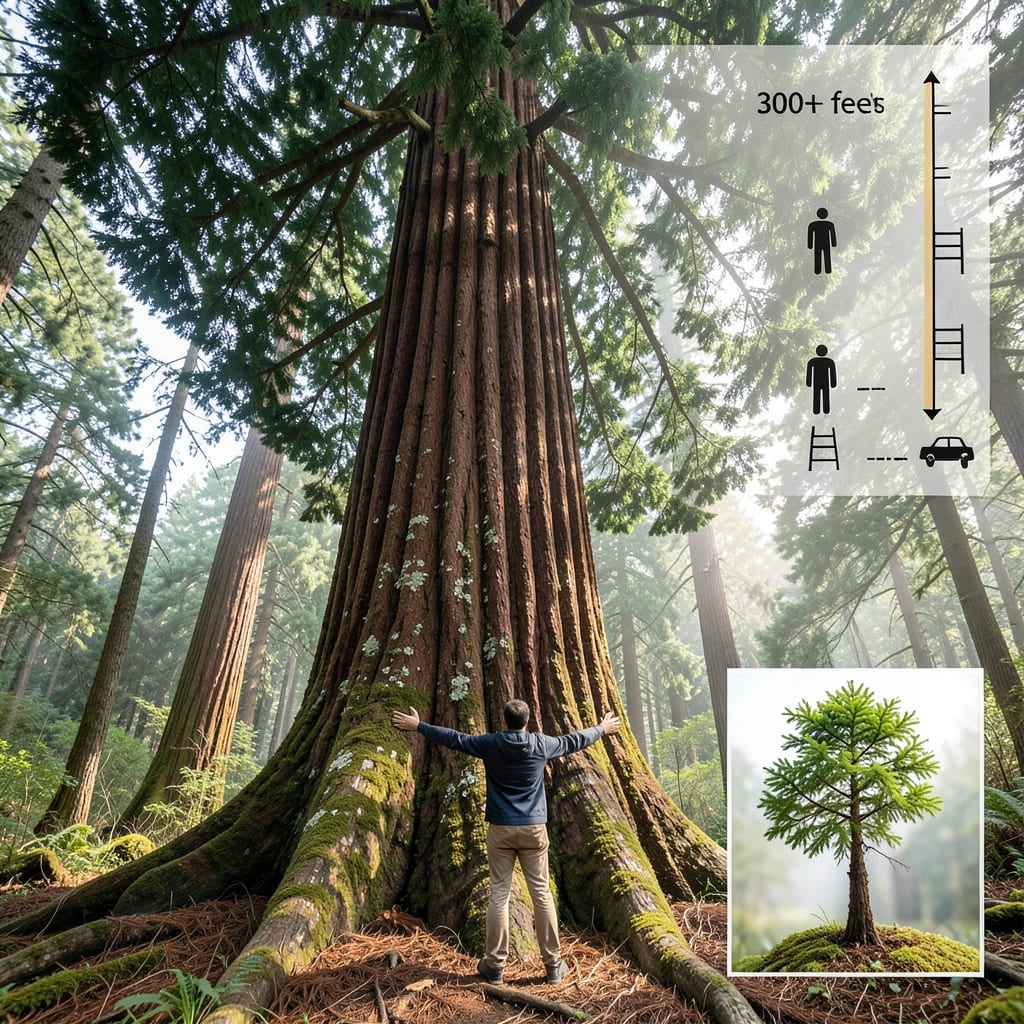
When you ask "how tall can redwood trees grow", you're really wondering about nature's ultimate skyscrapers - these 🌲 giants don't just reach for the sky, they redefine what's possible. The tallest redwoods, like the legendary Hyperion, stretch over 380 feet, making them taller than a 30-story building stacked on top of itself.
What makes these coastal California natives grow so massive? It's not just their genetics - redwoods thrive in USDA Zones 7b-10a where cool coastal fog provides natural irrigation while their shallow but extensive root systems anchor them against winds. This perfect storm of conditions creates trees that can live for millennia while growing taller each year.
For most of us dreaming of growing our own redwoods, the reality is different from the towering giants in Redwood National Park. While these trees can reach 250-380 feet in ideal conditions, home gardeners typically work with much smaller specimens. The key to growing them successfully lies in replicating their native environment - providing partial shade, consistent moisture, and protecting young seedlings from harsh elements.
Whether you're planning a backyard forest or simply fascinated by these natural wonders, understanding how redwoods grow reveals why they remain Earth's tallest living things. Let's explore what it takes to nurture these magnificent trees and how their growth compares to other giant species.


Record-breaking heights: the tallest redwood trees ever measured
When we talk about how tall can redwood trees grow, we're entering a realm where nature outdoes human engineering. The tallest redwood trees on Earth belong to the coast redwood species (Sequoia sempervirens), with Hyperion currently holding the record at a staggering 380.1 feet. That's taller than the Statue of Liberty's height plus its pedestal!
What makes these measurements so remarkable isn't just the raw height, but how these trees maintain their dominance over centuries. Helios (379.7 ft) and Icarus (379.4 ft) follow closely, proving these giants aren't one-off miracles but consistent performers in their coastal California habitat.
These measurements are verified through laser rangefinders and ground-based surveys, with scientists using climbing spikes to reach the upper branches. The National Park Service protects these locations to prevent disturbance, as even a single visitor could alter the tree's delicate balance.
| Tree Name | Height (ft) | Location | Year Measured |
|---|---|---|---|
| Hyperion | 380.1 | Redwood National and State Parks | 2006 (re-measured annually) |
| Helios | 379.7 | Redwood National and State Parks | 2019 |
| Icarus | 379.4 | Redwood National and State Parks | 2017 |
| Del Norte Titan | 374.9 | Del Norte Coast Redwoods State Park | 2019 |
| Fire Winder | 373.6 | Redwood National and State Parks | 2019 |
The coast redwood's ability to reach these heights is a combination of genetic potential and perfect growing conditions. Unlike their cousins, the giant sequoias (Sequoiadendron giganteum), which grow wider rather than taller, coast redwoods have evolved to maximize vertical growth in their foggy, coastal environment.
Interestingly, these record-breaking trees aren't the oldest redwoods. Some ancient specimens in Redwood National Park are over 2,000 years old but only reach 200-250 feet. This proves that age doesn't always equal height—it's the combination of genetics, climate, and space that creates these towering giants.
For comparison, the tallest giant sequoia, General Sherman, stands at 275 feet but has a 25-foot diameter. This shows how redwoods prioritize height over width, a key adaptation for their coastal forest understory where sunlight is limited.
What's truly astonishing is how these trees maintain their height over time. Hyperion grows about 2 feet per year in ideal conditions, adding nearly 6 inches of new growth annually. This steady, consistent growth over centuries allows them to reach their breathtaking heights.
The world record for tallest tree ever measured belongs to a coast redwood, proving these trees aren't just the tallest living things—they're the tallest trees period. Even the tallest eucalyptus (Mount Read) only reaches 325 feet, showing redwoods' unique dominance in the tree world.
For those wondering if they can grow redwoods this tall at home, the answer is complex. While you can grow redwood trees, replicating the perfect coastal California conditions—with its cool summers, high humidity, and nutrient-rich soil—is nearly impossible outside their native range. Even in ideal conditions, most home-grown redwoods reach 150-200 feet over centuries.
What makes redwood trees grow so tall? The science behind their height
Understanding how tall can redwood trees grow requires diving into their remarkable biology. Their towering stature isn't just about time—it's about evolutionary adaptations that make them nature's ultimate vertical engineers. One key factor is their shallow but expansive root system, which spreads widely to capture moisture from the foggy coastal air while anchoring against strong winds.
Their thick, fire-resistant bark (up to 12 inches thick!) protects them from both wildfires and pests, allowing them to survive centuries of environmental challenges. This bark also contains tannins that make it naturally rot-resistant, letting the trees maintain structural integrity as they grow taller and taller.
| Feature | Redwood Tree | Douglas Fir | Giant Sequoia |
|---|---|---|---|
| Max Height | 380 ft | 325 ft | 275 ft |
| Root System | Shallow, wide-spreading | Deep taproot | Deep, extensive |
| Bark Thickness | Up to 12 inches | 1-2 inches | Up to 3 feet |
| Growth Rate | 2 ft/year (young) | 1.5 ft/year | 0.5 ft/year |
| Climate Needs | Cool, foggy coastal | Mountainous, varied | High elevation, cold |
Their unique vascular system deserves special mention. Redwoods have extra-large xylem vessels that efficiently transport water from roots to canopy, even in their massive heights. This allows them to maintain consistent moisture delivery to leaves at 380 feet above ground—a feat no other tree achieves.
Another secret to their height is their lightweight foliage. Redwood needles are soft and flexible, reducing wind resistance while still capturing sunlight efficiently. Their evergreen nature means they photosynthesize year-round in their native climate, giving them a competitive edge over deciduous trees.
Interestingly, redwoods grow faster when young—some seedlings gain 2 feet per year in ideal conditions. This rapid early growth allows them to quickly reach the canopy layer where they can compete for sunlight. Their ability to self-prune dead branches also helps maintain an efficient growth structure.
For comparison, their cousins—the giant sequoias—prioritize width over height, growing much thicker trunks instead. This fundamental difference in growth strategy explains why coast redwoods hold the world record for tallest trees while giant sequoias become the most massive by volume.
Their success also depends on coastal fog, which provides up to 40% of their water needs without requiring deep roots. This natural irrigation system, combined with their high humidity tolerance, creates perfect conditions for vertical growth that would be impossible in drier climates.