
Size
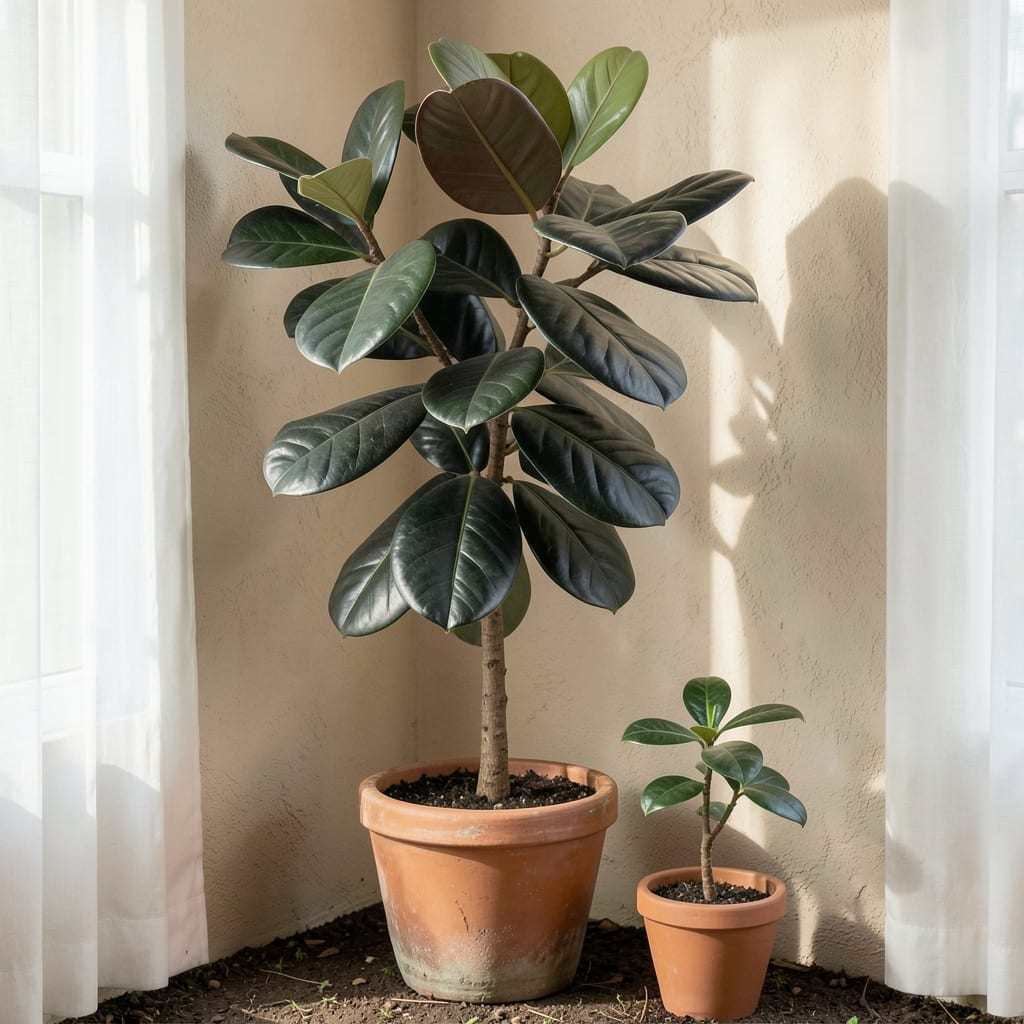
If you’ve ever wondered how tall rubber plants can grow and whether your Rubber Plant 🌿 will become a ceiling-high statement piece or stay a modest tabletop plant, the answer lies in its variety—and how you nurture it. Some Ficus elastica varieties stretch toward the sky, while others stay compact, proving that size isn’t just about genetics but also about care.
Understanding how tall your Rubber Plant can grow helps you plan its future. With the right conditions, these tropical beauties can reach 10 feet indoors, but many stay between 3-6 feet with proper guidance. The key? Light, pruning, and a little patience to unlock their full potential.
Whether you’re dealing with a dwarf variety or a fast-growing standard type, I’ll break down what influences their height—so you can choose the perfect spot and care routine. Let’s explore how to give your plant the space (and support) it needs to thrive.
From pruning tips to light requirements, you’ll learn how to encourage the height you want—whether that’s a towering indoor tree or a manageable houseplant. Ready to grow your Rubber Plant 🌿 to its full glory? Let’s get started.


Rubber plant height by variety: small to towering growth limits
Rubber plants (Ficus elastica) come in stunning varieties, each with its own height potential. Some stay petite enough for shelves, while others can become 10-foot indoor trees with the right care. The key difference lies in their genetics and growing conditions, so knowing your plant’s variety helps you set realistic expectations.
If you’re dreaming of a ceiling-high statement plant, standard varieties like 'Biggie' or 'Tineke' will deliver. But if you prefer a compact desk companion, dwarf varieties like 'Burgundy' or 'Black Magic' stay under 3 feet. Let’s explore the height ranges and ideal environments for each type.
🌱
Dwarf varieties like 'Burgundy' and 'Black Magic' are perfect for small spaces, while 'Biggie' and 'Tineke' thrive when given room to grow tall. The growth rate also varies—fast growers like 'Biggie' can add 1-2 feet per year with ideal care, while slower varieties like 'Ruby Red' mature more gradually.
Light plays a crucial role in height development. Bright indirect light encourages vertical growth, while low light can stunt a plant’s height and make it leggy. For example, 'Tineke' with direct sunlight may grow taller faster, but its leaves could scorch without proper shade.
If you’re growing a standard variety like 'Biggie' in a small apartment, consider pruning regularly to control height and encourage bushier growth. This not only manages size but also promotes healthier foliage. For dwarf varieties, less pruning is needed—they naturally stay compact.
🌿
Outdoor rubber plants can grow even taller, sometimes reaching 15 feet in tropical climates (USDA Zones 10–12). However, most indoor gardeners will see heights between 3–10 feet, depending on the variety and care. To maximize height, provide consistent moisture, nutrient-rich soil, and support for heavy stems as they grow.
Pro tip: If you want a taller rubber plant but lack ceiling space, try growing it as a standard plant with a single main stem. Simply remove lower leaves to encourage upward growth and use a bamboo stake for support as it reaches new heights.
✂️
How to encourage maximum height in rubber plants: pruning, light & support
Want your Rubber Plant 🌿 to reach its full height potential? The secret lies in strategic care—especially pruning techniques, light exposure, and structural support. Unlike many plants, rubber plants respond well to guidance, allowing you to shape their growth direction. Whether you’re aiming for a 10-foot indoor tree or simply want to encourage upward growth, these methods will help you achieve the height you desire.
For tall varieties like 'Biggie' or 'Tineke,' the goal is to promote vertical growth while maintaining a sturdy structure. Start by removing lower leaves to eliminate competition for nutrients, directing energy upward. This simple trick can add 1-2 feet of height per year in ideal conditions. Pair this with bright indirect light to fuel rapid, healthy growth without legginess.
🌱
Step-by-Step Guide to Maximizing Rubber Plant Height
-
Step 1: Choose the Right Variety
Select fast-growing types like 'Biggie' or 'Tineke' for maximum height. -
Step 2: Provide Bright Indirect Light
Place near an east-facing window for 4-6 hours daily. -
Step 3: Prune Strategically
Remove lower leaves to encourage upward growth; keep 1-2 main stems. -
Step 4: Use Support Stakes
Insert a bamboo stake early to prevent bending under heavy foliage. -
Step 5: Fertilize Regularly
Use a balanced 10-10-10 fertilizer every 4-6 weeks during spring/summer. -
Step 6: Rotate for Even Growth
Turn the pot quarter-turn weekly to prevent leaning toward light.
Light is non-negotiable for height. Place your plant within 2-3 feet of an east-facing window to avoid etiolation (stretched, weak stems). If natural light is limited, supplement with a grow light for 6-8 hours daily. Avoid direct afternoon sun, which can scorch leaves and stunt growth. For outdoor plants in USDA Zones 10–12, they can reach 15 feet, but indoors, 6-10 feet is typical with proper care.
Support is critical as rubber plants grow heavier with height. Use a bamboo stake or trellis inserted at planting to guide stems upward. For larger varieties, consider a heavier-duty support system like a metal cage or wooden post. This prevents stems from bending or breaking under the weight of new leaves. Prune regularly to remove any weak or crossing branches, which improves airflow and reduces disease risk.
🪴
Pro tip: If your rubber plant starts leaning, it’s not too late! Gently tie the stem to the stake with soft plant ties, and gradually guide it upright over 2-3 weeks. Avoid forcing it—let the plant adjust naturally to prevent stem damage.
For bushier growth (if you prefer width over height), prune the top stem just above a leaf node. This encourages lateral branches to form, creating a fuller plant. However, if height is your goal, avoid heavy pruning—focus on selective trimming to maintain a single strong stem.
✅
Remember: Patience is key. Rubber plants grow 1-2 feet per year under ideal conditions, so resist the urge to over-prune or over-fertilize. With consistent care, your plant will reward you with lush, towering growth that becomes the centerpiece of any room.