
Trees
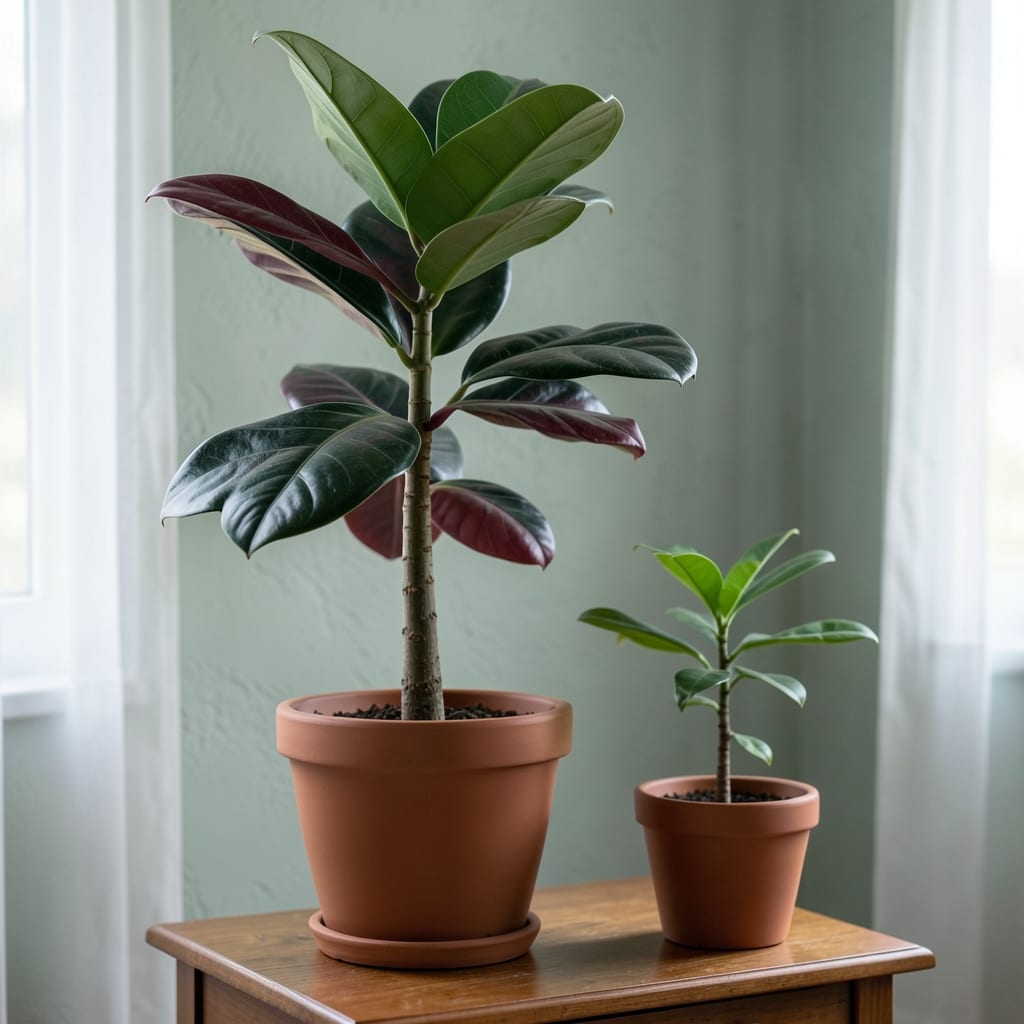
Curious about how tall your rubber tree 🌿 could grow? The answer might surprise you—these resilient plants can stretch from a compact tabletop size to towering heights that challenge even high ceilings, depending on variety and care.
If you're envisioning a lush indoor jungle but worried about space, don’t fret. Rubber trees (Ficus elastica) adapt beautifully to different environments, whether you're aiming for a 3-foot statement piece or a 10-foot living centerpiece. The key lies in understanding their growth patterns and how to guide them.
In this guide, I’ll break down the height potential of rubber trees, from dwarf varieties perfect for small apartments to standard types that thrive in larger spaces. You’ll also discover how light, pruning, and container size play a role in shaping their growth—so you can tailor their size to your exact needs.
Whether you're a seasoned plant parent or just starting your green journey, these insights will help you nurture a rubber tree that fits your space and your style. Let’s dive into the details!

Rubber tree height by variety: from tabletop to towering giants
Rubber trees (Ficus elastica) are famous for their dramatic height potential, but their mature size varies dramatically depending on the variety and growing conditions. Some stay compact enough for apartments, while others can dominate a room—or even an outdoor landscape. The key is choosing the right cultivar for your space and understanding how each grows over time.
I’ve grown rubber trees for over a decade, and I’ve seen everything from 3-foot tabletop varieties to 15-foot indoor giants. The difference often comes down to genetics and care. Let’s explore the most popular rubber tree varieties and their height ranges, so you can pick the perfect fit for your home or garden.
Here’s how rubber trees stack up by variety, including their growth rates and ideal conditions:
| Variety | Mature Height (Indoor) | Mature Height (Outdoor) | Growth Rate | Best For |
|---|---|---|---|---|
| 'Black Prince' | 3–5 ft | 10–15 ft | Slow to moderate | Small spaces, apartments |
| 'Robusta' | 6–10 ft | 20–30 ft | Moderate to fast | Living rooms, greenhouses |
| 'Tineke' | 5–8 ft | 15–20 ft | Moderate | Bright indoor spaces |
| 'Variegata' | 4–6 ft | 12–18 ft | Slow | Sunny windowsills |
| 'Melany' | 8–12 ft | 25–40 ft | Fast | Outdoor landscapes |
The 'Black Prince' variety is my go-to for small spaces—it stays under 5 feet indoors but can still make a bold statement with its deep purple-black leaves. Meanwhile, the 'Robusta' and 'Melany' varieties are the fast growers, perfect if you’re aiming for a dramatic indoor tree or an outdoor specimen.
Outdoor rubber trees have no natural height limit in ideal conditions. In tropical climates (USDA Zones 10–12), they can reach 30–50 feet or more, especially when planted in the ground. I’ve seen mature outdoor rubber trees in Florida and Hawaii that rival small oak trees!
For indoor growth, the container size plays a huge role. A rubber tree in a 10-inch pot will stay smaller than one in a 20-inch pot, even if they’re the same variety. Always choose a pot that’s 2–3 inches wider than the plant’s current root ball to encourage healthy growth without overpowering your space.
If you’re worried about height, pruning is your best friend. I prune my rubber trees annually to maintain their shape and control their size. Just be sure to use clean, sharp pruners and seal the cuts with a cinnamon-based wound dressing to prevent disease.
Pro tip: Rubber trees grow 2–4 feet per year under ideal conditions, but this slows dramatically in low light. If your tree isn’t growing as fast as you’d like, it might be time to move it to a brighter spot or supplement with a grow light.
Ready to pick your perfect rubber tree? Consider your space, light conditions, and growth goals—then choose a variety that fits your vision. Whether you want a compact desk companion or a room-filling centerpiece, there’s a rubber tree variety that’s just right for you!
How indoor conditions affect rubber tree height: light, pruning, and space
Your rubber tree’s height isn’t just about its variety—indoor conditions like light exposure, pruning habits, and container size play equally critical roles. I’ve watched rubber trees grow from 3-foot tabletop plants to 10-foot indoor giants simply by adjusting these factors. The good news? You can control their growth to fit your space perfectly.
Light is the #1 factor influencing rubber tree height. These plants thrive in bright indirect light, where they can grow 2–4 feet per year. But move them to a dark corner, and growth slows to a crawl—sometimes just 6 inches annually. I once had a 'Robusta' variety that barely grew for months until I relocated it near a south-facing window.
Here’s how to optimize growth—or keep it compact—using light, pruning, and space:
🌱 Top 3 Factors That Control Rubber Tree Height
- Light exposure: More light = faster growth (up to 4 ft/year)
- Pruning frequency: Regular pruning keeps height manageable (trim 1–2 times/year)
- Container size: Larger pots = taller trees (choose 2–3" wider than root ball)
Pruning is your secret weapon for controlling height. I recommend annual pruning in early spring to shape your tree and encourage bushier growth. Always use sterilized pruners and seal cuts with cinnamon powder to prevent fungal infections. For dramatic height reduction, prune back 1/3 of the stem—your tree will respond with vigorous new growth from lower branches.
Container size directly impacts height potential. A rubber tree in a 10-inch pot will max out around 5 feet, while the same variety in a 20-inch pot can reach 10 feet or more. If you want a compact tree, repot into a smaller container every 2–3 years. For faster growth, upgrade to a larger pot in spring when roots are actively growing.
Pro tip: Rotate your rubber tree quarter-turns every 2 weeks to ensure even growth. I’ve seen lopsided trees where owners never rotated them—leaving one side leggy and bare. Even light exposure on all sides keeps your tree balanced and full.
Ready to take control? Start by assessing your tree’s current light conditions, then adjust pruning and pot size accordingly. With the right care, you can grow a rubber tree that’s the perfect height for your space—whether that’s a 3-foot desk buddy or a 10-foot living room statement piece!