
Size
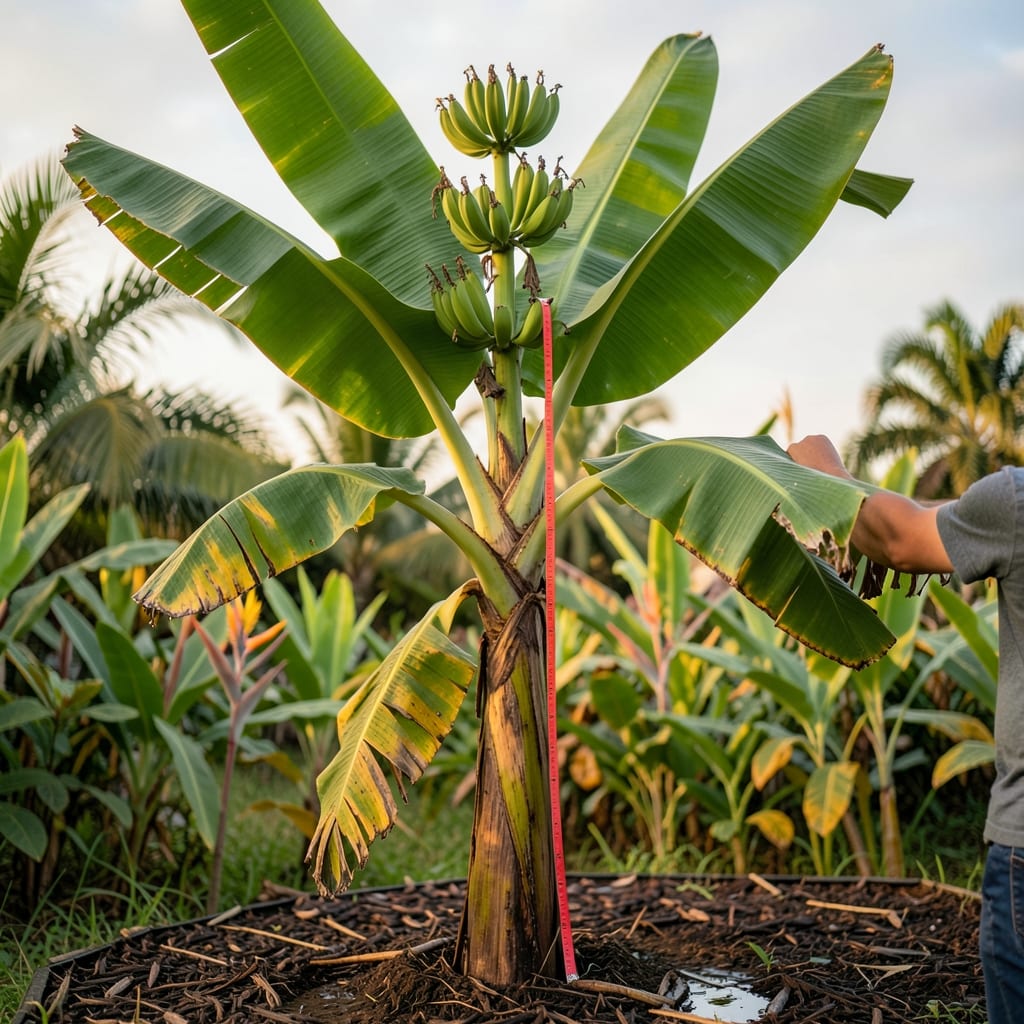
If you’ve ever wondered how tall do banana plants grow, you might be surprised to find they’re not the compact houseplants you’d expect—🍌 these tropical giants can stretch from waist-high dwarfs to towering 25-foot stalks, rivaling small trees!
Most banana plants thrive in General (Tropical/Subtropical) climates like USDA Zones 10-11, where they grow aggressively year-round. Dwarf varieties like the Cavendish max out around 10 feet, while commercial types can reach 18–25 feet—that’s taller than a two-story house!
But here’s the twist: their height isn’t just about variety—soil, sunlight, and water play huge roles. Too much shade or poor drainage can stunt growth, while ideal conditions turn them into fast-growing powerhouses. Even in containers, some compact types can still hit 8–12 feet!
Ready to grow your own? I’ll break down the best varieties for small spaces, how to control their size, and why they’re not trees at all—just massive herbaceous plants with a serious banana payoff.


Banana plant height by variety: from dwarf to giant species
Banana plants aren’t one-size-fits-all—their height varies wildly depending on the variety and growing conditions. Most people picture towering 20-foot stalks, but dwarf types can stay under 10 feet, making them perfect for containers. Let’s break down the height ranges of popular banana varieties so you can pick the right one for your space.
First, it’s crucial to note that banana plants are not trees—they’re giant herbaceous plants with pseudo-stems made of tightly packed leaves. Their height is determined by genetics, climate, and care. In ideal tropical conditions, some varieties can shoot up 3–4 feet per year, while others grow more slowly.
Here’s how the most common varieties stack up in height at maturity:
| Variety | Mature Height | Growth Habit | Best For |
|---|---|---|---|
| Dwarf Cavendish | 8–12 ft | Compact, bushy | Containers, small gardens |
| Lady Finger (Dwarf Red) | 10–14 ft | Semi-dwarf, upright | Balconies, urban gardens |
| Ice Cream Banana | 12–18 ft | Tall, fast-growing | Large gardens, tropical climates |
| Red Dacca | 15–20 ft | Tall, dramatic | Ornamental, large landscapes |
| Gros Michel (Big Mike) | 18–25 ft | Massive, aggressive | Commercial farms, spacious yards |
| Bluggoe | 10–15 ft | Medium, hardy | Cold-hardy zones (9b+) |
The Dwarf Cavendish is my top pick for beginners—it stays manageable at 8–12 feet and produces sweet, small bananas perfect for snacking. If you love dramatic foliage, the Red Dacca grows 15–20 feet tall with striking red fruit and leaves, making it a showstopper in large gardens.
For those in USDA Zones 10–11, the Ice Cream banana is a fan favorite because it grows 12–18 feet but produces creamy, dessert-like fruit. Meanwhile, the Gros Michel is the giant of the bunch, reaching 18–25 feet—ideal for tropical climates where space isn’t an issue.
Even if you’re limited to a container, varieties like 'Saba' or 'Bluggoe' can thrive in 15–20 gallon pots and still hit 10–15 feet tall. Just be prepared for their rapid growth—some can add 2 feet per month in ideal conditions!
Pro tip: If you’re growing bananas in cooler climates, choose hardier dwarf varieties like 'Cardaba' or 'Manzano', which tolerate slightly lower temperatures and still produce fruit.
Factors that influence banana plant height and growth speed
While banana plant varieties set the baseline for height, their actual growth depends on environmental factors and your care routine. In tropical climates like USDA Zones 10–11, banana plants can grow 3–4 feet per year—but in cooler zones or containers, growth slows dramatically. Let’s explore the key factors that determine how tall your banana plant will become and how quickly it reaches maturity.
The most critical factor is sunlight exposure. Banana plants thrive in full sun (6+ hours daily), but too much intense afternoon sun can scorch leaves in hot climates. In my Zone 10 garden, I’ve noticed Ice Cream bananas grow 20% faster when placed in partial morning shade during peak summer months. Without enough light, plants become leggy and produce smaller fruit.
Soil quality plays an equally vital role. Bananas love well-draining, nutrient-rich soil with a slightly acidic pH (5.5–7.0). I always amend my garden beds with compost and banana peel tea—this potassium boost helps plants reach their full height potential. Poor soil stunts growth and reduces fruit production, even in dwarf varieties.
Watering habits directly impact growth speed. Banana plants need consistent moisture, especially during flowering and fruiting stages. In my experience, daily watering in summer helps Dwarf Cavendish varieties hit 10–12 feet in their first year, while inconsistent watering can limit growth to just 6–8 feet. Overwatering, however, leads to root rot and stunted growth—always ensure pots have drainage holes.
Don’t overlook the role of fertilization. A balanced 10-10-10 NPK fertilizer applied every 6 weeks during growing season gives plants the nutrients they need to reach maximum height. I’ve seen Red Dacca plants grow 50% taller with proper feeding compared to neglected specimens. Too much nitrogen, though, results in excessive leaf growth at the expense of fruit production.
Even pruning techniques affect height. While you might think trimming helps control size, banana plants actually regrow from the base after harvest. I recommend removing only damaged or yellow leaves to maintain energy for new growth. Over-pruning can reduce height potential by 20–30%, especially in first-year plants.
Climate matters most for cold-hardy varieties. In Zone 9b, I’ve successfully grown 'Bluggoe' bananas that reach 12–15 feet by protecting them from frost with mulch and row covers. In colder zones, even dwarf varieties may struggle to exceed 8 feet without winter protection. The key is choosing varieties with cold tolerance and providing seasonal care.
🌱 Key Growth Factors
- 1. Sunlight: 6+ hours daily for optimal growth (partial shade in extreme heat)
- 2. Soil: Well-draining, rich in organic matter (pH 5.5–7.0)
- 3. Water: Daily in summer, reduce in winter (never waterlogged)
- 4. Fertilizer: Balanced 10-10-10 every 6 weeks (spring–fall)
- 5. Pruning: Remove only damaged leaves (never over-prune)
- 6. Climate: Zones 10–11 ideal; protect in colder zones
Remember, banana plants are not trees—they’re fast-growing herbaceous plants that can double in height under ideal conditions. With the right care, even container-grown varieties can surprise you with their growth potential. The secret is consistency: sun, water, and nutrients work together to determine how tall your banana plant will become.