
Companion Plants
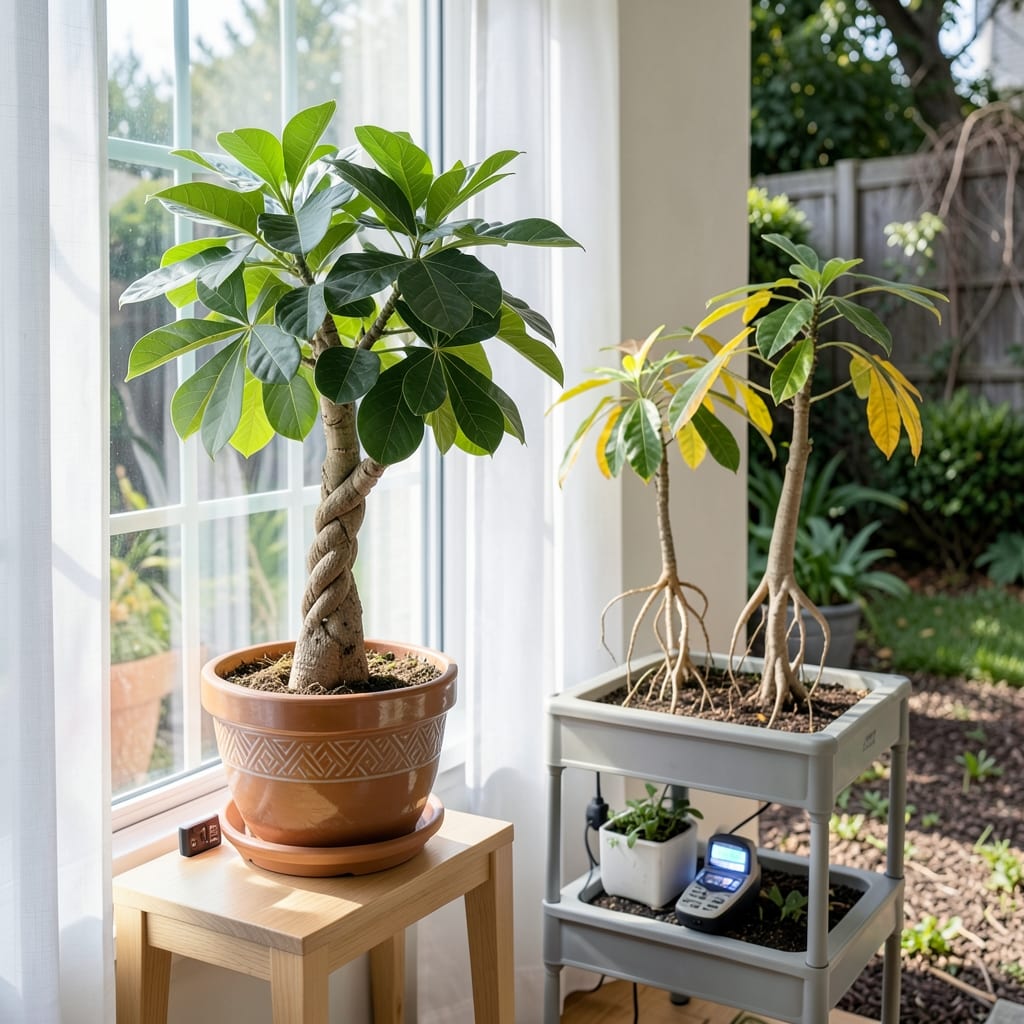
Money tree light requirements: the perfect balance for healthy growth
Your money tree (Pachira aquatica) thrives in bright indirect light, but it’s surprisingly adaptable to other conditions. Too little light causes leggy growth, while too much can scorch its tropical leaves. Let’s break down the ideal light zones and how to spot the difference.
Money trees prefer 2-4 hours of bright indirect sunlight daily. Think of east-facing windows or 2-3 feet from a north-facing window. This mimics their native tropical understory environment, where dappled sunlight filters through the canopy.
The key is avoiding direct midday sun, which can burn leaves, and deep shade, which weakens growth. Most indoor spaces fall into one of three light categories: bright indirect, medium light, or low light.
| Light Zone | Description | Signs of Healthy Plant | Signs of Stress |
|---|---|---|---|
| Bright Indirect | East/west windows, 2-3 ft from north window | Dark green leaves, compact growth, new leaves | Brown leaf tips (overwatering + light combo) |
| Medium Light | 6-10 ft from south window, fluorescent lighting | Slower growth, smaller leaves, pale green color | Leggy stems, sparse foliage, yellowing leaves |
| Low Light | North-facing corners, dim rooms, no direct sun | Survives but grows very slowly | Brown patches, leaf drop, weak stems |
Notice how bright indirect light produces the healthiest results? That’s because your money tree naturally grows under filtering canopy light in its tropical habitat. Even in medium light, it can survive but will grow leggy and sparse.
For low-light conditions, your money tree becomes a survivor rather than a thriver. You’ll see smaller leaves and longer stems as it stretches toward any available light. This is its way of compensating for insufficient energy from photosynthesis.
Direct sunlight is the only true enemy of your money tree. South-facing windows or unfiltered afternoon sun can cause leaf scorch, visible as crispy brown edges. If you notice this, move your plant further from the window or use a sheer curtain to diffuse the light.
Pro tip: Rotate your money tree quarter-turns every 2-3 weeks. This ensures even growth and prevents it from leaning toward the light source. Uneven light exposure causes lopsided foliage, which detracts from its natural symmetry.
Seasonal changes also affect light exposure. During winter months, shorter daylight hours mean your money tree may need supplemental grow lights to maintain its health. A simple LED grow light for 6-8 hours daily can make all the difference.
Remember, your money tree’s leaves are its energy factories. When they’re healthy and vibrant, your plant will reward you with lush growth and that prized bonsai-like structure we all love. Pay attention to these visual cues, and you’ll keep your money tree thriving for years.
How to adjust your money tree’s light exposure for maximum growth
Now that you understand your money tree’s light needs, let’s tackle the practical adjustments to create the perfect environment. Even the best-lit rooms can have hot spots or shadowy corners, so flexibility is key. Start by assessing your space—most homes naturally fall into one of three light scenarios: bright but harsh, consistently dim, or uneven lighting.
For bright but harsh areas (like south-facing windows), use sheer white curtains to scatter light evenly. These diffuse intense rays while still allowing plenty of brightness. Avoid heavy drapes, which block too much light. If your money tree is already showing brown leaf tips, this is your first clue that direct sun is the culprit.
In consistently dim rooms, supplement with a LED grow light placed 12-18 inches above the plant. Aim for 6-8 hours of light daily—this mimics natural daylight cycles. A simple full-spectrum bulb (6400K color temperature) works wonders for encouraging compact growth and vibrant leaves.
- 1. Rotate weekly: Turn your money tree quarter-turns every 7 days to prevent lopsided growth from leaning toward light sources.
- 2. Test placement: Move your plant 3 feet closer/further from windows every 2 weeks to find the sweet spot for bright indirect light.
- 3. Use mirrors: Place a small mirror near the plant to bounce light into shadowy areas—this works surprisingly well in north-facing rooms.
- 4. Adjust seasonally: In winter, extend light exposure with a timed grow light (6 AM–8 PM) to compensate for shorter days.
- 5. Prune strategically: If your tree grows leggy, trim the longest stems to encourage bushier growth—this helps redirect energy to new leaves.
Seasonal changes demand extra attention. During winter months, when natural light dims, your money tree may slow growth or drop leaves. This is normal, but a 10-watt LED grow light on a timer can prevent stress. Place it 18 inches away for gentle illumination without overheating the leaves.
If you notice yellowing leaves despite good light, check your watering habits—overwatering in bright conditions is a common mistake. Money trees in bright indirect light need slightly drier soil than those in low light. Stick your finger 1 inch into the soil; if it’s damp, wait before watering.
For uneven lighting (like near a window with partial shade), place your money tree 2 feet from the window and use a light-colored curtain to soften harsh afternoon sun. This balance keeps leaves lush and green while avoiding leaf scorch.
Remember, your money tree’s growth rate directly reflects its light conditions. In ideal bright indirect light, you’ll see new leaves every 4-6 weeks. If growth stalls, reassess the light—this is your plant’s way of communicating its needs. With these adjustments, your money tree will thrive year-round, rewarding you with dense foliage and that coveted bonsai aesthetic.