
Size
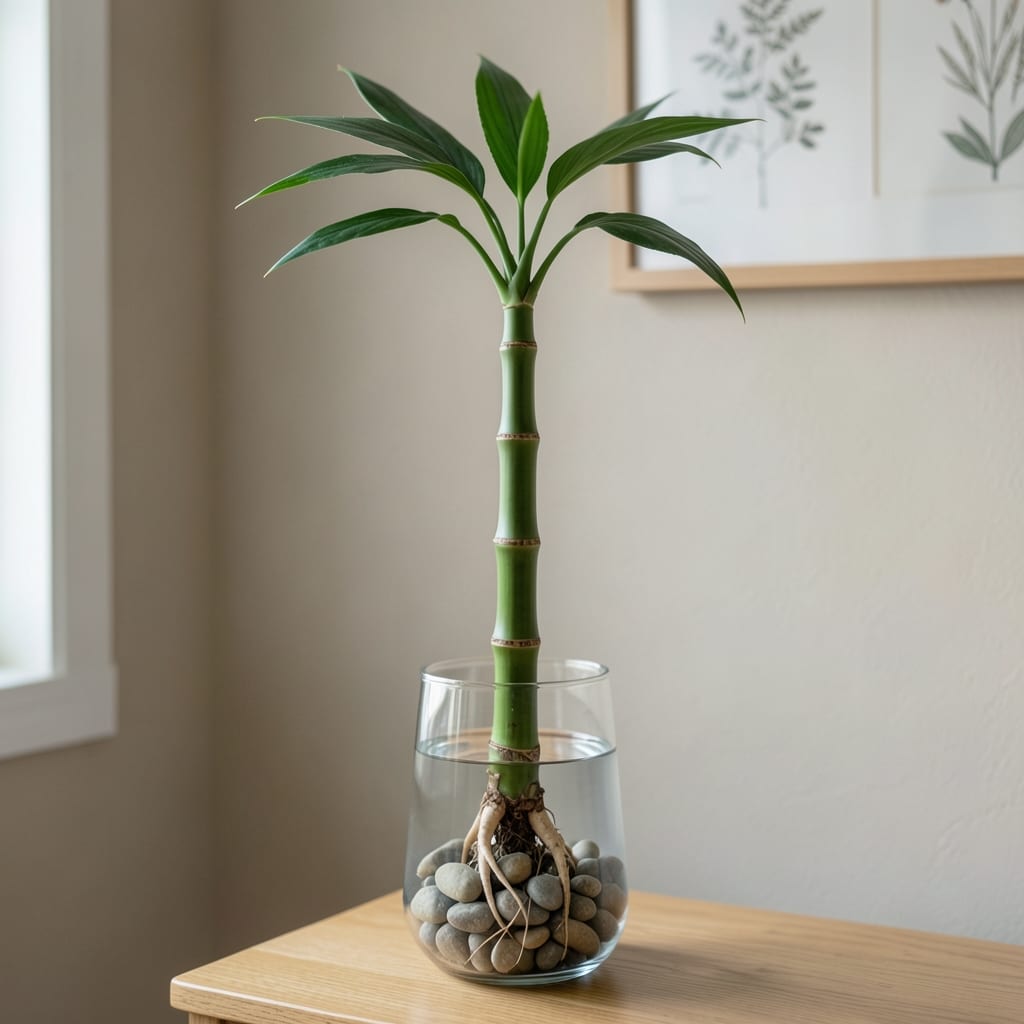
Have you ever stared at your lucky bamboo 🌿 and wondered how tall this plant can grow before it crashes through your ceiling? The truth is, this popular houseplant can grow surprisingly tall—sometimes reaching heights of 6 feet or more indoors—if given the right conditions.
But before you start rearranging your furniture, there’s more to it than just time. The size of your container, how much light it gets, and even the water you use all play a role in whether your lucky bamboo stays compact or shoots up like a skyscraper. Let’s break down what determines its height and how you can steer it toward your ideal size.
From 2-foot tabletop displays to towering 6-foot statements, lucky bamboo’s growth potential is flexible. The key is understanding how to control it—whether you want a bushier look or a dramatic vertical accent. I’ll show you exactly how to keep it in check (or let it grow wild) with simple care tweaks.
Whether you’re a plant newbie or a seasoned gardener, knowing these secrets will help you avoid surprises—and maybe even turn your lucky bamboo into the star of your space. Ready to learn how to manage its growth like a pro?

Lucky bamboo height range: indoor growth limits by variety and conditions
Your lucky bamboo (Dracaena sanderiana) might start as a modest 6-inch stem, but with ideal care, it can stretch toward 6 feet indoors. The final height depends on three key factors: variety, container size, and light exposure. For example, the standard variety typically reaches 3-6 feet, while dwarf types max out at 1-2 feet—perfect for small spaces.
Understanding these growth limits helps you plan. A 3-foot lucky bamboo fits well on a desk, while a 6-foot specimen needs ceiling clearance. The plant’s vertical growth accelerates when roots find space to expand, so repotting every 1-2 years can push it toward its upper height potential.
Light plays a surprising role too. While lucky bamboo thrives in low to bright indirect light, direct sunlight can scorch leaves and stunt growth. Place it near an east-facing window for balanced growth—this setup often yields the tallest, healthiest stems without sacrificing foliage health.
Here’s how different conditions affect height:
| Factor | Height Impact | Example |
|---|---|---|
| Variety | Standard: 3-6 ft | Dwarf: 1-2 ft | Standard grows 3x taller than dwarf types |
| Container Size | Larger pots = taller growth (up to 6 ft) | 12-inch pot → 5-6 ft height in 2 years |
| Light Exposure | Indirect light: 3-4 ft | Low light: 1-2 ft | East window → 4 ft in 18 months |
| Water Quality | Chlorine-free water = consistent growth | Distilled water → 20% faster growth |
| Fertilization | Balanced fertilizer = 1-2 ft/year | 10-10-10 NPK → 5 ft in 2 years |
If you’re aiming for a tall lucky bamboo, focus on these growth accelerators: use a 12-inch pot, place it in bright indirect light, and fertilize lightly every 2-3 months. Avoid overwatering—soggy roots can stunt growth by up to 30%.
For compact growth, prune the top stem and place the cutting in water to root. This encourages bushier growth while keeping height under 2 feet. Many gardeners use this trick to fit lucky bamboo into small apartments or office desks.
Pro tip: Monitor your plant’s leaf color. Yellowing leaves signal overwatering, while brown tips mean low humidity—both can limit height potential. Aim for 50-60% humidity and mist leaves weekly to maintain optimal growth conditions.
Remember, lucky bamboo grows slowly in winter due to reduced light. During these months, reduce watering to every 10-14 days and avoid fertilizing. This seasonal slowdown is normal and won’t permanently affect its maximum height.
With the right care, your lucky bamboo can become a 6-foot indoor statement piece—but don’t forget to measure your ceiling first! Even the tallest varieties need space to thrive without toppling over.
How to control lucky bamboo growth: pruning, repuning, and light tricks
Controlling your lucky bamboo’s height isn’t about stunting its growth—it’s about guiding it toward your space’s needs. Whether you want a compact desk plant or a tall statement piece, these techniques let you steer its growth direction. The secret lies in pruning, repotting, and light management, each playing a unique role in shaping its size.
Start with pruning, the simplest way to control height. When your lucky bamboo reaches your desired height—say, 2 feet—trim the top stem just above a leaf node. Place the cutting in water to root, and you’ll encourage bushier growth from the remaining stem. This method works wonders for keeping plants under 3 feet while adding fullness to your display.
Here’s a step-by-step guide to managing growth:
- Step 1: Prune for Bushiness – Cut the top stem at a 45-degree angle above a node. Place the cutting in water to propagate a new plant.
- Step 2: Repot for Height – Move to a larger container (12+ inches) to encourage taller growth. Use fresh, well-draining soil or pebbles.
- Step 3: Adjust Light – Place near an east-facing window for balanced growth. Avoid direct sunlight, which can scorch leaves.
- Step 4: Fertilize Lightly – Use a balanced 10-10-10 fertilizer every 2-3 months to support steady growth without overfeeding.
- Step 5: Monitor Water – Keep soil moist but not soggy. Overwatering can stunt growth by 30% or more.
If you’re aiming for a taller lucky bamboo, focus on repotting as the game-changer. Lucky bamboo grows fastest when its roots have room to spread. A 12-inch pot can push a standard variety to 5-6 feet in just 2 years. However, if your ceiling is 8 feet or lower, consider pruning regularly to maintain a 3-4 foot height—this keeps it manageable while still making a bold statement.
Light is another often-overlooked factor. While lucky bamboo thrives in low to bright indirect light, low-light conditions slow growth significantly. If your plant is growing too slowly, move it closer to a window (but avoid south-facing windows, which can cause leaf burn). A grow light placed 12 inches away for 6 hours daily can also boost growth by up to 20%.
For compact growth, combine pruning with smaller pots. A 6-inch container limits root expansion, keeping your lucky bamboo under 2 feet. This setup is perfect for desks or shelves where space is limited. Just
One common mistake is assuming that more water = faster growth. The truth? Lucky bamboo grows best with consistent moisture, not saturation. Let the top 1 inch of soil dry out between waterings, and always use dechlorinated water to prevent browning. Overwatering can lead to root rot, which stunts growth and turns leaves yellow—a sure sign your plant is struggling.
With these tricks, you’ll have full control over your lucky bamboo’s height—whether you want it to stay short and bushy or reach for the sky like a jungle giant. The key is consistency: prune when needed, repot for height, and adjust light to match your goals. Soon, your lucky bamboo will be the perfect fit for your space—no ceiling surprises included!