
How To
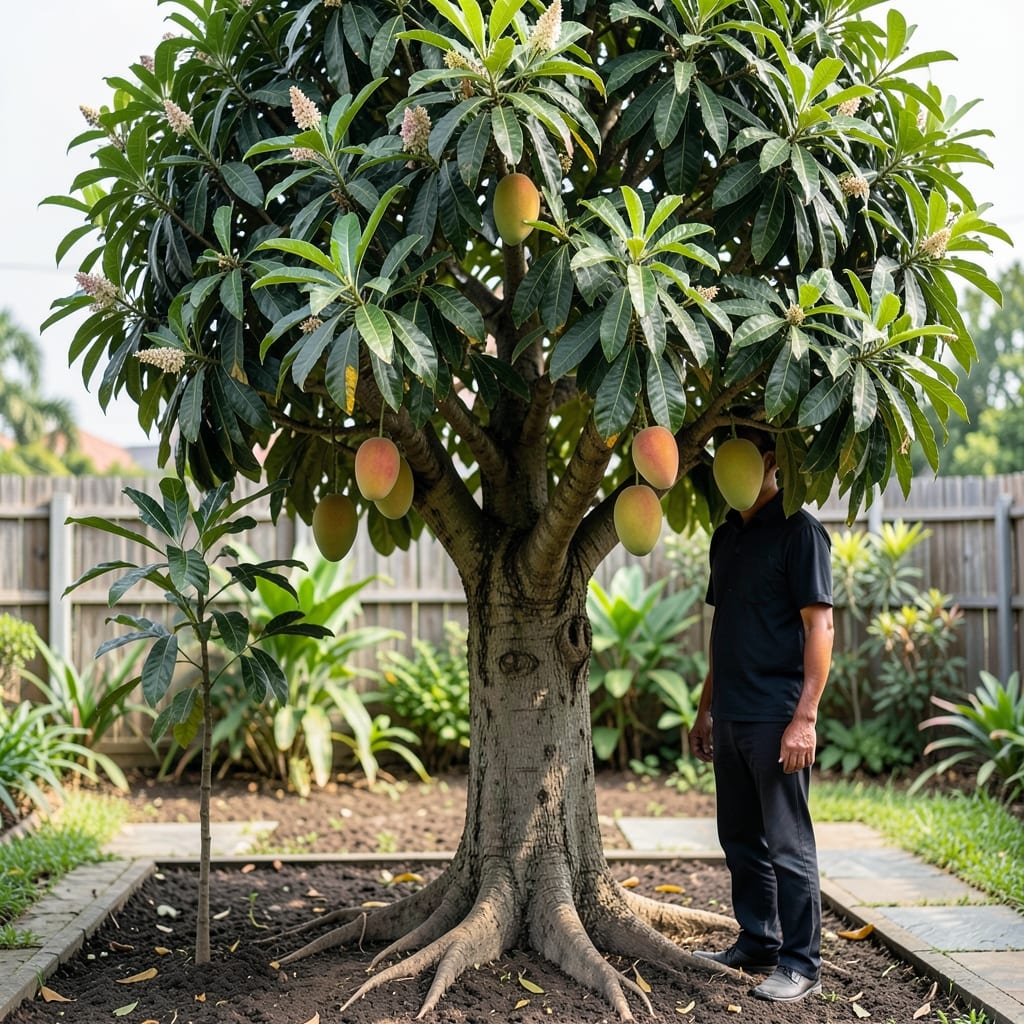
If you’ve ever wondered how tall a mango tree can grow before planting one in your backyard, the answer depends entirely on the variety you choose—and some stay surprisingly compact.
Standard tropical varieties can soar to 100 feet or more, dwarfing even the tallest two-story homes, while dwarf cultivars like ‘Cogshall’ top out at just 15 feet. That means whether you’re working with a sprawling garden or a cozy balcony, there’s a mango tree perfect for your space—and your pruning skills.
But here’s the catch: even dwarf varieties need the right care to stay manageable. Pruning at the right time, choosing the right container, and avoiding common growth mistakes can make all the difference between a jungle-sized mess and a fruitful, bite-sized tree.
Let’s break down exactly how tall your mango tree can grow—and how to keep it at your ideal height, no matter where you live in zones 10-11 (or with protection in 9b).

Mango tree height by variety: from skyscrapers to compact dwarfs
When choosing a mango tree, the first question is always: how tall can it grow? The answer varies wildly—from towering tropical giants to manageable dwarf varieties perfect for small spaces. Standard mango trees (Mangifera indica) can reach 60–100 feet in ideal conditions, while dwarf cultivars stay under 15 feet, making them ideal for containers or urban gardens.
Your climate plays a huge role too. In USDA zones 10–11, tropical varieties like 'Alphonso' thrive and grow aggressively, while cooler zones (like 9b with protection) may stunt growth unless you choose cold-hardy dwarf types like 'Cogshall'. Let’s break down the height ranges by popular varieties so you can pick the perfect fit for your space.
🌱
If you’re in zone 9b and need a cold-hardy option, 'Cogshall' or 'Julie' are my top picks—they stay under 15 feet and produce fruit in 3–5 years, unlike their towering cousins. For tropical climates (zones 10–11), 'Alphonso' or 'Keitt' deliver massive yields but require pruning every 1–2 years to control their sky-high growth.
Pro tip: Even dwarf varieties can outgrow their space if not pruned. I recommend structural pruning in late winter (just before new growth starts) to maintain shape and encourage airflow—critical for preventing fungal diseases in dense foliage.
🪴
For container growers, choose dwarf rootstocks grafted onto cold-hardy varieties like 'Julie'. A 20-gallon pot can support a 10-foot tree for 3–5 years before upgrading to a 50-gallon container. Just remember: container trees need daily watering in summer and monthly fertilizer to match the nutrients of in-ground soil.
💧
One common mistake? Assuming all mango trees grow at the same rate. 'Alphonso' can shoot up 5 feet per year in ideal conditions, while 'Cogshall' might only add 1 foot annually. Always check the growth rate when selecting a variety—it’s the difference between a manageable shrub and a jungle takeover.
✂️
Mango tree height by variety: from skyscrapers to compact dwarfs
If you’re eyeing a mango tree for your garden, the first question should be: how tall can it grow? The answer varies wildly—from towering tropical giants to manageable dwarf varieties perfect for small spaces. Standard mango trees (Mangifera indica) can reach 60–100 feet, while dwarf cultivars stay under 15–25 feet. Your choice depends on your space, climate (zones 10–11 or protected 9b), and whether you want a backyard giant or a balcony-friendly tree.
For example, the 'Alphonso' variety—beloved in India—can soar to 100 feet, while 'Cogshall', a cold-hardy dwarf, tops out at just 12–15 feet. Even semi-dwarf types like 'Haden' hit 30–50 feet, making them ideal for larger yards. Below, we’ll compare the most popular varieties by height, growth rate, and ideal growing conditions to help you pick the perfect fit for your space.
🌱 Visual Guide: Mango Tree Heights at a Glance
Notice how dwarf varieties like 'Cogshall' and 'Julie' are perfect for containers or small yards, while 'Alphonso' and 'Kent' need ample space to thrive. Even semi-dwarfs like 'Haden' can work in larger backyards but may still outgrow typical suburban lots. If you’re in Zone 9b, cold-hardy dwarfs like 'Cogshall' are your best bet—they survive light frosts and stay compact.
Growth rates also play a role. Fast-growing varieties like 'Kent' can add 3–5 feet per year in ideal conditions, while slower growers like 'Cogshall' take 1–2 feet annually. This means a 3-year-old 'Kent' could already be 10–15 feet tall, while a 'Cogshall' of the same age might only reach 5–6 feet. Plan accordingly if you’re working with limited space!
Pro tip: Even standard varieties can be pruned to stay smaller, but they’ll still need regular maintenance to prevent them from reaching skyscraper heights. For example, a 'Haden' left unpruned could hit 50 feet, but with annual pruning, you can keep it under 20 feet—ideal for a medium-sized backyard. We’ll cover pruning hacks in the next section to help you manage growth like a pro.