
Flowers
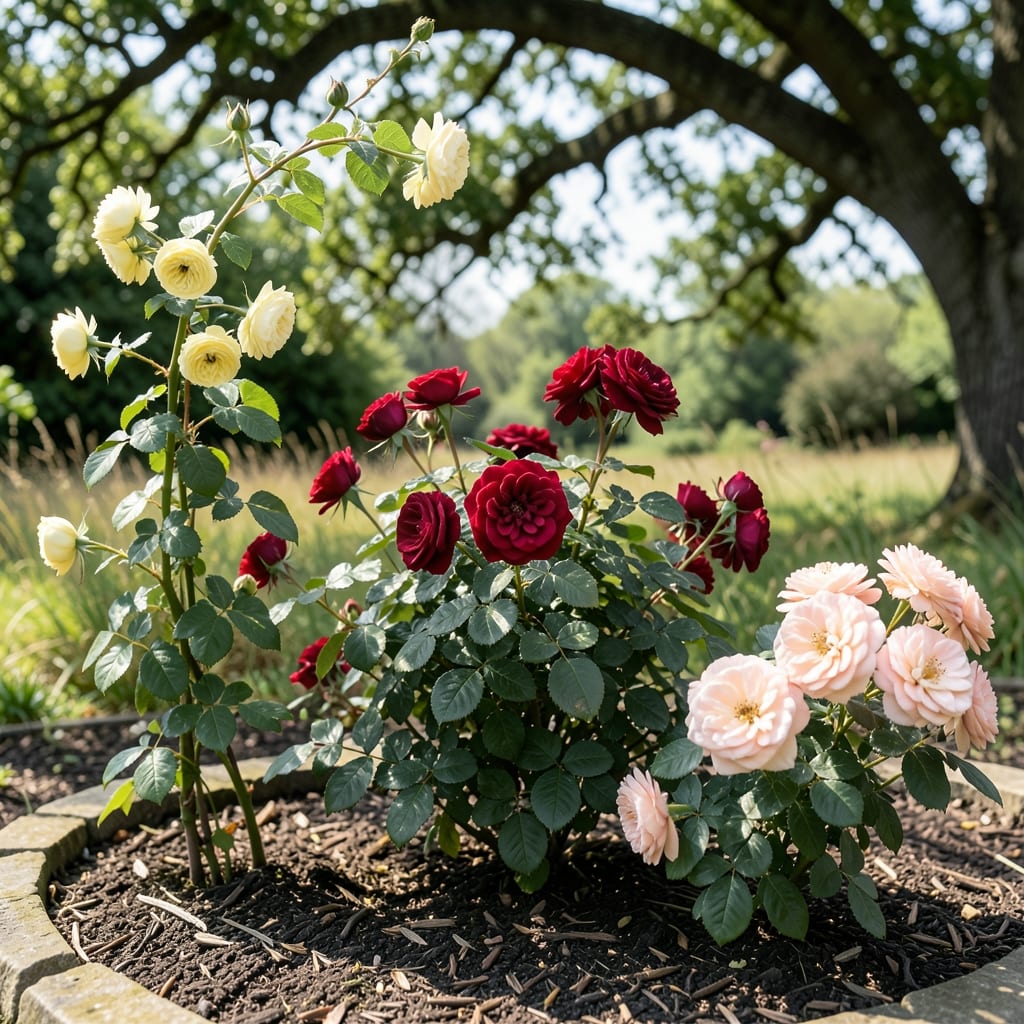
Rose height by variety: from dwarf to climbing giants
Roses aren’t one-size-fits-all—some varieties stay compact enough for window boxes, while others climb 20+ feet up trellises. The key to choosing the right rose for your space lies in understanding their mature height ranges and growth habits.
From miniature roses that barely reach your knee to climbing roses that can top your garage, each type has a distinct height potential. Even within categories, cultivar differences can mean a 3-foot difference in mature size.
Here’s how to match your garden’s vertical potential with the perfect rose variety—complete with real-world height expectations and popular examples to guide your selection.
| Variety | Mature Height | Growth Habit | Best For |
|---|---|---|---|
| Miniature Roses | 1–3 ft | Bushy, compact | Containers, window boxes |
| Floribunda | 3–5 ft | Bushy, multi-stemmed | Borders, foundation plantings |
| Hybrid Tea | 4–6 ft | Single-stemmed, upright | Cut flowers, formal gardens |
| Climbing Roses | 8–20+ ft | Long, flexible canes | Arbors, trellises, fences |
| Shrub Roses | 5–8 ft | Multi-stemmed, rounded | Hedges, mass plantings |
If you’re working with limited vertical space, miniature roses or dwarf varieties (like 'Fairy' or 'Baby Love') are perfect for containers or window boxes. These stay under 3 feet and thrive in 6-inch pots.
For bold statements, climbing roses like 'New Dawn' or 'Blaze' can scale 15–20 feet with proper support. I once saw a 'Zephirine Drouhin' rose climb a 30-foot fence—though that required annual pruning to manage its vigor.
Even standard roses (grafted onto tall stems) can reach 6–8 feet but require staking for stability. Varieties like 'Mr. Lincoln' or 'Double Delight' make stunning focal points in formal gardens.
Remember: height isn’t everything. Some shrub roses like 'Knock Out' stay under 4 feet but produce nonstop blooms—ideal for low-maintenance gardens. Always balance size, bloom volume, and care needs when selecting.
For urban gardens or <
Climate-Zone chart: how your location affects rose growth
Your USDA hardiness zone isn’t just about winter survival—it directly impacts how tall your roses will grow. Roses in Zone 10 (tropical climates) can reach 20+ feet with minimal winter stress, while those in Zone 4 may max out at 5–6 feet due to cold damage.
Climate influences growth vigor, bloom cycles, and even pruning needs. For example, climbing roses in Zone 7 may only reach 12 feet without winter protection, while the same variety in Zone 9 could hit 18 feet with proper care.
Here’s how your zone affects rose height, including cold-hardy vs. tropical varieties and their ideal growth ranges:
| USDA Zone | Climate Type | Max Rose Height | Best Varieties | Winter Care |
|---|---|---|---|---|
| 3–5 | Cold Continental | 4–6 ft | 'Dr. Huey', 'Knock Out' | Heavy mulch, winter wrap |
| 6–7 | Temperate | 6–12 ft | 'New Dawn', 'Blaze' | Light mulch, prune early |
| 8–9 | Mediterranean | 10–20+ ft | 'Zephirine Drouhin', 'Rambling Rector' | Minimal protection |
| 10–11 | Tropical | 15–30+ ft | 'Cecile Brunner', 'Louis Philippe' | None needed |
In cooler zones (3–5), focus on dwarf or shrub roses like 'Dr. Huey' or 'Knock Out,' which stay under 5 feet and tolerate harsh winters. These varieties prioritize survival over height, making them ideal for northern gardens.
For warmer climates (8–11), climbing roses thrive with minimal winter care. I’ve seen 'Rambling Rector' roses in Zone 9 reach 25 feet with just annual pruning—no mulch or wrapping required! The trade-off? Fewer blooms in extreme heat without afternoon shade.