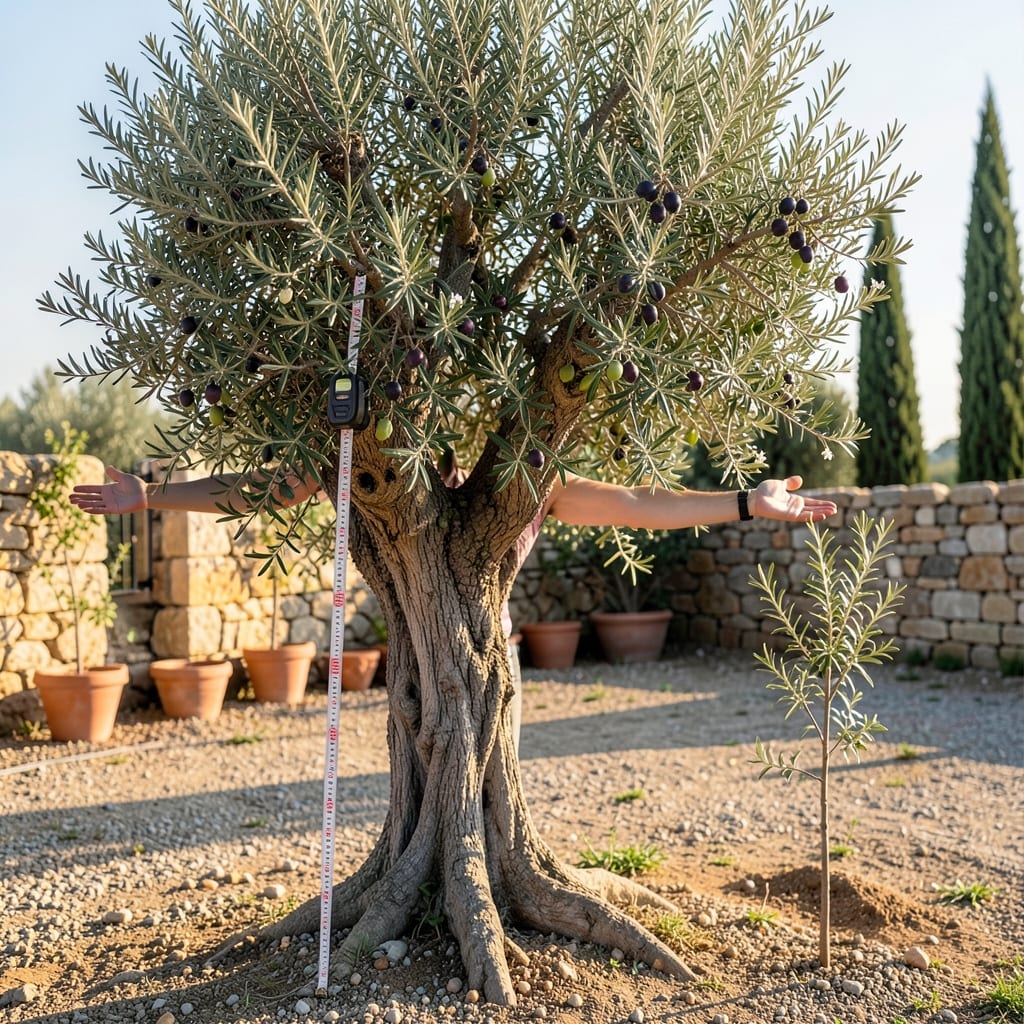
If you're wondering "how tall can an olive tree grow", the answer might surprise you—these Mediterranean staples can stretch from compact 8-foot dwarfs to towering 50-foot giants, depending on the variety and care. Picture this: a 🫒 olive tree in your backyard that could one day shade your entire patio or fit snugly in a container on your balcony.
The key to controlling height lies in choosing the right variety for your space. Some, like the 'Little Ollie', stay manageable at just 8–12 feet, while others, such as the 'Manzanillo', can reach 30–50 feet if left unpruned. Whether you're dreaming of homegrown olives or just love the look of these silvery-green trees, knowing your options is the first step to success.
But here's the catch: climate plays a huge role. In Zone 9b (think California coastal areas), olive trees thrive year-round, but their growth habits shift based on pruning, soil, and even how you plant them. With the right techniques, you can keep a giant variety in check—or let it grow wild if you have the space. Let’s break down how to make it work for your yard.
Ready to turn your olive tree dreams into reality? I’ll walk you through everything from picking the perfect variety to pruning tips that keep your tree at your ideal height—whether that’s a 5-foot tabletop tree or a 50-foot Mediterranean giant. Let’s get growing!
Olive Tree Height Range
10 ftto50 ft
0 ft
3 ft
6 ft
9 ft
12 ft
🌱
Tall Tree
Olive tree height by variety: from dwarf to giant sizes
Choosing the right olive tree variety is the first step to controlling its height. Some varieties stay under 10 feet, perfect for containers or small yards, while others can soar to 50 feet—ideal for large landscapes or Mediterranean-style estates. The key is matching the variety to your space, climate, and goals (fruit production vs. ornamental appeal).
In Zone 9b, where frost is rare, olive trees thrive year-round, but their growth rates vary dramatically. For example, the 'Little Ollie' grows just 8–12 feet tall, while the 'Manzanillo' can reach 30–50 feet if left unpruned. Even within dwarf varieties, growth habits differ—some stay bushy, while others grow taller but narrower.
Below, I’ve broken down 10+ olive tree varieties by height, growth rate, and ideal use. Whether you’re aiming for a tabletop tree or a shade-providing giant, there’s a perfect match for your space. Let’s explore the options!
| Variety |
Mature Height |
Growth Rate |
Best For |
Notes |
| Little Ollie |
8–12 ft |
Slow (1–2 ft/year) |
Containers, patios |
Dwarf variety; great for small spaces. |
| Arbequina |
15–25 ft |
Moderate (2–3 ft/year) |
Fruit production, small yards |
Cold-hardy; produces small, flavorful olives. |
| Frantoio |
25–40 ft |
Fast (3–4 ft/year) |
Large landscapes, orchards |
Classic Italian variety; needs space. |
| Manzanillo |
30–50 ft |
Very fast (4–5 ft/year) |
Shade trees, large properties |
Tallest variety; needs pruning to control height. |
| Leccino |
20–35 ft |
Moderate (2–3 ft/year) |
Orchards, Mediterranean climates |
Drought-tolerant; produces dual-purpose olives. |
| Kalamata |
15–25 ft |
Slow to moderate (1–2 ft/year) |
Table olives, containers |
Compact; known for large, dark olives. |
| Mission |
20–30 ft |
Moderate (2–3 ft/year) |
California gardens, fruit production |
Heat-tolerant; produces large fruit. |
| Ascolano |
10–15 ft |
Slow (1 ft/year) |
Containers, bonsai-style |
Dwarf; ideal for small spaces or pruning. |
| Pendolino |
25–40 ft |
Fast (3–4 ft/year) |
Large properties, shade |
Upright growth; needs pruning for width. |
How to control olive tree height: pruning, spacing, and grafting tips
If you’re aiming for a compact olive tree or simply want to manage the height of a 50-foot giant, pruning is your best tool. Unlike many trees, olive trees respond well to pruning year-round in Zone 9b, but timing matters. Prune in late winter or early spring (February–March) to encourage new growth, or lightly prune in summer to shape the tree without stimulating vigorous regrowth.
Start by removing dead or crossing branches—these compete for nutrients and can stunt overall growth. For height control, focus on the central leader (the main upward-growing branch). Cutting it back by 1/3 encourages bushier growth and prevents the tree from shooting up too fast. Use sharp, clean pruners to avoid damaging the tree.
Spacing also plays a crucial role. Planting an olive tree too close to structures or other plants restricts its natural growth pattern. Give dwarf varieties like 'Little Ollie' at least 6–8 feet of space, while standard varieties like 'Manzanillo' need 20–30 feet to thrive. Proper spacing ensures airflow, reducing disease risk and promoting healthier, slower growth.
For even more control, consider grafting. This technique involves attaching a dwarf scion (a small cutting from a dwarf variety) onto the rootstock of a standard tree. The result? A tree with the root system of a giant but the growth habit of a dwarf. Grafting is best done in late winter when the tree is dormant, and it requires some skill—but the payoff is a tree that stays under 10 feet even if its roots could support a 50-foot giant.
🌿 Step-by-Step Pruning Guide for Olive Trees
-
Step 1: Prune in late winter (Feb–March) to shape the tree before new growth begins.
-
Step 2: Remove dead, diseased, or crossing branches first to improve airflow and health.
-
Step 3: Cut back the central leader by 1/3 to encourage bushier growth and control height.
-
Step 4: Thin out overcrowded branches to allow sunlight to reach the inner canopy.
-
Step 5: Lightly prune in summer (June–July) to maintain shape without stimulating rapid growth.
Pro Tip: Sterilize pruners with rubbing alcohol between cuts to prevent disease spread. ✂️
Pruning isn’t just about height—it’s also about fruit production. Olive trees produce fruit on older wood, so avoid heavy pruning of mature branches if you want a good harvest. Instead, focus on light shaping to maintain an open canopy that lets sunlight reach the fruit. For container-grown trees, prune more aggressively to keep them manageable, but always leave enough foliage for photosynthesis.
Remember, olive trees are slow growers compared to many other trees, so you won’t see dramatic height changes overnight. With patience and consistent pruning, you can guide your olive tree to the perfect height—whether that’s a 5-foot tabletop tree or a well-managed 20-foot shade provider. The key is to prune regularly and strategically to match your goals.
Need a quick reference? Bookmark this guide and revisit it every pruning season. Your olive tree will thank you with healthier growth and better fruit—all while staying at your ideal height. Happy pruning! 🪴
★★★★★4.5(5 reviews)
|