
Trees
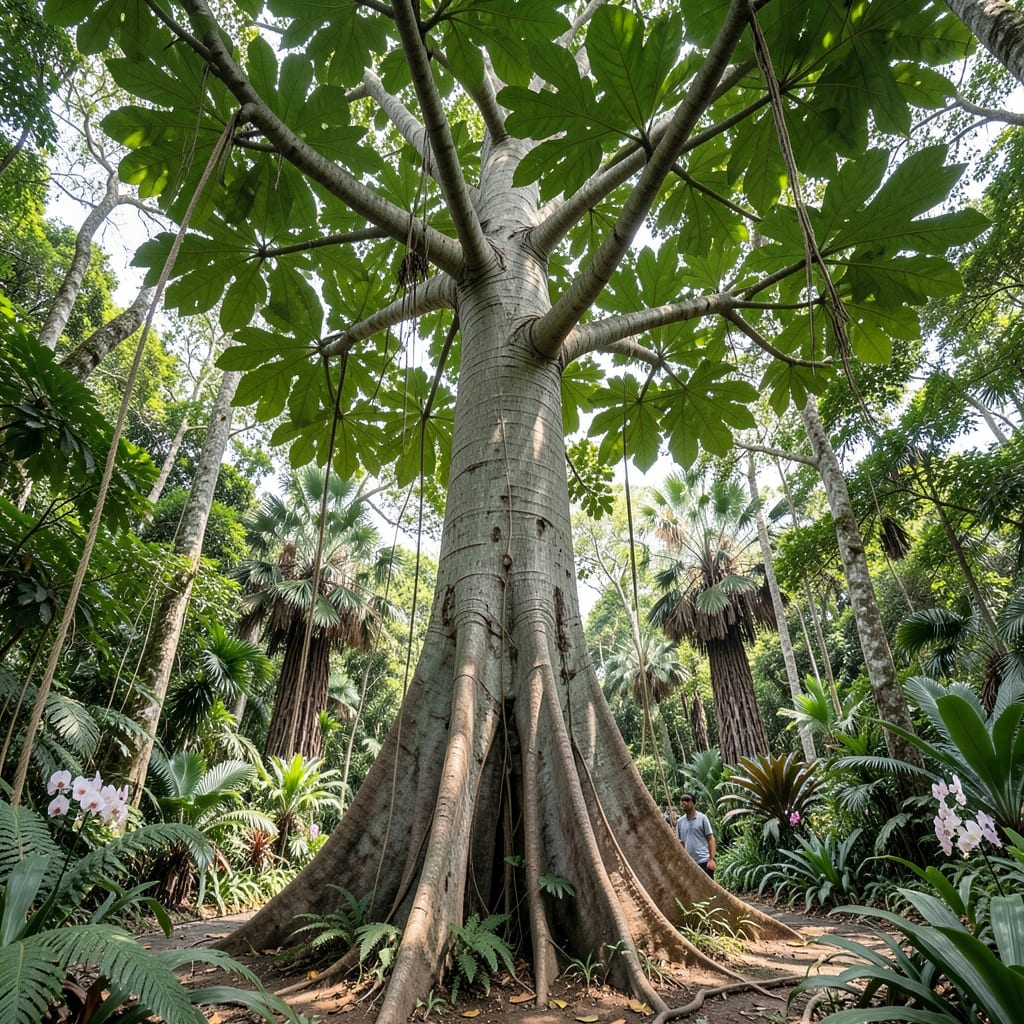
If you’ve ever gazed up at a 330-foot tower of green that seems to pierce the sky itself, you’ve witnessed how tall rainforest trees can grow—nature’s skyscrapers reaching heights that defy imagination. These natural giants don’t just stretch toward the heavens—they redefine what’s possible in the plant kingdom, growing taller than most buildings and defying gravity with every leaf.
But what makes these trees reach such staggering heights? The answer lies in their tropical homes, where competition for sunlight forces them to evolve into vertical marvels. From the towering kapok to the legendary empress tree, these species thrive in USDA Zones 10-12, where year-round warmth and humidity fuel their rapid growth.
In this guide, I’ll break down the science behind their record-breaking stature—how they survive extreme heights, what conditions they need to flourish, and whether you could ever grow one in your own backyard. Spoiler: It’s not as simple as planting a seed.
Get ready to discover the secrets of nature’s skyscrapers and why some rainforest trees grow so tall they seem to touch the clouds.

The tallest rainforest trees in the world and their staggering heights
Rainforest trees aren’t just tall—they’re architectural marvels that push the limits of what we think plants can achieve. The tallest rainforest trees can reach heights of 330 feet or more, dwarfing even the tallest buildings. These giants aren’t just impressive; they’re essential to their ecosystems, creating microclimates and providing habitats for countless species. But which trees hold the record, and what makes them grow so high?
In the dense, humid canopies of the Amazon, Congo, and Southeast Asian rainforests, trees like the kapok, empress tree, and shihuahuaco dominate the skyline. These species aren’t just tall—they’re structural engineers, evolving to outcompete neighbors for sunlight in the battle for survival. Their heights aren’t random; they’re the result of millions of years of adaptation to a crowded, competitive environment.
Here’s a closer look at the tallest rainforest trees and the heights they achieve, along with the conditions that allow them to reach such staggering proportions:
| Tree Name | Recorded Height | Location | Key Features |
|---|---|---|---|
| Kapok Tree (Ceiba pentandra) | 200–230 ft | Amazon, Central/South America | Fast-growing, hollow trunk, buttress roots |
| Empress Tree (Albizia saman) | 160–200 ft | Central/South America, Caribbean | Broad canopy, nitrogen-fixing, drought-tolerant |
| Shihuahuaco (Dipteryx odorata) | 180–220 ft | Amazon Basin | Valuable timber, slow-growing, deep roots |
| Eucalyptus regnans | 330 ft (tallest known) | Australia (Tasmania) | Fastest-growing angiosperm, fire-adapted |
| Koa (Acacia koa) | 100–150 ft | Hawaii | Hardwood, drought-resistant, cultural significance |
The Eucalyptus regnans, native to Tasmania, holds the record for the tallest flowering tree on Earth, with some specimens reaching 330 feet. That’s taller than a 30-story skyscraper! These trees grow so fast they can add 12 feet per year under ideal conditions, making them a powerhouse of vertical growth. Meanwhile, the kapok tree and shihuahuaco dominate the Amazon, their towering forms a testament to the region’s biodiversity.
But why do these trees grow so tall? The answer lies in the canopy layers of the rainforest. In a dense forest, sunlight is scarce at ground level, so trees evolve to grow taller to access the direct sunlight needed for photosynthesis. This competition for light drives the evolution of height, creating a vertical arms race where only the tallest survive. The taller a tree grows, the more nutrients and water it needs to support its massive biomass, which is why these giants develop specialized adaptations.
If you’re dreaming of growing a rainforest tree in your own yard, it’s important to understand that most of these giants require USDA Zones 10-12 and year-round warmth. Even if you live in a suitable climate, planting a 330-foot tree isn’t practical for most home gardens. However, smaller rainforest species like the empress tree or koa can be cultivated with the right conditions—nutrient-rich soil, high humidity, and indirect sunlight. Just be prepared for a long-term commitment; these trees take decades to reach even a fraction of their potential height.
For those who can’t grow a rainforest giant, visiting these trees in their natural habitats is a humbling experience. Standing beneath a 200-foot kapok tree, you’ll feel the sheer scale of nature’s engineering. Their height isn’t just a feat of biology—it’s a survival strategy that has shaped entire ecosystems. Whether you’re a gardener, a nature enthusiast, or simply curious about the wonders of the plant kingdom, these towering trees offer a glimpse into the incredible heights nature can achieve.
Why do rainforest trees grow so tall? The science behind their height
Rainforest trees don’t just grow tall—they evolve into vertical giants through a mix of ecological pressure and biological innovation. The primary driver is the competition for sunlight in dense canopies. In a rainforest, sunlight barely reaches the forest floor, forcing trees to grow upward to capture even 1% of available light. This creates a vertical arms race where only the tallest trees survive, as they dominate the canopy layer where sunlight is most abundant.
The canopy layer acts like a natural skyscraper, with trees growing in tiers. The tallest species, like the kapok or empress tree, occupy the upper canopy, while shorter trees thrive in the understory. This stratification ensures no single species monopolizes all resources, creating a balanced ecosystem. The taller a tree grows, the more it can spread its leaves to maximize photosynthesis, giving it a competitive edge over shorter rivals.
But sunlight isn’t the only factor—soil nutrients and water availability also play crucial roles. Rainforest soils are often nutrient-poor, so trees develop deep root systems to access water and minerals. The buttress roots of kapok trees, for example, spread wide to stabilize the tree and absorb nutrients from a larger area. Meanwhile, epiphytes (like orchids and bromeliads) grow on branches, adding biomass and even contributing nutrients through decomposing organic matter.
- 🌞 Sunlight Competition: Tall trees dominate the canopy to access direct sunlight, outcompeting shorter species for photosynthesis.
- 🌱 Nutrient Scarcity: Poor rainforest soils force trees to develop deep roots and symbiotic relationships with fungi and epiphytes.
- 💧 Water Access: Deep root systems tap into groundwater, supporting massive biomass in water-rich environments.
- 🌿 Epiphyte Partnerships: Orchids and mosses grow on branches, adding weight and nutrients to the host tree.
- 🌡️ Climate Stability: Year-round warmth and humidity in USDA Zones 10-12 enable rapid, uninterrupted growth.
Another key factor is the lack of seasonal dormancy in tropical climates. Unlike temperate trees, rainforest species grow year-round, adding height continuously. For example, the Eucalyptus regnans can grow 12 feet per year under ideal conditions, thanks to its fast metabolism and efficient water transport system. This relentless growth rate is a direct result of the stable, warm climate, which eliminates the growth slowdowns caused by cold winters.
Even the wind patterns in rainforests influence height. Unlike open landscapes where wind can stunt growth, the dense canopy creates a protected microclimate at the top. Trees grow taller not just to reach light but also to escape wind damage near the forest floor. Their flexible branches and lightweight leaves reduce wind resistance, allowing them to maintain stability at extreme heights.
For gardeners dreaming of cultivating rainforest trees, understanding these factors is key. While you can’t replicate a full tropical canopy, providing high humidity, nutrient-rich soil, and indirect sunlight can help smaller species like the empress tree or koa thrive. Just remember: these giants aren’t just tall—they’re the result of millions of years of evolution in one of Earth’s most competitive environments.