
Size
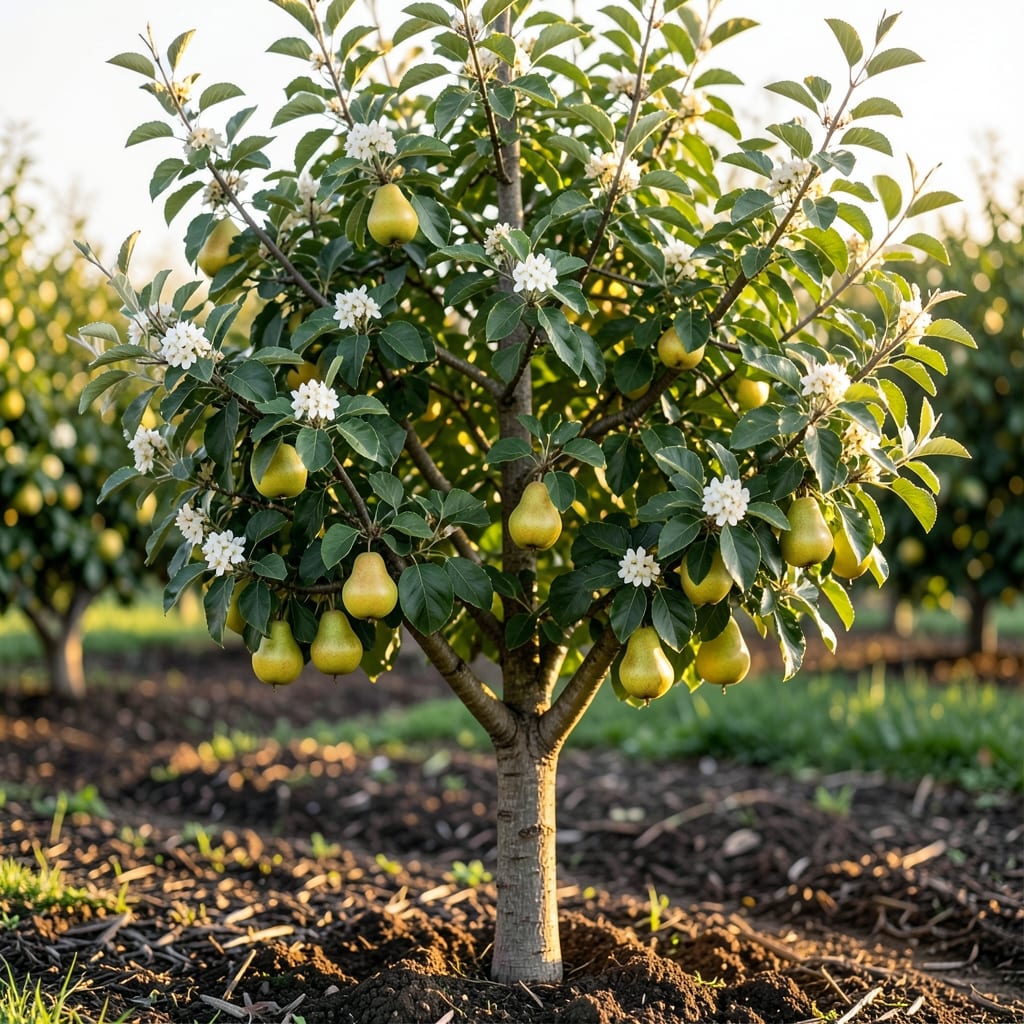
If you're wondering how tall do Asian pear trees grow, the answer might surprise you—especially if you're working with limited space. These trees can reach towering heights of 20-30 feet in standard varieties, but don’t let that intimidate you. With the right variety and care, you can enjoy crisp, sweet 🍐 fruit without sacrificing your yard’s layout.
Not all Asian pear trees demand massive space. Compact varieties like 'Chojuro' or 'Hosui' stay under 15 feet, making them perfect for urban gardens or small backyards. Whether you're a first-time gardener or a seasoned grower, choosing the right type is the key to balancing size and productivity.
Beyond variety selection, pruning and training techniques can help control height naturally. I’ll show you how to manage growth without sacrificing fruit quality, so you can enjoy the best of both worlds—abundant harvests and a tree that fits your space.
Ready to grow your own Asian pears? Let’s break down the options and tips to keep your tree at the perfect height for your garden.


Asian pear tree height by variety: compact options under 15 feet
When planning your garden, knowing how tall Asian pear trees grow helps you choose the perfect variety for your space. Standard Asian pear trees can reach 20-30 feet, but compact varieties like 'Chojuro' or 'Hosui' stay under 12 feet, making them ideal for small yards or containers.
For those with limited space, dwarf varieties are a game-changer. They mature between 8-12 feet and produce just as many sweet, crisp pears as their taller counterparts—without the space requirements. Whether you're in an urban backyard or a rural setting, the right variety ensures you get fruit without sacrificing your garden layout.
Here’s a quick comparison of popular Asian pear varieties and their mature heights:
| Variety | Mature Height | Best For |
|---|---|---|
| 'Chojuro' | 8-10 ft | Containers, small yards |
| 'Hosui' | 10-12 ft | Urban gardens, patios |
| 'Niitaka' | 12-15 ft | Medium yards, espalier |
| 'Shinseiki' | 20-25 ft | Large yards, orchards |
| 'Kieffer' | 15-20 ft | Medium yards, traditional planting |
If you're growing Asian pears in containers, stick with dwarf varieties like 'Chojuro' or 'Hosui'. These trees thrive in large pots (at least 20-gallon containers) and can be moved to optimize sunlight exposure. Just ensure the pot has drainage holes to prevent root rot.
For those with slightly more space, semi-dwarf varieties like 'Niitaka' offer a balance. They grow 12-15 feet tall and are perfect for medium-sized yards or espalier training against fences or walls. This technique not only saves space but also creates a beautiful, decorative feature in your garden.
When choosing a variety, also consider growth rates. Dwarf varieties grow 1-2 feet per year, while standard types can add 3-5 feet annually. This means your compact tree will reach maturity faster, giving you fruit sooner without the space commitment.
One common misconception is that smaller trees produce fewer pears. In reality, compact varieties yield just as many fruits as larger trees, provided they receive proper care. The key is to prune regularly to encourage a strong, productive canopy without excessive height.
For urban gardeners or those with limited space, consider espalier training. This method involves pruning and training branches to grow flat against a wall or trellis, reducing the tree’s footprint by up to 70%. It’s a fantastic way to grow Asian pears in small spaces while keeping the tree manageable.
No matter which variety you choose, always plant in well-draining soil with full sun exposure. This ensures healthy growth and maximizes fruit production, even in compact trees. With the right care, you’ll enjoy sweet, homegrown Asian pears without the space constraints of a full-sized tree.
How to control Asian pear tree height naturally (pruning & training tips)
Even with compact varieties, you can further manage Asian pear tree height using natural techniques like pruning and training. These methods help shape your tree while maximizing fruit production, ensuring it stays within your desired space. The key is timing and technique—prune at the right moments to encourage bushier growth rather than vertical expansion.
One of the most effective ways to control height is through winter pruning. This is when trees are dormant, making it easier to shape them without stress. Focus on removing suckers and water sprouts, which are fast-growing vertical shoots that waste energy. Cut these back to just above a lateral branch or bud to redirect growth outward rather than upward.
Here’s a step-by-step guide to pruning for height control:
- Step 1: Prune in late winter or early spring (before buds swell) to shape the tree without encouraging new growth too early.
- Step 2: Remove upward-growing branches to prevent the tree from becoming top-heavy. Aim for a balanced canopy with branches spreading outward.
- Step 3: Thin out crossing or rubbing branches to improve airflow and reduce disease risk, which also helps the tree focus energy on fruit production.
- Step 4: Use the open-center form for dwarf varieties, keeping the center open to allow sunlight to reach all branches. This encourages a bushier, more productive shape.
- Step 5: After harvest, do a light pruning to remove any dead or diseased wood and shape the tree for the next growing season.
For even more dramatic height reduction, try espalier training. This ancient technique involves training branches to grow flat against a wall, fence, or trellis, reducing the tree’s footprint by up to 70%. It’s perfect for urban gardens or small spaces. Start by selecting 3-4 main branches and prune them to grow horizontally. Use soft ties or clips to guide them along the support structure.
Another natural way to control height is through root pruning. If your tree is growing too quickly, gently prune the roots in early spring to slow vertical growth. Dig around the outer edges of the root ball and trim any roots that are circling or growing too aggressively. This encourages a wider, shallower root system, which can help stabilize the tree and reduce rapid height increases.
If you’re growing Asian pears in containers, regular root pruning is even more critical. Since container-grown trees have limited root space, their growth is naturally slower. However, you can further control height by repotting every 2-3 years into a slightly larger container. This gives roots more room to spread, which can help manage the tree’s overall size.
Finally, avoid over-fertilizing with high-nitrogen products, as this encourages rapid vertical growth. Instead, use a balanced fertilizer (10-10-10) and focus on organic matter like compost to promote steady, controlled growth. With these techniques, you can keep your Asian pear tree at a manageable height while still enjoying a bountiful harvest.