
How To
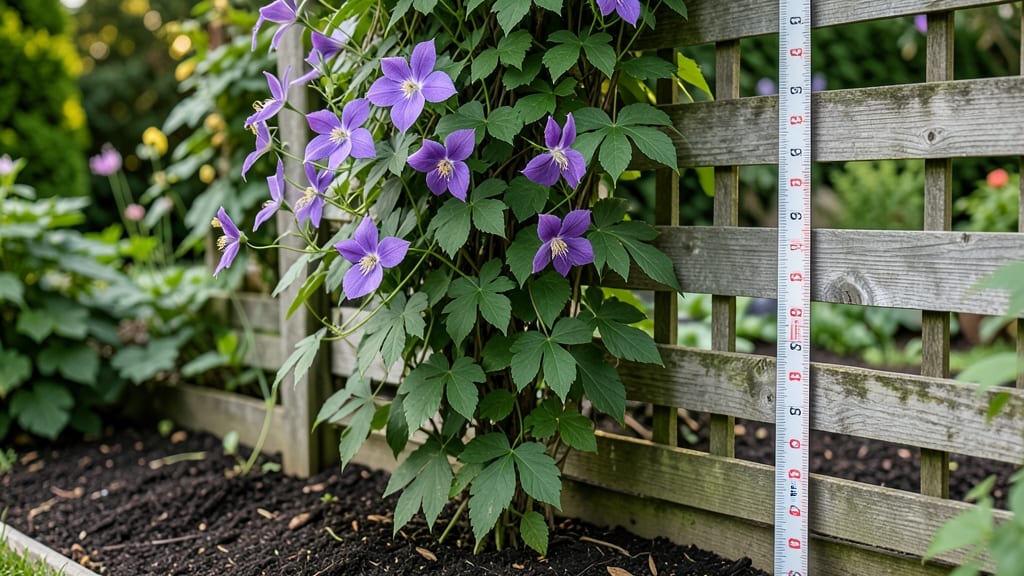
Clematis growth height by pruning Group: what to expect
Clematis plants are famous for their dramatic vertical growth, but not all varieties reach for the sky. Their mature height depends on their pruning group—a classification system that determines when and how much to trim for optimal blooms.
Understanding these groups helps you choose the perfect clematis for your space, whether it's a small balcony or a large pergola. Let’s break down the three main pruning groups and their typical heights.
The three pruning groups (Group 1, Group 2, and Group 3) each have distinct growth habits and bloom times. Group 1 clematis, like the classic 'Jackmanii', are early bloomers that grow 10-20 feet tall and thrive with minimal pruning.
Group 3 varieties, such as 'Niobe', are late-season bloomers that also reach 10-15 feet but need aggressive spring pruning to encourage new growth. Meanwhile, Group 2—ever-flowering types like 'Comtesse de Bouchaud'—grow 6-12 feet tall and bloom intermittently throughout the season.
🌿 Clematis Height by Pruning Group
| Pruning Group | Mature Height | Bloom Time | Pruning Tip |
|---|---|---|---|
| Group 1 | 10-20 ft | Early spring | Minimal pruning; trim dead stems in late winter |
| Group 2 | 6-12 ft | Intermittent (spring & fall) | Light pruning; remove dead stems after blooms |
| Group 3 | 8-15 ft | Late summer/fall | Hard pruning; cut back to first 3-4 buds in spring |
If you’re wondering how tall a clematis grows in your first year, expect 3-5 feet of growth. By year two, most varieties will surge to 6-10 feet, and by year three, they’ll reach their full mature height.
For example, 'Jackmanii' can tower over a 10-foot fence within three years, while 'Perle d'Azur', a dwarf variety, stays under 6 feet—perfect for small gardens or container growing.
Your clematis’s height also depends on its support structure. A sturdy trellis or arbor is essential for varieties over 8 feet tall, while smaller types like 'Freckles' (3-5 feet) can thrive on a simple wire mesh.
Always plant clematis near a support to avoid flopping vines and ensure healthy upward growth.
For gardeners with limited space, dwarf clematis like 'Lanuginosa' (woolly clematis) grow only 3-6 feet tall and are ideal for balconies or window boxes. These compact varieties still produce stunning blooms but won’t overwhelm your patio.
Meanwhile, large-space climbers like 'The President' can reach 15+ feet, making them perfect for covering pergolas or fences in expansive gardens.
One common mistake is assuming all clematis grow equally tall. Group 1 varieties often outpace Group 3 in height, but Group 3 plants may produce more blooms per foot of vine. This is why pruning strategy matters—it directly impacts both height and flowering potential.
For instance, if you prune a Group 3 clematis too lightly, it may grow taller but produce fewer flowers.
To maximize both height and blooms, pair your clematis with the right support structure. A strong trellis for tall varieties ensures vines grow vertically, while a small obelisk works for compact types.
Mulch around the base to retain moisture, and fertilize with a balanced NPK (5-10-10) in early spring to fuel growth. Avoid over-fertilizing with nitrogen, which promotes leafy growth at the expense of flowers.
If you’re planning your garden layout, consider the mature height of your clematis when placing it near walkways or structures. A 15-foot clematis near a patio might block sunlight or become a tripping hazard, while a 6-foot variety on a trellis adds vertical interest without crowding.
Always leave 2-3 feet of clearance around the base for airflow and maintenance.
For those in USDA Zones 6-9, clematis thrive with proper winter care. In colder zones, mulch heavily around the base to protect roots, and avoid heavy pruning in fall, which can stimulate new growth that won’t survive frost.
In warmer zones, Group 3 varieties may bloom year-round with minimal dormancy.
Clematis growth height by pruning Group: what to expect
Clematis plants are famous for their dramatic vertical growth, but their mature height varies dramatically depending on the pruning group. Understanding these groups helps you choose the right variety for your space and prune effectively.
Group 1 clematis, like the classic 'Jackmanii', can reach 10-15 feet or more, while Group 3 varieties such as 'Niobe' typically max out around 8-10 feet. Even within groups, dwarf varieties exist, making them perfect for containers or small gardens.
Group 1 clematis bloom on previous year's growth, so they need minimal pruning but can grow aggressively. Group 2 varieties, like 'The President', are early bloomers that also prefer light pruning and can climb 10-12 feet.
Group 3, the late bloomers, are the most flexible—prune them hard in early spring to encourage compact growth (6-10 feet) or lightly to let them sprawl. This flexibility makes them ideal for gardeners who want to control height while maximizing blooms.
| Pruning Group | Mature Height | Bloom Time | Example Variety |
|---|---|---|---|
| Group 1 | 10-15 ft | Early to mid-spring | 'Jackmanii' |
| Group 2 | 8-12 ft | Early summer | 'The President' |
| Group 3 | 6-10 ft (compact with pruning) | Mid to late summer | 'Niobe' |
For small gardens, prioritize Group 3 varieties like 'Perle d'Azur', which stays under 6 feet with proper pruning. These compact types thrive on trellises or arbors, adding vertical interest without overwhelming your space.
If you're working with a large pergola or fence, Group 1 or 2 clematis will cover the structure beautifully, creating a lush, romantic backdrop. Just ensure your support structure is sturdy and tall enough—clematis vines can weigh 50+ pounds when fully loaded with flowers!
Height isn’t just about aesthetics—it directly impacts pruning strategies and bloom timing. Taller varieties need stronger supports, while shorter ones can be trained horizontally along fences.
Always plant clematis with their crown 2-4 inches below soil level to protect roots from heat and cold, which also encourages stronger growth upward. This simple trick can make a noticeable difference in how quickly your vine reaches its mature height.
When planning your garden layout, consider how clematis height will interact with nearby plants. Pair tall varieties like 'Jackmanii' with shrubs or perennials that won’t be overshadowed, while dwarf clematis can spill elegantly over containers or low trellises.
Mulching around the base with organic matter helps retain moisture, which is critical for supporting the plant’s vertical growth during dry spells.
Remember, clematis height is a two-year process. In their first year, most varieties grow 3-5 feet, while mature height is reached by year three. Patience pays off—with the right support and care, your clematis will transform your garden into a vertical paradise of blooms. 🌸