
Trees
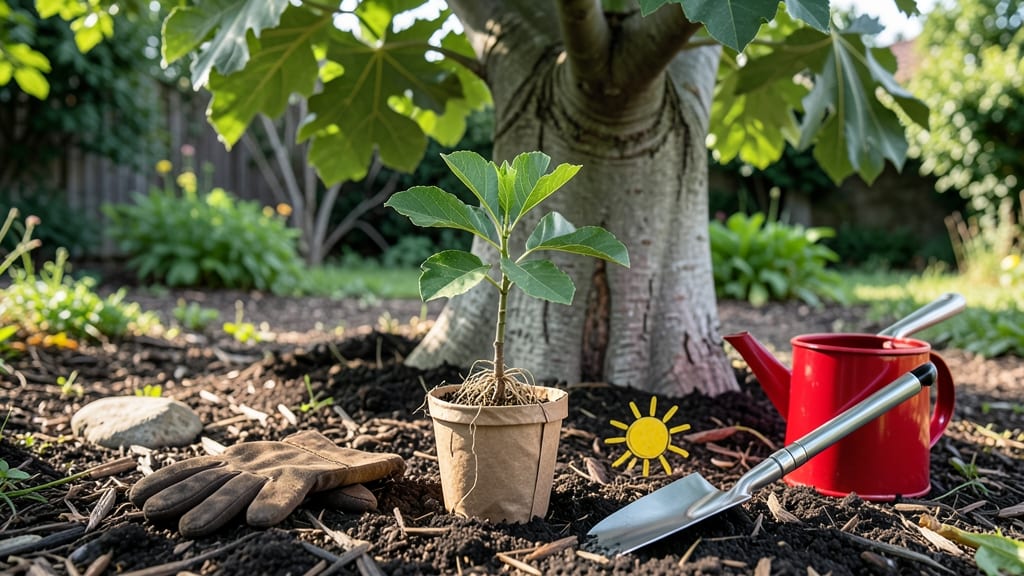
NC heat-zone planting calendar for fig trees: best months by region
North Carolina spans USDA zones 6b through 8b, creating dramatic differences in frost timing that directly impact when you can safely plant fig trees.
In zone 6b (western mountains), your last frost typically arrives by April 15-30, while coastal zone 8b gardeners enjoy frost-free conditions by March 1-15. These variations mean your planting window shifts by nearly 6 weeks depending on location.
Fig trees thrive in warm soil temperatures (60°F+), so even after your last frost, you’ll need to wait for the ground to heat up. Container-grown figs warm up faster than bare-root plants, giving you a 2-3 week advantage if you’re in doubt.
For in-ground planting, use a soil thermometer to confirm readiness—fig roots won’t activate until the soil hits 55°F consistently.
🌱 Did You Know? The Chicago Hardy fig variety is the most cold-tolerant, surviving down to -15°F with proper protection. This makes it ideal for zone 6b gardeners, while Brown Turkey and Celeste varieties prefer milder zone 7a+ climates. Always match your fig variety to your local microclimate—mountain valleys frost later than nearby ridges.
| USDA Zone | Last Frost Date | Ideal Planting Window | Best Fig Varieties | Soil Temp Threshold |
|---|---|---|---|---|
| 6b (Mountains) | April 15-30 | May 1-15 (after soil warms) | Chicago Hardy, Desert King | 60°F+ (use black plastic mulch) |
| 7a (Piedmont) | March 20-April 5 | April 1-15 | Brown Turkey, Celeste | 55°F+ (container-grown warms faster) |
| 7b (Coastal Plain) | March 1-15 | March 15-April 1 | Violette de Bordeaux, Black Mission | 50°F+ (soil warms quickly) |
| 8a (Outer Banks) | February 15-March 1 | February 28-April 15 | All varieties (longer growing season) | 45°F+ (minimal frost risk) |
For fall planting (September-October), aim to give your fig tree’s roots 6-8 weeks to establish before the first frost. In zone 7a, this means planting by September 15—any later, and young roots won’t harden in time.
Container-grown figs handle fall planting better than bare-root, as their root systems are less stressed during transplant.
Pro tip: Use a frost clock or local CoCoRaHS weather station data to track your exact last frost date. NC State Extension offices also publish county-specific frost maps each year—bookmark yours before planting season!
For example, Asheville (zone 6b) averages its last frost 2 weeks later than Raleigh (zone 7b), even though they’re only 150 miles apart.
If you’re in zone 6b and want to plant early, consider container growing with insulated pots (like those with air gaps). This lets you plant as early as late March and move containers indoors or under a frost cloth if temperatures dip below 28°F.
Just remember: fig trees need full sun year-round, so your container spot must get 6+ hours of sunlight daily, even in winter.
Heat waves can be just as damaging as frost for fig trees. In zone 8b, planting in late April risks heat stress during the tree’s critical root-establishment phase.
To mitigate this, mulch heavily (4-6 inches of straw or wood chips) and water deeply at dawn to keep soil temperatures stable. Avoid planting during NC’s peak summer heat (June-August)—fig trees planted then often bolt to flower too early, weakening their first winter survival.
For urban gardeners, microclimates can shift your planting window by 1-2 weeks. A south-facing wall might add 10°F of warmth to your planting spot, while a shady backyard could delay soil warming by 3-5 days.
Always test your planting site’s soil temperature at 4-inch depth for 3 consecutive days before planting—this is the most reliable way to avoid root shock from temperature swings.
🌿 Key Reminder: Fig trees planted in NC’s spring (March-April) will bear fruit in their first or second year, while fall-planted trees may take 1 year longer to produce. Choose your planting time based on whether you prioritize early harvests
Signs your NC climate is ready for fig tree planting (and what to watch for)
Fig trees thrive in North Carolina’s climate, but timing is everything. The last frost date in your area is your first clue—wait until after April 15 in most zones, but verify local records since microclimates (like urban heat islands) can vary by 1-2 weeks.
For example, Asheville’s last frost often hits mid-April, while coastal Wilmington may be frost-free by mid-March.
Beyond frost dates, check your soil temperature. Fig trees need soil that’s consistently above 60°F at a 4-inch depth. Use a soil thermometer to confirm—planting in 50-55°F soil can stunt root growth.
In NC’s Piedmont region, this typically aligns with late April, while mountain areas may need to wait until early May.
Don’t rush planting after one warm week in March or April—NC’s late frosts can still hit. Monitor the National Weather Service’s frost forecast for your county, and consider using frost cloth if planting early in Zone 6b-7a areas like the western mountains.
Watch for new leaf growth on existing fig trees in your area—a sign the climate has stabilized.
For container-grown figs, hardened-off plants (acclimated to outdoor temps) can go in the ground 2-3 weeks before the last frost date, but protect them with mulch or row covers if nights dip below 40°F.
Humidity is another NC-specific factor. Fig trees hate soggy roots, so avoid planting in low-lying areas where spring rains pool. Amend heavy clay soil with compost or sand to improve drainage—this is especially critical in eastern NC’s coastal plain, where poor drainage is common.
For fall planting (September-October), aim for 6-8 weeks before first frostZone 8a (e.g., Raleigh), this means planting by mid-October; in Zone 7a (e.g., Boone), wrap up by early October.
Finally, observe local fig trees in nurseries or neighbors’ yards. If you see new shoots or flowering in early spring, it’s a green light—your climate is ready. But if buds blacken or drop after a cold snap, wait another 2-3 weeks.