
Trees
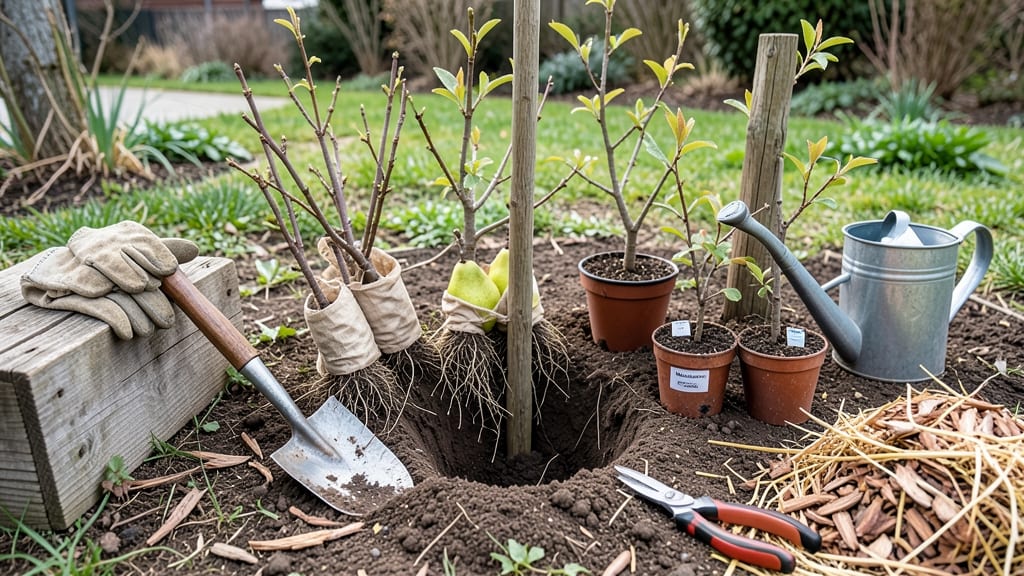
Zone 5 fruit tree planting timeline by chill-hour requirements
In Zone 5, timing your fruit tree planting to match chill-hour requirements is non-negotiable. Most fruit trees need 400-1,000 chill hours (temperatures between 32°F and 45°F) to break dormancy. Planting too early or late disrupts root establishment, leading to weak growth or winter dieback.
Your ideal planting window spans late winter to early spring (February-April) or fall (September-October). Fall planting gives roots time to establish before summer heat, while spring planting aligns with bud swelling. Let’s break down the best times for popular varieties.
🌱
| Fruit Type | Chill Hours Needed | Best Planting Time | Notes |
|---|---|---|---|
| Apple | 600-800 | Late April (bare-root) or Sept-Oct | Needs well-drained soil; avoid wet springs. |
| Peach | 400-600 | March-April or Sept | Prone to frost damage; choose late-blooming varieties. |
| Cherry | 500-700 | Late March-April or Sept-Oct | Sweet cherries need cross-pollination; plant pairs. |
| Pear | 300-500 | April or Sept-Oct | Tolerates partial shade; great for small gardens. |
| Plum | 400-600 | March-April or Sept | Dwarf varieties ideal for containers; needs support. |
For bare-root trees, plant as soon as soil is workable (40°F+) in early spring. Containerized trees can wait until late April when frost risk drops. In fall, aim for 6-8 weeks before first frost to allow root establishment.
If you’re planting dwarf varieties, prioritize spring planting—their smaller root systems need extra time to adapt. Use mulch (3-4 inches) to insulate roots in winter and retain moisture in summer.
🌿
Pro tip: Check your local last frost date (typically mid-May in Zone 5) and plant 2-3 weeks before to avoid late-season cold snaps. For example, apples planted in late April have 6 weeks of root growth before summer heat stress begins.
Container-grown trees can be planted 1-2 weeks later than bare-root varieties since their roots are less sensitive to transplant shock. Always soak containerized roots for 1-2 hours before planting to reduce shock.
🪴
Remember: Peaches and cherries are frost-sensitive. Plant them in south-facing locations with 6+ hours of sun to accelerate warming and reduce late-frost risks. If your area has unpredictable frost, consider windbreaks or microclimate spots near buildings.
Finally, avoid planting during extreme heat (>85°F) or freezing temperatures (<32°F). Use shade cloth if planting in summer and protect young trees with burlap wraps in winter.
Zone 5 fruit tree planting timeline by chill-hour requirements
In Zone 5, timing your fruit tree planting around chill hours (typically 400–1,000 hours below 45°F) ensures the tree enters dormancy properly. Most varieties—like apples and peaches—need 500–800 chill hours, while cherries and plums often require 900+ chill hours.
Planting outside these windows risks poor root establishment or winter damage.
For bare-root trees, the best time is late winter to early spring (February–March) when the ground is workable but before buds swell. Containerized trees can also go in fall (September–October), giving roots time to settle before winter. Avoid planting when soil temps exceed 70°F—this stresses young roots.
Here’s how popular fruit trees align with Zone 5’s chill-hour windows and frost-free periods:
For fall planting, aim for 6–8 weeks before the first frost (typically September–October in Zone 5). This gives roots time to establish before winter dormancy. Use mulch (4–6 inches) to insulate roots and retain moisture.
If planting in spring, wait until 2–3 weeks after the last frost—check your local USDA frost map for precise dates.
Pro tip: Soil temperature matters more than air temperature. Use a soil thermometer—plant when it’s consistently above 45°F for at least a week. Cold soil slows root growth, while soil above 70°F can shock roots. Balance is key!