
Flowers
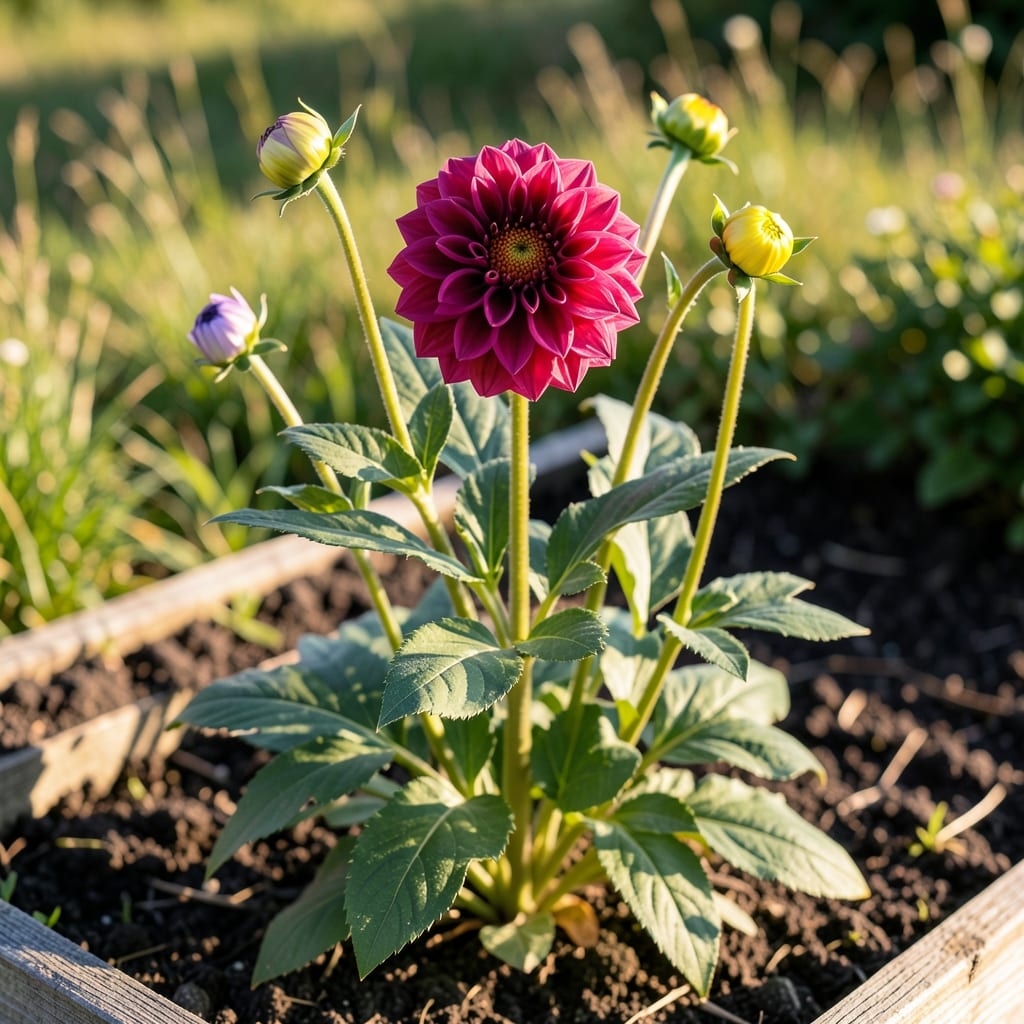
Dahlia height categories: from tiny dwarfs to towering giants
When you're planning your garden, knowing how tall dahlias grow helps you decide where to plant them—whether they'll peek over your fence or stay neatly tucked into a container. Dahlias span an incredible range, from 12-inch dwarfs to 8-foot giants, making them versatile for any space. The height you choose affects everything from spacing requirements to support needs, so let's break down the categories.
Dwarf dahlias, like 'Mignon' or 'Little Chief', stay compact at 12-24 inches, perfect for borders or containers. These varieties are ideal if you have limited space or want to create a low-maintenance display. Their smaller stature also means they need less staking, saving you time and effort during the growing season.
| Category | Height Range | Best For | Support Needed |
|---|---|---|---|
| Dwarf | 12"–24" | Containers, borders, rock gardens | Minimal (optional small stakes) |
| Semi-Dwarf | 24"–36" | Front of beds, mixed borders | Light staking (1-2 stakes) |
| Standard | 36"–48" | Back of beds, cut flower gardens | Moderate (3-4 stakes or cages) |
| Giant | 48"–84" | Backdrops, focal points, trellises | Heavy (6+ stakes or cages) |
Semi-dwarf varieties, such as 'Café au Lait' or 'Thomas Edison', reach 24-36 inches, making them perfect for the front of garden beds or mixed borders. These plants offer a balance between manageable height and dramatic blooms, often producing larger flowers than their dwarf counterparts. They typically require only light staking to keep them upright.
For gardeners with more space, standard dahlias like 'Bishop' or 'Karma Choc' grow 36-48 inches tall, ideal for the back of beds or cut flower gardens. These varieties need moderate support, such as 3-4 stakes or a small cage, to handle their weight. Their height also makes them great for creating vertical interest in your landscape.
At the extreme end of the spectrum, giant dahlias like 'Arabian Night' or 'Black Narcissus' can reach 6-8 feet, rivaling small trees. These are showstoppers for backdrops, focal points, or trellises. However, their heavy stems require heavy-duty support, often needing 6+ stakes or a sturdy cage to prevent flopping over.
Choosing the right height for your garden isn't just about aesthetics—it's also about practicality. Taller dahlias need more space between plants (up to 3-4 feet apart for giants) to avoid crowding, while dwarfs can be planted 12-18 inches apart. Additionally, taller varieties may need extra watering to reach their full potential, as their roots work harder to support their height.
If you're unsure which height to choose, consider your garden's layout and design goals. For example, a container garden might only accommodate dwarfs, while a privacy screen could benefit from giants. Mixing heights can also create visual layers, adding depth and interest to your space.
In my own garden, I’ve found that medium-height dahlias (36-48 inches) strike the perfect balance—they’re tall enough to add drama but don’t require as much maintenance as giants. Plus, their blooms are at eye level, making them easier to enjoy without bending over.
Remember, the height of your dahlias can also be influenced by pruning and care. Even giant varieties can be kept shorter with strategic pruning, while dwarf varieties may grow taller if given extra nutrients. The key is to observe and adjust as your plants grow.
Dahlia height categories: from tiny dwarfs to towering giants
When planning your dahlia garden, height is one of the first factors to consider—it determines everything from spacing to support structures and even bloom visibility. Dahlias span an incredible range, from dwarf varieties that barely peek over a patio table to giant cultivars that reach the eaves of your house. Understanding these categories helps you create a cohesive, functional, and visually stunning display.
The American Dahlia Society categorizes dahlias into four primary height groups, each with distinct characteristics. Dwarf varieties (12–24 inches) are perfect for containers or front-of-border plantings, while giant varieties (5–8 feet) demand serious space and structural support. Knowing which category your dahlias fall into ensures you allocate resources—like stakes, cages, or trellises—efficiently and avoid overcrowding.
One common misconception is that all dahlias will grow to their maximum potential without intervention. In reality, genetics set the baseline, but environmental factors like sunlight, soil fertility, and pruning can push a plant toward the higher or lower end of its range. For example, a 'Thomas Edison' semi-dwarf might only reach 2 feet in partial shade but stretch to 4 feet with full sun and rich compost.
For containers, stick to dwarf or semi-dwarf varieties to avoid root-bound stress. A 15-gallon pot can comfortably accommodate a 2-foot-tall dahlia, but a giant variety would require a massive container (30+ gallons) and still struggle with stability. Always leave 12–18 inches of space between plants in the ground to allow airflow and reduce disease risks like powdery mildew.
If you’re designing a cut-flower garden, prioritize medium-height dahlias (3–4 feet). These strike a balance between easy access for harvesting and dramatic impact in bouquets. Place taller varieties toward the back of the bed or along fences where their height can be leveraged for vertical interest without blocking sunlight from shorter plants.
Remember, first-year growth is often slower than mature heights suggest. A giant dahlia might only reach 3 feet its first season but can double in height by its third year. Plan accordingly, and don’t hesitate to prune strategically to encourage bushier growth or control height in tight spaces.