
Light Requirements
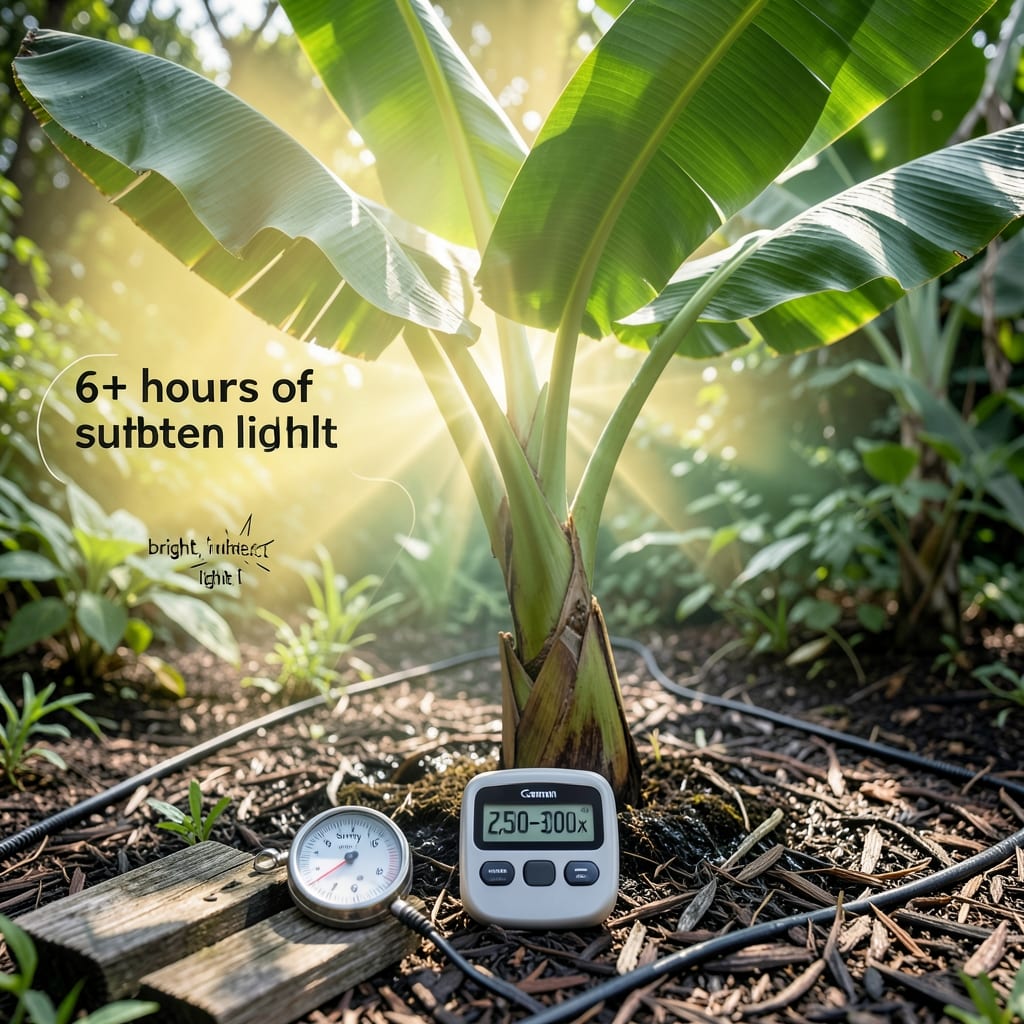
If your 🍌 banana plant is growing slower than a sloth on a lazy Sunday, it might be starving for the right amount of light—and you’re not alone in guessing how much it really needs. Too little sunlight, and you’ll end up with leggy, weak stems; too much, and those lush leaves will crisp like overcooked fries. The secret to fast, healthy growth lies in understanding the exact light balance your tropical friend craves.
Most gardeners assume banana plants need full sun all day, but the truth is more nuanced. While these giants love bright conditions, they’re actually sensitive to intense afternoon rays that can scorch their leaves. What they really need is 6-8 hours of direct sunlight—think morning sun with some afternoon shade, especially in hot climates like USDA Zone 6a. This sweet spot keeps them thriving without stress.
Here’s the game-changer: whether you’re growing your banana plant indoors by a south-facing window or outdoors in a sunny patch, small adjustments can make all the difference. I’ll show you how to spot light-related problems—like yellowing leaves or stunted growth—and fix them before they derail your plant’s progress. Ready to give your banana plant the perfect light prescription?
From seedlings to fruit-bearing giants, every stage has unique light needs. By the end, you’ll know exactly how to position your plant for optimal growth, whether you’re working with limited indoor space or a backyard oasis. Let’s get those leaves shining bright and those bunches plumping up!

Banana plant light requirements by growth stage: sunlight hours breakdown
Banana plants aren’t one-size-fits-all when it comes to light—what works for a seedling can scorch a fruiting plant. Each growth stage demands slightly different light conditions to avoid stress, stunted growth, or even leaf burn. Understanding these shifts is key to growing a banana plant that reaches its full 15-25-foot potential.
The seedling stage (first 6 months) is the most delicate. Young banana plants need 4-6 hours of bright, indirect light daily. Too much direct sun at this stage causes leaf scorch, while too little leads to weak, leggy stems that struggle to support future fruit. Think of it like raising a toddler—gentle but consistent care builds a strong foundation.
As your plant enters the vegetative stage (6-18 months), its light needs ramp up to 6-8 hours of direct sunlight. This is when those iconic banana leaves unfurl rapidly, and the plant starts developing its muscular pseudostem. Morning sun (6 AM–12 PM) is ideal, but afternoon shade becomes crucial in hot climates like USDA Zone 6a to prevent heat stress.
When your banana plant reaches the flowering stage (18+ months), it becomes even more light-sensitive. The inflorescence (flower stalk) requires 8+ hours of bright light to develop properly, but direct afternoon sun can cause the delicate flower buds to wilt. Here’s the trick: position your plant where it gets morning sun and filtered afternoon light, like under a sheer curtain or near a south-facing window with partial shade.
The fruiting stage is when most gardeners panic—will my bananas ripen properly? The answer lies in maintaining 6-8 hours of direct sunlight while protecting the fruit from intense afternoon rays. Mature banana plants can handle more sun than younger ones, but their leaves act as natural sunscreen. If you notice the outer leaves curling or browning, it’s a sign of too much exposure.
Indoor growers face unique challenges. A south-facing window provides the best natural light, but even there, banana plants may need supplemental grow lights (12-14 hours/day) to mimic tropical conditions. Without enough light, indoor banana plants become etiolated—long, weak, and prone to falling over.
🌱 Banana Plant Light Requirements by Growth Stage
| Stage | Ideal Light Hours | Key Notes | Indoor Adjustments |
|---|---|---|---|
| Seedling (0-6 months) | 4-6 hours | Bright, indirect light; avoid direct sun | South-facing window + grow light 4 hrs/day |
| Vegetative (6-18 months) | 6-8 hours | Morning sun + afternoon shade; prevent leaf burn | Grow light 8-10 hrs/day; rotate plant weekly |
| Flowering (18+ months) | 8+ hours | Bright but filtered light; protect flower stalk | LED grow light 12+ hrs/day; keep 12-18" away |
| Fruiting (Year-round) | 6-8 hours | Morning sun; shield fruit from harsh afternoon rays | South window + supplemental light; prune lower leaves |
One common misconception is that banana plants thrive in full sun all day. While they love bright conditions, tropical banana plants in their native habitats often grow under the canopy of larger trees, which filters sunlight. Recreating this balance is easier than you think—just observe your plant’s leaves. If they’re yellowing at the edges, it’s too much sun; if they’re dark green and sparse, it’s not enough.
Outdoor banana plants in USDA Zone 6a can handle more direct sunlight than indoor plants, but even they benefit from afternoon shade during summer’s peak heat. A simple trick is to plant them near a tall fence or tree that provides natural shade after 2 PM. For container growers, move pots to a shaded area during the hottest part of the day to prevent root stress.
Remember, banana plants are not true trees—they’re giant herbaceous plants with delicate systems. Giving them the right light at each stage isn’t just about aesthetics; it directly impacts fruit production. A well-lit banana plant will develop larger, healthier leaves that support heavier bunches of fruit and recover faster from pests or disease.
Start by assessing your plant’s current light conditions. If you’re unsure whether it’s getting enough, try this test: place a white piece of paper near the plant for an hour. If the paper stays bright white, your plant is getting sufficient light. If it yellows or fades, it’s time to adjust.
How to provide perfect light for banana plants: indoor vs. outdoor solutions
Banana plants are sun-worshippers, but their light needs shift dramatically between indoor and outdoor environments. While outdoor plants bask in natural tropical conditions, indoor growers must get creative to replicate that bright, filtered sunlight. The key is understanding how to maximize natural light while supplementing strategically—especially in spaces with limited windows or harsh afternoon glare.
A south-facing window is your best bet for indoor growing, offering the most consistent light throughout the day. However, even this may not provide enough intensity for mature banana plants. Without proper light, indoor banana plants become etiolated, growing tall and weak with pale leaves that can’t support heavy fruit. The solution? Combine natural light with grow lights to create a balanced light spectrum that mimics their native habitat.
Outdoor banana plants have it easier—just plant them in a location with 6-8 hours of morning sun and afternoon shade. In hot climates like USDA Zone 6a, direct afternoon sunlight can scorch leaves, so providing dappled shade after 2 PM is crucial. A simple shade cloth or nearby tree can make all the difference. For container growers, mobility is your friend—move pots to shaded areas during peak heat to prevent root stress.
🌱 Indoor vs. Outdoor Light Solutions for Banana Plants
Indoor Solutions
- South-facing window: Best natural light source
- Grow lights: LED or fluorescent, 12-14 hrs/day
- Rotate plants: Weekly to prevent uneven growth
- Avoid north-facing: Too little light for healthy growth
Outdoor Solutions
- Morning sun: 6-8 hours of direct light
- Afternoon shade: Use shade cloth or trees
- Mobile containers: Move pots during peak heat
- Wind protection: Prevents leaf burn from dry winds
When supplementing with grow lights, LED bulbs are the gold standard for banana plants. They emit a full-spectrum light that mimics sunlight, promoting healthier growth and better fruit development. Fluorescent bulbs work too, but they’re less efficient and may not provide enough intensity for mature plants. Position LED grow lights 12-18 inches above your banana plant and keep them on for 12-14 hours per day to replicate tropical daylight conditions.
Avoid these common mistakes that can derail your banana plant’s growth. First, don’t overwater in low-light conditions—banana plants need more water when they get plenty of light, but too much moisture in dim spaces leads to root rot. Second, never place your plant near a cold window in winter, as drafts can shock the roots. Finally, resist the urge to crowd your banana plant with other houseplants—it needs unobstructed access to light to thrive.
For outdoor growers in cooler climates, consider using a greenhouse or cold frame to extend the growing season. These structures protect your banana plant from frost while maximizing sunlight exposure. Even in USDA Zone 6a, where winters can be harsh, a well-insulated greenhouse allows you to grow banana plants year-round with proper light management and temperature control.
Start by assessing your space. If you’re indoors, measure the light intensity near your banana plant using a light meter or the white paper test mentioned earlier. If the light is insufficient, invest in a quality grow light and adjust your plant’s position daily to ensure even growth. For outdoor plants, observe how the sunlight moves across your yard throughout the day—this will help you determine the best spot for your banana plant’s long-term health.