
Light Requirements
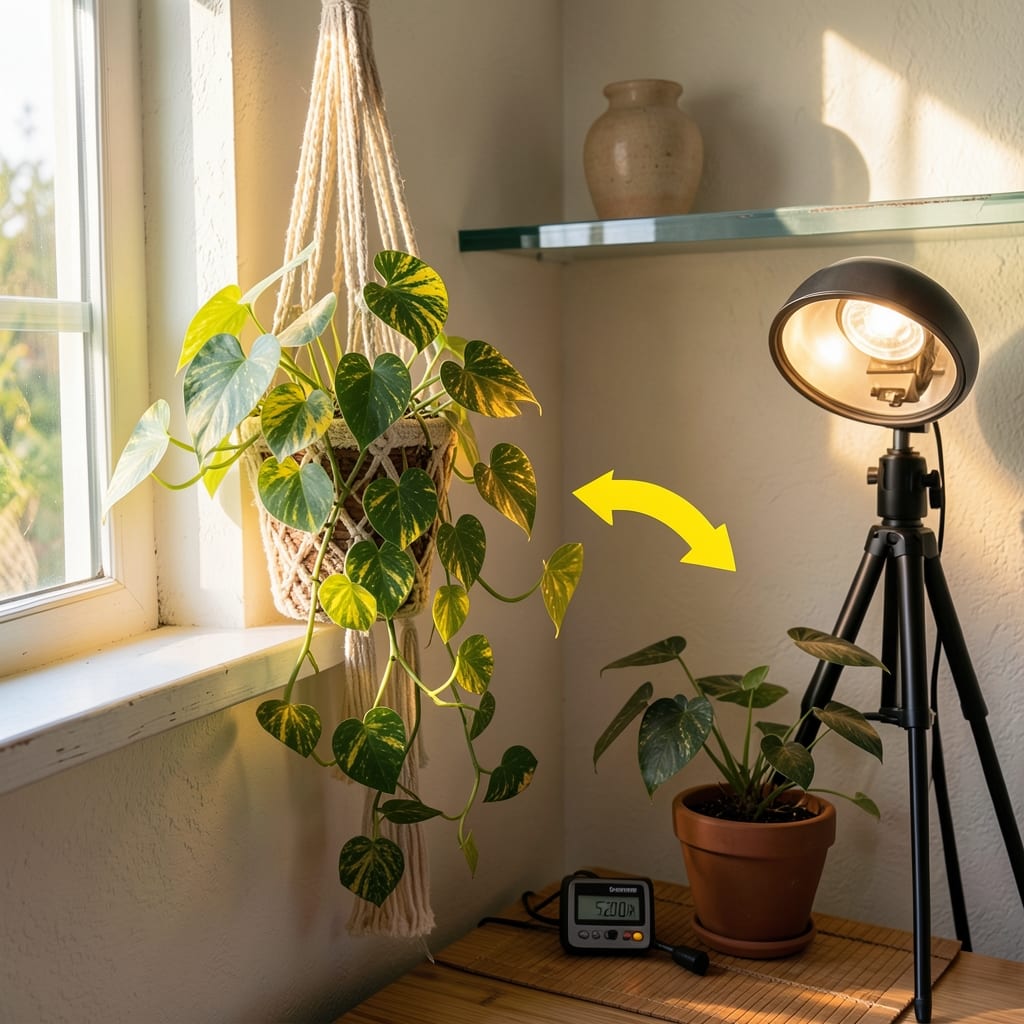
If your pothos 🌿 leaves are turning yellow or stretching too thin, you might be guessing about how much light does a pothos plant need—and that’s the problem. This adaptable vine thrives in conditions most people overlook, but getting the lighting just right can transform your plant from sad to stunning in weeks.
Pothos isn’t picky, but it does have a sweet spot: bright indirect light that mimics its natural jungle habitat. Too little, and it becomes leggy and weak; too much, and those gorgeous variegated leaves lose their pattern. The good news? You don’t need a greenhouse—just a few simple tweaks to your space can make all the difference.
Let’s break down the exact light zones your pothos prefers, how to spot when it’s happy (or struggling), and what to do if your office, bathroom, or sunny windowsill isn’t cutting it. No more guesswork—just lush, thriving vines that keep growing year-round.
Ready to save your plant before it’s too late? I’ll show you how to diagnose the issue in 3 simple steps and adjust the light like a pro—even if you’ve never gardened before.

Pothos light requirements: the 3 brightness zones that keep leaves vibrant
Your pothos plant (Epipremnum aureum) is a master of adaptability, but that doesn’t mean it thrives in every corner of your home. Understanding its light zones is the key to preventing yellowing leaves and encouraging lush, variegated growth. Pothos can survive in conditions where other plants would struggle, but pushing it too far in either direction—too dim or too harsh—will show up in its foliage.
The secret lies in recognizing the three brightness zones that keep pothos happy: low light, medium indirect light, and bright indirect light. Each zone affects growth speed, leaf color vibrancy, and even vine length. For example, a pothos in low light might grow slowly with darker green leaves, while one in bright indirect light will show off its stunning variegation and grow faster. Let’s break down what each zone looks like in real life.
🌱 Pothos Light Zones at a Glance
| Zone | Light Description | Ideal Locations | Leaf Color & Growth |
|---|---|---|---|
| Low Light | Fluorescent lighting, north-facing windows, or rooms without direct sun | Offices, bathrooms, hallways | Darker green leaves, slower growth, leggy vines |
| Medium Indirect Light | Bright indirect light from east/west windows, 2-3 feet from a south-facing window | Living rooms, kitchens, home offices | Balanced variegation, moderate growth, healthy foliage |
| Bright Indirect Light | Dappled sunlight or sheer curtain-filtered light from south-facing windows | Sunrooms, near skylights, under trees outdoors | Vibrant variegation, faster growth, bushier plants |
💡 Pro Tip: Rotate your pothos quarterly to ensure even light exposure and prevent lopsided growth.
If you’re unsure whether your space qualifies as low light, medium indirect, or bright indirect, here’s how to test it: Place a white piece of paper near your pothos for a few hours. If the paper stays bright and unmarked, you’re in the bright indirect zone. If it has a faint shadow, you’re in medium indirect. If it’s almost completely dark, you’re in low light. This simple trick helps you match your pothos to the perfect spot.
One common misconception is that pothos can thrive in any light, so people often place them in dim corners or directly under harsh overhead lights. While pothos is drought-tolerant, it’s not light-tolerant in the same way. Pushing it into low light for months will lead to yellowing leaves and stunted growth. On the flip side, placing it in direct sunlight can scorch its delicate leaves, causing brown patches. The goal is to find that sweet spot where your pothos gets enough light to stay vibrant without risking damage.
For those in apartments or offices with limited natural light, don’t despair—pothos can still thrive! Fluorescent lighting or even LED bulbs designed for plants can supplement natural light. Look for bulbs labeled "full-spectrum" or "grow lights", and place them about 6-12 inches above your plant for 12-14 hours a day. This mimics the medium indirect light zone and keeps your pothos happy even in the dimmest spaces.
Outdoor gardeners might wonder if pothos can handle outdoor light conditions. While pothos is often grown indoors, it can adapt to outdoor spaces—with caution. In shady gardens or under dappled sunlight, pothos thrives as a trailing plant in hanging baskets or climbing a trellis. However, avoid placing it in full sun outdoors, as the intense rays can cause leaf burn. If you’re growing pothos outside, monitor it closely and bring it indoors if you notice brown or crispy edges on the leaves.
Another pro tip: Pay attention to your pothos’ leaf color. Healthy variegated pothos should have a mix of green and yellow or white patterns. If the variegation fades to all green, it’s a sign of low light. Conversely, if the leaves develop brown spots or look dry and papery, it’s getting too much direct light. These visual cues are your pothos’ way of communicating its needs—learn to read them, and you’ll keep your plant looking its best.
Let’s address a frequent question: Can pothos survive in a bathroom? The answer is yes—but with conditions. Bathrooms often have low light and high humidity, both of which pothos can handle. However, if your bathroom has a window with medium indirect light, that’s even better. Just avoid placing it directly in front of a shower or near vents that might dry out the air too much. A happy pothos in a bathroom adds a touch of greenery to a space that’s often overlooked for plants.
In summary, your pothos’ light needs boil down to this: indirect light is key. Whether you’re working with fluorescent bulbs, a north-facing window, or a sunny patio with shade, aim for a balance that keeps the leaves vibrant and the growth steady. With the right light, your pothos will reward you with lush, trailing
Signs your pothos isn’t getting enough light (and how to fix it fast)
If your pothos plant is showing signs of light deprivation, it’s sending you clear (but often overlooked) signals. The most common red flags include yellowing leaves, leggy growth, and dull variegation. These aren’t just cosmetic issues—they’re your pothos begging for more light. The good news? Fixing these problems is easier than you think, and most solutions require minimal effort or cost.
One of the first signs your pothos needs more light is when its leaves lose their variegation. Healthy pothos should display a mix of green and yellow or white patterns. If the leaves turn all green, it’s a classic sign of low light stress. This happens because the plant prioritizes survival over color production when light is scarce. Another giveaway is long, thin stems with sparse leaves—this leggy growth is your pothos stretching toward any available light, even if it’s weak.
⚠️ Warning: Don’t Ignore These Light Deprivation Signs!
If you notice yellowing leaves or brown patches, it’s often too late to reverse the damage. Act fast by moving your pothos to a brighter spot or supplementing with grow lights. Ignoring these signs can lead to leaf drop or even plant death over time.
💡 Pro Tip: Check the underside of leaves—if they’re pale or yellowing, it’s a sure sign of light starvation.
Let’s tackle the most common fixes for light-deprived pothos. First, if your plant is in a dim corner or bathroom without a window, move it to a brighter location. Even a spot near a north-facing window or under a fluorescent bulb can make a world of difference. If relocating isn’t an option, consider adding a reflective surface, like a white wall or mirror, to bounce more light onto your plant. This simple trick can double the effective light your pothos receives.
For those in apartments or offices with limited natural light, grow lights are a game-changer. A full-spectrum LED bulb (like those designed for plants) placed 6-12 inches above your pothos for 12-14 hours a day mimics the medium indirect light zone. You don’t need expensive equipment—affordable options under $20 can work wonders. Just avoid placing the bulb too close, as this can cause leaf burn.
Another quick fix is to rotate your pothos every 2-4 weeks. Plants grow toward light sources, so if one side is always facing the window, it can become lopsided. Rotating ensures even growth and helps the plant utilize light more efficiently. Pair this with a light-colored pot, which reflects more light than dark containers, giving your pothos an extra boost.
If you’ve tried everything and your pothos still looks unhappy, it might be time to prune and propagate. Snip off the leggy, yellowing stems and place them in water to grow new plants. This not only revives your existing pothos but also gives you free baby plants to place in brighter spots. Think of it as a reset button for your plant’s health.
Remember, pothos is resilient, but it won’t tolerate neglect forever. The key is to act before the damage worsens. Start by assessing your plant’s current light conditions, then adjust gradually. Within a few weeks, you’ll see new growth, brighter variegation, and a plant that’s thriving instead of struggling. Your pothos will thank you with lush, vibrant foliage that keeps growing for years!