
Trees
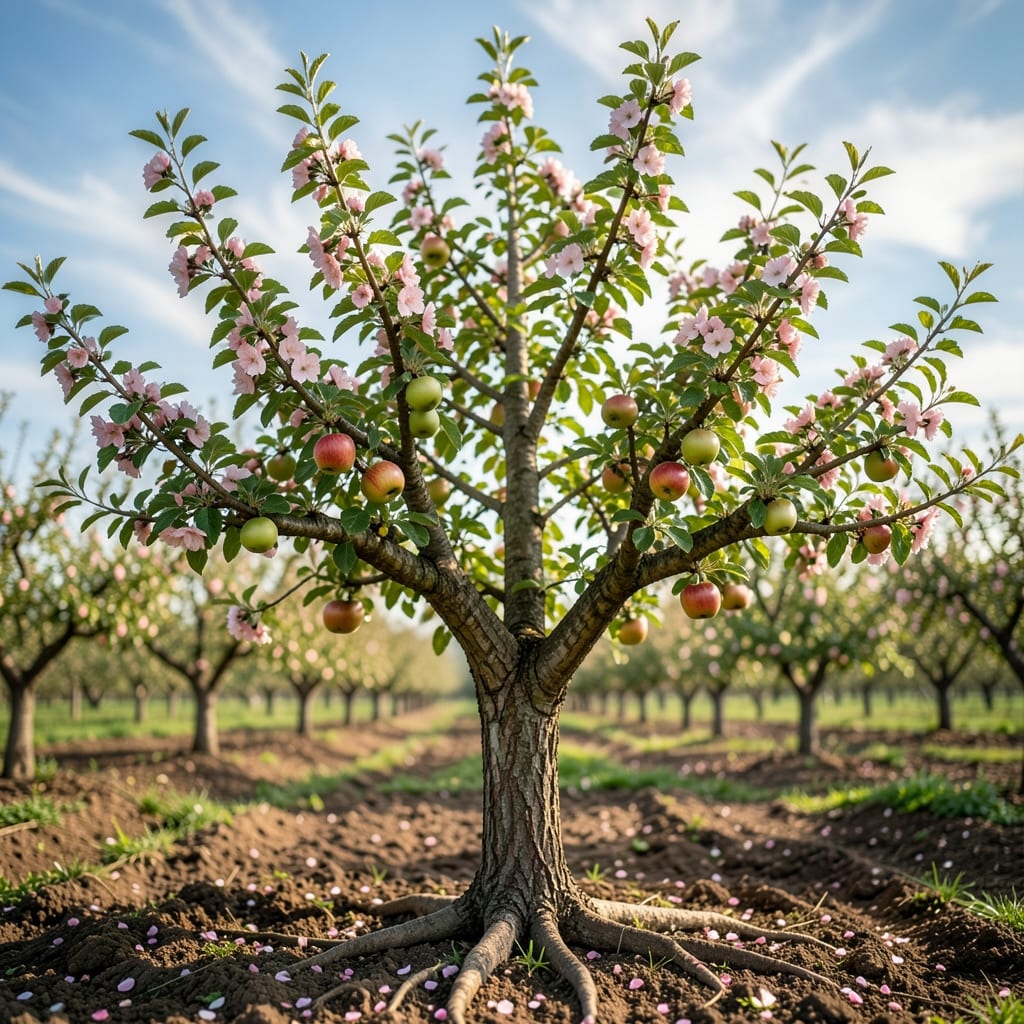
If you’ve ever wondered how tall apple trees grow—and whether your backyard can handle one—you’re not alone. Some varieties stretch taller than a two-story house, while others stay small enough for containers, making the difference between a dream harvest and a space nightmare.
Picture this: a 🍎 apple tree thriving in your garden, but the wrong choice could leave you with a towering giant crowding out your patio or driveway. The secret lies in rootstock, pruning, and even your local climate—factors that turn a 15-foot dwarf into a 30-foot standard in just a few years.
Whether you’re working with a cozy urban yard or a sprawling rural plot, knowing these growth patterns is the key to picking the perfect tree. I’ll break down the height ranges, spacing rules, and care tips so you can enjoy fresh apples without the headache of a runaway giant.
Ready to turn your space into an orchard? Let’s dive into the varieties, pruning tricks, and spacing secrets that will keep your 🍎 apple tree happy—and your yard manageable.


Apple tree height by variety: compact vs. standard types for small gardens
Choosing the right apple tree variety starts with understanding how tall apple trees grow—because a 20-foot standard tree won’t fit in most backyards, while a 6-foot dwarf can thrive in containers. The difference? Rootstock, the underground part of the tree that controls height and vigor.
Dwarf apple trees, grafted onto M.9 or B.9 rootstock, typically reach 6–12 feet at maturity, making them perfect for small gardens or even large pots. Semi-dwarf varieties (like M.7 rootstock) grow 12–18 feet, while standard trees (seedling rootstock) can soar to 20–30 feet—think towering giants that need serious space.
Here’s the game-changer: Columnar apple trees (like ' columnar Honeycrisp') stay under 8 feet tall but produce full-sized fruit. If you’re working with limited space, these are my top picks for urban orchards or patio planting.
If you’re torn between varieties, consider climate compatibility. For example, 'Liberty' (a semi-dwarf) thrives in USDA Zones 4–8 and resists disease, while 'Arctic Sweet' (a dwarf) handles colder zones but needs protection from late frosts.
For container growing, stick to dwarf varieties in 15–25 gallon pots with well-draining soil. Just remember: even dwarf trees need full sun (6+ hours daily) to produce fruit. Skimp on light, and you’ll get sparse harvests—or no apples at all.
Now, let’s talk growth rates. A dwarf apple tree might grow 1–2 feet per year in ideal conditions, while a standard tree can shoot up 3–5 feet annually if unchecked. Pruning plays a huge role here—more on that in the next section!
My personal favorite for small spaces? The 'columnar Evereste'—it’s disease-resistant, stays under 8 feet, and produces hundreds of apples per year. Perfect for a sunny patio or balcony!
Before you plant, measure your space. A 20-foot standard tree needs 20 feet of clearance in all directions—no exceptions. That’s why I always recommend dwarf or semi-dwarf varieties for suburban gardens.
🍏
Proper spacing rules for apple trees based on size and garden layout
Spacing your apple tree correctly isn’t just about giving it room to grow—it’s about ensuring air circulation, sunlight access, and root development for a healthy, productive tree. The wrong spacing leads to crowded branches, disease risks, and poor fruit quality. For example, a 20-foot standard tree needs at least 20 feet of clearance in all directions, while a 6-foot dwarf can thrive just 6 feet apart from other plants.
Here’s the golden rule: Mature height + 3–5 feet equals your minimum spacing. This accounts for the tree’s eventual spread and prevents future pruning headaches. For instance, a 12-foot semi-dwarf should get 12–15 feet of space, while a 30-foot standard needs a 25–30-foot radius to avoid shading out neighboring plants.
For urban gardens or small yards, consider espalier training, which flattens trees against fences or walls. This technique lets you grow full-sized apples in just 6–8 feet of width—perfect for backyards with limited space. Just ensure the wall faces south for maximum sunlight.
If you’re planting multiple trees, arrange them in a quadrant or cross pattern to maximize airflow. For example, place 4 dwarf trees in a 10x10 ft square—this creates a mini-orchard that’s easy to manage and harvest. Avoid planting trees too close to buildings or fences, as roots can damage foundations or structures over time.
One common mistake? Assuming container-growing rules apply to in-ground planting. While a 15-gallon pot works for dwarf trees, in-ground spacing must account for root spread, which can extend 2–3 times the canopy width. For example, a 10-foot dwarf tree might need 20–30 feet of root zone in the ground.
Pro tip: Mark your spacing with stakes or spray paint before planting. This ensures you don’t accidentally crowd trees or plant them too close to property lines. And remember—pruning later won’t fix poor spacing. It’s better to plan ahead than to struggle with a tree that outgrows its space.
🌳