
Trees
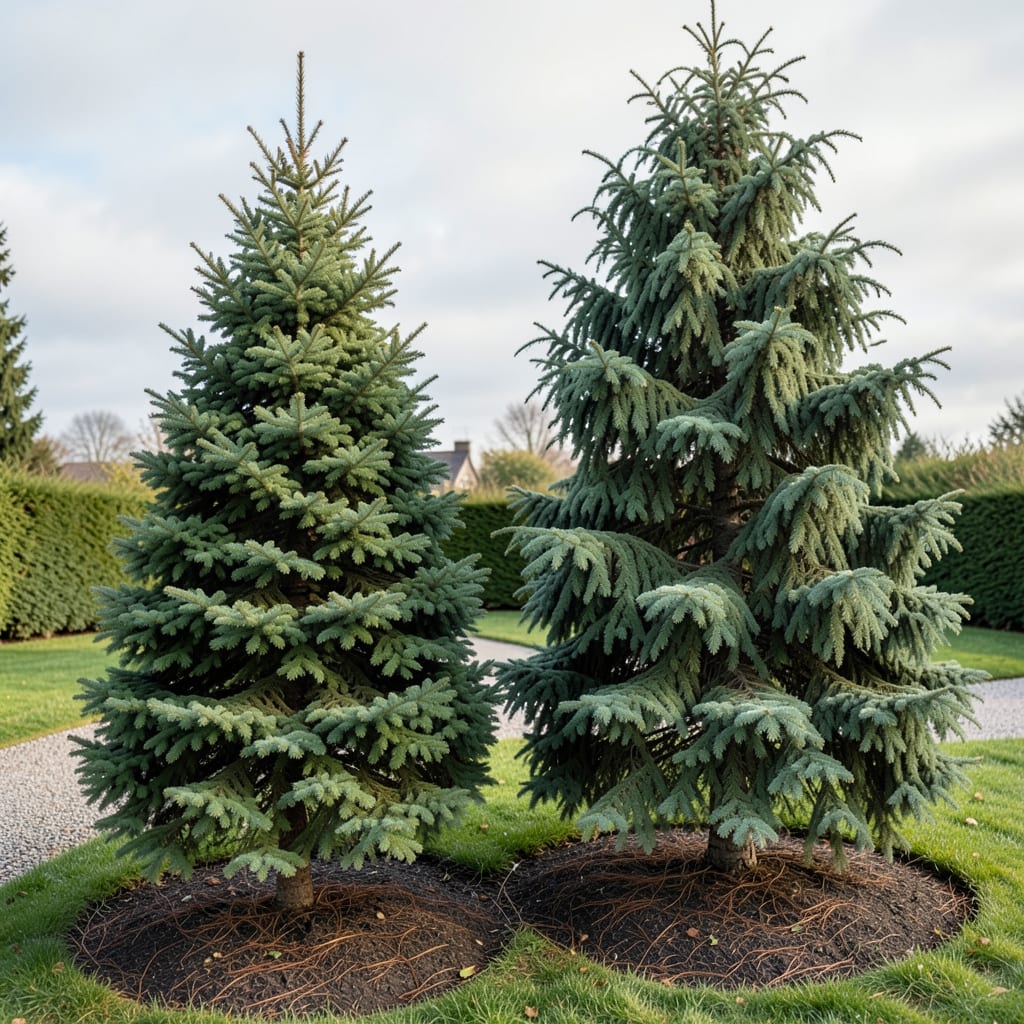
If you're planning your landscape and wondering "how tall do arborvitae trees grow", you're in for a pleasant surprise—these evergreen 🌲 stars come in sizes for every space, from towering giants to tiny tabletop trees.
Some varieties like the Green Giant can reach 60 feet tall, making them perfect for privacy screens or large property borders, while others like the Emerald Green stay neatly under 15 feet, ideal for smaller yards or foundation plantings.
What you'll discover here is how to match the right arborvitae to your space, plus pruning secrets that control height without sacrificing beauty. Whether you're designing a cozy backyard retreat or a grand estate, we've got the variety breakdown and growth tips you need.
Let's explore the height ranges, growth rates, and smart placement strategies that will help you turn your arborvitae dreams into a reality—no matter how much (or little) vertical space you have to work with.


Arborvitae height chart: fastest-growing varieties compared
When planning your landscape, understanding how tall arborvitae trees grow is key to avoiding surprises. The Green Giant variety, for example, can shoot up to 60 feet—taller than a 3-story building—while others like Emerald Green stay compact at just 12-15 feet. These differences aren't just about aesthetics; they dictate spacing, sunlight needs, and even pruning strategies.
Growth rates also vary wildly: some arborvitae gain 2-3 feet per year in their youth, while slower growers add only 6-12 inches annually. This means a 10-foot tree today could be a 30-foot privacy wall in 10 years if you choose the wrong variety. Let's break down the fastest-growing types and their mature heights so you can pick the perfect fit for your space.
| Variety | Mature Height | Growth Rate | Spacing Needs |
|---|---|---|---|
| Green Giant | 40-60 ft | 2-3 ft/year | 12-15 ft apart |
| Emerald Green | 12-15 ft | 12-18 in/year | 4-6 ft apart |
| American Plumosa | 10-15 ft | 10-12 in/year | 3-5 ft apart |
| Leap Year | 3-5 ft | 6-12 in/year | 2-3 ft apart |
| Star | 4-6 ft | 8-12 in/year | 2-4 ft apart |
| Teddy Bear | 3-4 ft | 4-8 in/year | 1-2 ft apart |
Notice how the Green Giant requires massive spacing (12-15 feet) to avoid crowding, while the Teddy Bear fits snugly in tight spaces. This chart shows why spacing recommendations matter: planting a Green Giant too close to your house could mean years of pruning battles. Always check the mature height and growth rate before committing to a variety.
For example, if you're aiming for a privacy screen, the Green Giant will deliver faster results but needs more room. For a foundation planting, the Emerald Green offers elegance without overwhelming your home's facade. Even the dwarf varieties like Leap Year and Teddy Bear can create stunning borders or container gardens with minimal effort.
One common mistake I see is assuming all arborvitae grow at the same rate. In reality, soil quality, sunlight exposure, and watering habits can accelerate or slow growth by 30-50%. For instance, a Green Giant in poor soil might only grow 1 foot per year instead of the expected 2-3 feet. Always amend your soil with compost and organic matter before planting to ensure optimal growth.
Another pro tip: pruning in late winter (just before new growth starts) can help control height in faster-growing varieties. Simply trimming the top 6-12 inches of new growth each year keeps the Green Giant from becoming a 60-foot monster too quickly. We'll cover pruning strategies in detail in the next section, but for now, remember: less aggressive pruning = faster vertical growth.
If you're working with limited space, consider the American Plumosa—it grows at a steady 10-12 inches per year and tops out at 10-15 feet, making it perfect for urban backyards or smaller properties. Its blue-green foliage adds a pop of color without the commitment of a towering giant. For container gardening, the Star variety (4-6 feet) is a fantastic choice, as it thrives
Best arborvitae types for small yards and containers
If your space is limited but you still want the beauty of arborvitae, don’t worry—there are compact varieties designed for small yards and even container gardening. The key is choosing dwarf or semi-dwarf types that stay under 6 feet tall while still delivering that classic evergreen charm. These varieties are perfect for urban gardens, patio plantings, or even as foundation shrubs near small homes.
For example, the 'Teddy Bear' variety tops out at just 3-4 feet and grows only 4-8 inches per year, making it ideal for tight spaces or container gardens. Its rounded shape and soft, feathery foliage add texture without taking over. Meanwhile, the 'Little Giant' reaches 5-7 feet—perfect for small privacy screens or hedge rows along walkways.
The 'Leap Year' variety is another fantastic choice for containers, reaching only 3-5 feet tall. Its slow growth (6-12 inches per year) makes it easy to manage, and it thrives in 5-gallon pots or larger. For a formal look, the 'Emerald® Sentinel' grows in a narrow, columnar shape up to 10 feet tall, making it ideal for tight spaces along fences or driveways. If you're dealing with windy conditions, the 'Nana Gracilis' is a tough, low-growing option that stays under 3 feet and resists damage.
When planting arborvitae in containers, use a well-draining potting mix with organic matter like compost or peat moss. Choose a container at least 12 inches wider than the root ball to allow for growth, and place it in a spot with at least 4-6 hours of sunlight daily. Watering is critical—containers dry out faster, so check the soil every 3-5 days and water deeply until it drains from the bottom.
One of my favorite container-friendly tricks is using self-watering pots with a wicking system to keep roots consistently moist without overwatering. This is especially helpful in hot climates where arborvitae can suffer from drought stress. For small yards, consider planting multiple dwarf varieties in a row to create a low hedge or border that stays under control. For instance, a row of 'Teddy Bear' and 'Leap Year' can create a living room divider without blocking sunlight.
Remember, even dwarf arborvitae benefit from light pruning to maintain shape. A quick trim in late winter or early spring keeps them looking neat and encourages dense foliage. Avoid heavy pruning, as it can stress smaller varieties. With the right choice, you’ll have a low-maintenance, space-saving evergreen that adds year-round greenery to even the smallest garden.