
Trees
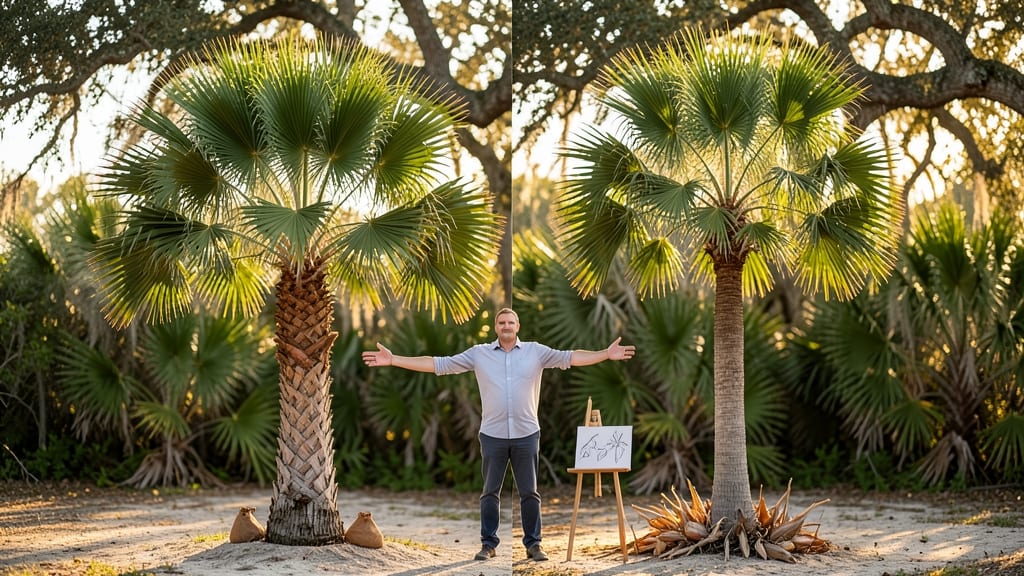
Florida palm tree heights by species: from dwarf to sky-scratching giants
Florida’s palm trees come in all shapes and sizes, but their mature heights can dramatically change your landscape design. Some varieties stay compact enough for small yards, while others reach skyscraper proportions.
The Sabal palm, for example, tops out at 30-50 feet, making it perfect for medium-sized properties, while the Coconut palm can soar to 80-100 feet, dominating coastal vistas. Understanding these height ranges helps you choose palms that fit your space and vision.
Palm tree growth rates also vary wildly. Fast growers like the Mediterranean Fan Palm can add 2 feet per year in ideal conditions, while slower growers like the Needle Palm take decades to reach their 15-20 foot mature height.
This variation means planning for both immediate and long-term space needs is crucial. For instance, a 6-foot-tall Pygmy Date Palm today could become a 12-foot centerpiece in just 10 years.
Native Florida palms often thrive with minimal care, but their height potential depends heavily on soil drainage, sunlight exposure, and water availability. Sandy soils, common in coastal areas, drain quickly and suit most palms, while heavy clay soils can stunt growth or cause root rot.
Always amend soil with organic matter like compost to improve drainage and nutrient availability.
Here’s a quick reference for some of Florida’s most popular palm varieties and their mature heights:
| Palm Variety | Mature Height | Growth Rate | Best For |
|---|---|---|---|
| Sabal Palm | 30-50 ft | 1-2 ft/year | Medium yards, urban landscapes |
| Coconut Palm | 80-100 ft | 2-3 ft/year | Coastal properties, large estates |
| Royal Palm | 60-75 ft | 1.5-2.5 ft/year | Tropical landscapes, parks |
| Pygmy Date Palm | 6-12 ft | 0.5-1 ft/year | Small yards, containers, patios |
| Mediterranean Fan Palm | 15-25 ft | 2 ft/year | Urban gardens, small landscapes |
| Needle Palm | 15-20 ft | 0.5-1 ft/year | Woodland gardens, shaded areas |
If you’re planting palms near power lines or sidewalks, always check local municipal regulations. Many cities enforce height restrictions to prevent overgrowth interfering with utilities or pedestrian paths.
For example, Miami-Dade County limits palm trees near sidewalks to 20 feet or less unless they’re planted in designated medians. Always verify before planting!
For small-space gardening, consider dwarf varieties like the Pygmy Date Palm or Dwarf Palmetto, which stay under 10 feet tall. These are ideal for containers, patios, or tight urban yards. Even in containers, these palms can thrive for years with proper drainage and fertilization
How to choose palm trees based on height and growing conditions
Selecting the right palm tree for your Florida landscape starts with understanding height limitations and growing conditions. Not all palms thrive in the same environment—some need coastal salt tolerance, while others prefer inland humidity.
My top tip? Match the palm’s mature height to your space and its sunlight needs to your yard’s exposure.
For small yards, dwarf varieties like the Pygmy Date Palm (6-12 ft) or Mediterranean Fan Palm (15-25 ft) are perfect. They fit cozy front yards without overshadowing patios.
Meanwhile, coastal properties benefit from salt-tolerant species like the Sabal Palm (20-40 ft), which handles wind and salty air like a champ.
🌱 Pros & Cons: Palm Tree Selection
Pros: Compact, urban-friendly
Cons: Slower growth, limited shade
Pros: Salt-tolerant, wind-resistant
Cons: Needs space (30-60 ft)
Pros: Drought-resistant, diverse
Cons: Some need protection from cold snaps
Sunlight is non-negotiable for palms. Most Florida varieties crave 6+ hours of full sun daily, but a few, like the Chinese Fan Palm, tolerate partial shade.
If your yard has afternoon shade, opt for understory palms like the Sabal Palm or Cocos Palm—they’ll still grow tall but with less intensity.
Soil drainage is another game-changer. Sandy soils (common in coastal areas) drain too fast, while clay-heavy soils (inland) can suffocate roots. Amend your soil with organic matter like compost or palm-specific fertilizer to mimic Florida’s native well-draining conditions. I’ve seen palms thrive in amended soil even where they struggled before!
Don’t overlook wind exposure. Coastal areas need flexible trunks (like the Sabal Palm), while inland yards can handle taller, stiffer palms (e.g., Royal Palm).
If you’re near the beach, avoid top-heavy palms like the Coconut Palm—they can snap in storms. Instead, choose wind-swaying varieties with broad canopies for stability.
Pro tip: Measure your space before buying! A 60-foot Royal Palm won’t fit in a 20-foot-wide front yard—plan for mature height + canopy spread. And always check local HOA or city regulations—some areas restrict palm heights near power lines or sidewalks.
When in doubt, consult a local nursery for site-specific recommendations. 🌴