
How To
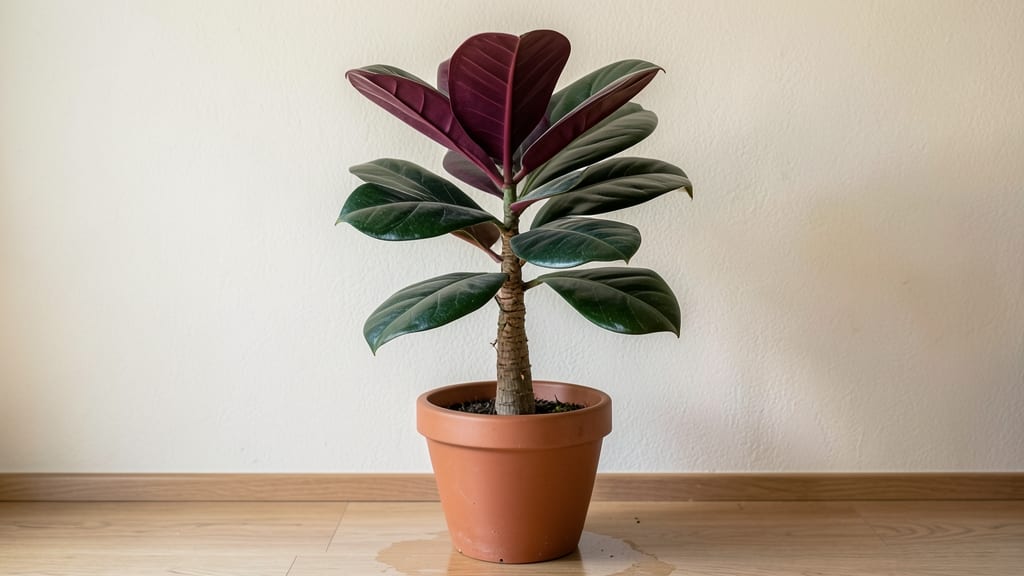
Rubber plant height by variety: from compact to towering giants
Rubber plants (Ficus elastica) are famous for their dramatic foliage and striking growth patterns, but their mature height can vary dramatically depending on the variety. Some stay compact enough for a desk, while others become towering indoor trees.
The key factors influencing height are leaf size, stem thickness, and growth rate, which are genetically determined by the cultivar.
If you're planning your space, knowing your rubber plant's potential height helps you choose the right variety for your home. For example, a 'Decora' variety might stay under 3 feet, while a 'Black Prince' could reach 10 feet with proper care.
Let’s explore the most popular varieties and their mature height ranges.
🌿 Pro Tip: Always check the specific variety label when purchasing, as nurseries often sell plants under generic names that don’t reflect their true growth potential.
Notice how the 'Black Prince' and 'Burgundy' varieties tend to grow taller with larger leaves, while 'Robusta' stays shorter with smaller foliage. This pattern isn’t just about aesthetics—it’s also about how quickly they grow.
For instance, the 'Variegata' with its striking variegated leaves grows at a moderate pace, making it a great compromise for those who want height without rapid expansion.
The leaf size also plays a role in how your rubber plant looks as it matures. Larger leaves often mean thicker stems, which can support greater height.
If you’re aiming for a bushier plant rather than a tall one, varieties like 'Robusta' or 'Decora' are ideal because they naturally grow more compactly.
One common misconception is that all rubber plants will eventually reach their maximum height. In reality, their growth slows significantly after 3–5 years unless you provide optimal care, including bright indirect light, proper pruning, and regular fertilization.
Without these, even fast-growing varieties like 'Black Prince' may plateau at 4–5 feet instead of reaching their full 10-foot potential.
If you're dealing with limited space, consider dwarf varieties or pruning techniques to control height. For example, pinching back the top growth of a 'Burgundy' can encourage it to branch out instead of shooting upward. This is especially useful if you’re growing your rubber plant indoors where space is limited.
🌱 Key Takeaway: The height of your rubber plant isn’t just about the variety—it’s also about how you care for it. Even a 'Decora' can grow taller than expected if given ideal conditions, while a 'Black Prince' might stay shorter if deprived of light or nutrients.
How to control rubber plant height: pruning, training & care hacks
Want to keep your rubber plant from becoming a jungle giant? The key is pruning and training—two simple techniques that let you shape its growth. Unlike some plants, rubber plants (Ficus elastica) respond well to pruning, even encouraging bushier, fuller growth when done right.
Whether you prefer a compact desk plant or a tall statement piece, you’re in control.
Pruning isn’t just about cutting back overgrowth—it’s about stimulating new growth at the stem nodes. When you trim the top of your rubber plant, those dormant buds below the cut will wake up and sprout fresh leaves, creating a denser, more balanced shape.
Think of it like giving your plant a haircut—it grows back fuller and healthier!
Timing matters too. The best time to prune is in early spring or after the plant finishes flowering (if it does). Avoid heavy pruning in winter, as the plant’s growth slows down during dormancy.
A light trim to remove yellow or damaged leaves is fine year-round, but major reshaping should wait for spring.
5 Essential Pruning & Training Tips
- Use clean tools: Sterilize scissors or pruners with rubbing alcohol to prevent disease. Dirty cuts can invite fungal infections.
- Cut at a 45° angle: Trim just above a leaf node (the bump where leaves grow) to encourage new shoots. Avoid leaving stubs.
- Propagate cuttings: Place stem cuttings in water or soil to grow new plants—it’s free propagation!
- Train with stakes: Use bamboo stakes or trellises to guide tall stems into a braided or spiral shape.
- Rotate for even growth: Turn your plant weekly so all sides get equal light, preventing lopsided growth.
Light exposure plays a surprising role in height control. Rubber plants grow taller and leggier when stretched for sunlight, while bright indirect light promotes bushier, compact growth. If your plant is reaching skyward, move it closer to a window (but avoid harsh direct sun, which can scorch leaves).
A south-facing window works best for indoor growers.
Fertilizer also impacts height—too much can lead to rapid, weak growth. Use a balanced 10-10-10 fertilizer every 4-6 weeks during spring and summer, but reduce feeding in fall and winter. Over-fertilizing causes nutrient burn and leggy stems, while consistent, moderate feeding keeps growth steady and sturdy.
For outdoor rubber plants, pot size matters. Root-bound plants grow faster but may become top-heavy. Repot every 2-3 years into a container just 1-2 inches larger than the current one.
If you’re growing it in the ground, prune aggressively in early spring to manage its spread—these plants can become invasive if left unchecked!
Remember: Patience is key. Rubber plants grow about 12 inches per year under ideal conditions, but with pruning and training, you can shape them to fit your space—whether that’s a 3-foot desk buddy or a 10-foot living room centerpiece. Start small, and watch your plant transform!