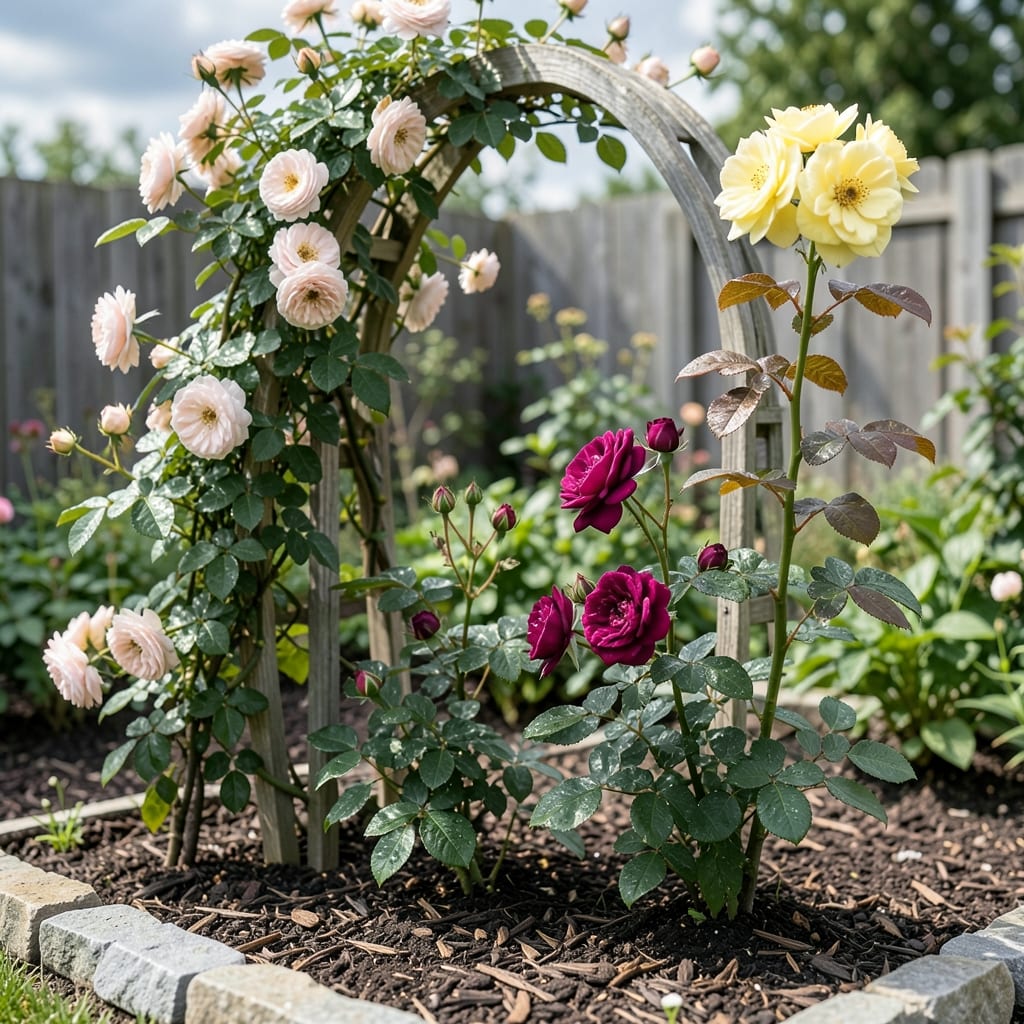
If you’ve ever wondered how tall rose bushes can grow in your garden, you’re not alone—but the answer isn’t as simple as you might think. The height of your roses depends on the variety you choose, where you live, and how you care for them. From compact Knock Out roses that stay under 3 feet to towering climbers that can stretch over 10 feet, knowing the right expectations is key to planning your perfect garden.
In USDA Zone 6a, like many gardens across the Midwest, rose bushes grow differently than they would in warmer climates. Some varieties, like dwarf roses, max out at just 1-3 feet, while others, such as climbing roses, can easily surpass 6 feet with the right support. The good news? You can influence their height with simple pruning and care techniques, whether you want them to stay small or grow wild.
Whether you’re working with a small backyard or a sprawling landscape, understanding the growth potential of your roses helps you avoid surprises. In this guide, I’ll break down the exact height ranges for 15 popular varieties, explain how climate affects growth, and share 5 pro tips to control—or encourage—their height naturally. Let’s get your roses growing exactly how you want them!
Ready to transform your garden with the perfect rose bush height? The secret starts with choosing the right variety for your space—and knowing how to nurture it. Let’s dive in!
Dwarf
1-3 ft
Container friendly
Semi-Dwarf
3-5 ft
Most popular
Standard
5-10 ft
Full orchard size
Rose bush height ranges by variety: from miniature to climbing giants
When planning your garden, the height of rose bushes can vary dramatically—from tiny miniature roses that fit in a pot to climbing roses that scale two-story homes. The variety you choose determines not just height but also care needs, so let’s break down the exact ranges for 15 popular rose types to help you visualize their mature sizes.
For example, Knock Out roses stay compact at 3–4 feet tall, perfect for borders, while climbing roses like 'New Dawn' can reach 10–15 feet when trained on a trellis. Even within categories like shrub roses, heights differ: 'Dr. Huey' maxes out at 3 feet, while 'Belinda’s Dream' stretches to 6 feet. Your climate also plays a role—we’ll cover that next!
🌹
Variety
Height Range
Best For
Notes
Miniature Roses ('Fairy Tale')
1–2 ft
Containers, rock gardens
Dwarf variety; blooms year-round
Shrub Roses ('Knock Out')
3–4 ft
Borders, hedges, low fences
Disease-resistant; continuous blooms
Floribunda ('Iceberg')
3–5 ft
Cut flowers, mixed borders
Cluster blooms; needs staking
Hybrid Tea ('Double Delight')
4–6 ft
Cut flowers, formal gardens
Large blooms; prune for height control
Climbing ('New Dawn')
10–15 ft
Arbors, pergolas, walls
Needs support; repeat bloomer
English Roses ('David Austin')
4–6 ft
Cottage gardens, hedges
Fragrant; disease-resistant
Groundcover ('The Fairy')
1–2 ft (spreading)
Slopes, erosion control
Low-growing; drought-tolerant
Standard Roses ('Apollo')
6–8 ft (with grafted stem)
Focal points, patios
Taller than shrub roses; prune graft
Rugosa ('Hansa')
5–6 ft
Coastal gardens, hedges
Salt-tolerant; thorny
Tea Roses ('First Prize')
3–5 ft
Cut flowers, containers
Delicate blooms; needs support
Poliantha ('Iceberg Polyantha')
2–3 ft
Borders, mass planting
Cluster blooms; low-maintenance
Noisette ('Cécile Brünner')
8–10 ft
Climbing, trellises
Fragrant; repeat bloomer
China Roses ('Mutabilis')
4–6 ft
Ornamental, specimen
Color-changing blooms
Bourbon ('Zéphirine Drouhin')
6–10 ft (climbing)
Arbors, walls
Fragrant; repeat bloomer
Climate-Zone height adjustments: how cold winters shrink or stretch your roses
Your USDA climate zone plays a bigger role in rose height than you might think. A 'Dr. Huey' rose that stays at 3 feet tall in Zone 5 could easily stretch to 6 feet in Zone 8 with warmer winters. Cold snaps force roses into dormancy earlier, limiting their growth potential, while milder climates allow them to grow taller and bushier.
For example, climbing roses like 'New Dawn' reach 15 feet in Zone 9 but may only hit 8 feet in Zone 6a without winter protection. Even shrub roses like 'Knock Out' grow 1 foot taller in Zone 7 compared to colder zones. The key? Understanding how chilling hours and frost dates affect your roses’ growth cycle.
🌡️
Variety
Zone 5 Height
Zone 6a Height
Zone 8 Height
Zone 9 Height
Pruning Tip
Knock Out Roses
3–4 ft
3.5–5 ft
4–6 ft
5–7 ft
Prune lightly in spring
Climbing ('New Dawn')
6–8 ft
8–10 ft
10–12 ft
12–15 ft
Train on trellis yearly
Floribunda ('Iceberg')
2.5–3.5 ft
3–4.5 ft
4–5.5 ft
5–6 ft
Stake for support
Hybrid Tea ('Double Delight')
3–4 ft
4–5 ft
5–6 ft
6–7 ft
Prune for height control
English Roses ('David Austin')
3–4 ft
4–5 ft
5–6 ft
6–7 ft
Light pruning only
In colder zones like Zone 5, roses often need winter mulch or row covers to survive, which can stunt their growth if overdone. Meanwhile, in Zone 9, roses grow more aggressively but may need regular pruning to prevent them from becoming unmanageable. The secret to controlling height in any zone? Selective pruning in late winter or early spring before new growth starts.
For climbing roses, the difference between zones is dramatic. In Zone 6a, 'Zéphirine Drouhin' might only reach 8 feet without winter protection, while in Zone 9, it can easily climb 12 feet or more. The same variety becomes a smaller shrub in colder climates but a towering climber in warmer ones.
🌿 Whether you're in a cold northern climate or a mild southern zone, adjusting your pruning schedule and providing the right support can help your roses reach their full potential—or stay compact, depending on your garden’s needs.